
14-Day Dog Training Schedule for Beginners to Train a Well-Behaved Dog
Written By:

Bringing home a new dog is exciting, but it can also feel overwhelming. I still remember wondering where to start, especially when my dog seemed more interested in chewing furniture than listening to me. The good news is that successful dog training does not require special skills or expensive classes in the beginning.
What helped me most was following a simple daily routine and staying consistent. In just two weeks, you can start teaching important commands that make everyday life easier and safer for both you and your dog.

According to the American Veterinary Medical Association, positive reinforcement is one of the most effective ways to teach dogs new behaviors. When dogs are rewarded for doing the right thing, they learn faster and enjoy the training process more.
What You’ll Learn In This 14-Day Plan

This beginner-friendly training schedule focuses on:
- Building attention and focus
- Teaching basic obedience commands
- Improving leash manners
- Developing impulse control
- Strengthening recall skills
- Creating positive habits from day one
Key Takeaways
- Short daily training sessions work better than long sessions
- Positive reinforcement builds trust and confidence
- Consistency matters more than perfection
- High-value rewards increase learning speed
- Most dogs learn faster when training feels fun
- Progress may vary, but daily practice produces results
Day 1–2: Name Recognition & Eye Contact

Before teaching commands, I always make sure a dog understands that their name deserves attention. This creates the foundation for every future lesson.
What You’re Teaching
When your dog hears their name, they should learn to look at you. This simple skill improves focus and helps reduce distractions during training.
How to Do It
Say your dog’s name in a cheerful voice. The moment they turn toward you, reward them with praise and a small treat. Repeat throughout the day in different situations.
I avoid using my dog’s name when correcting unwanted behavior. I want their name to create positive expectations rather than stress or confusion.
Pro Tip: Practice in quiet rooms first before adding distractions.
Day 3–4: Sit Happens (Literally)
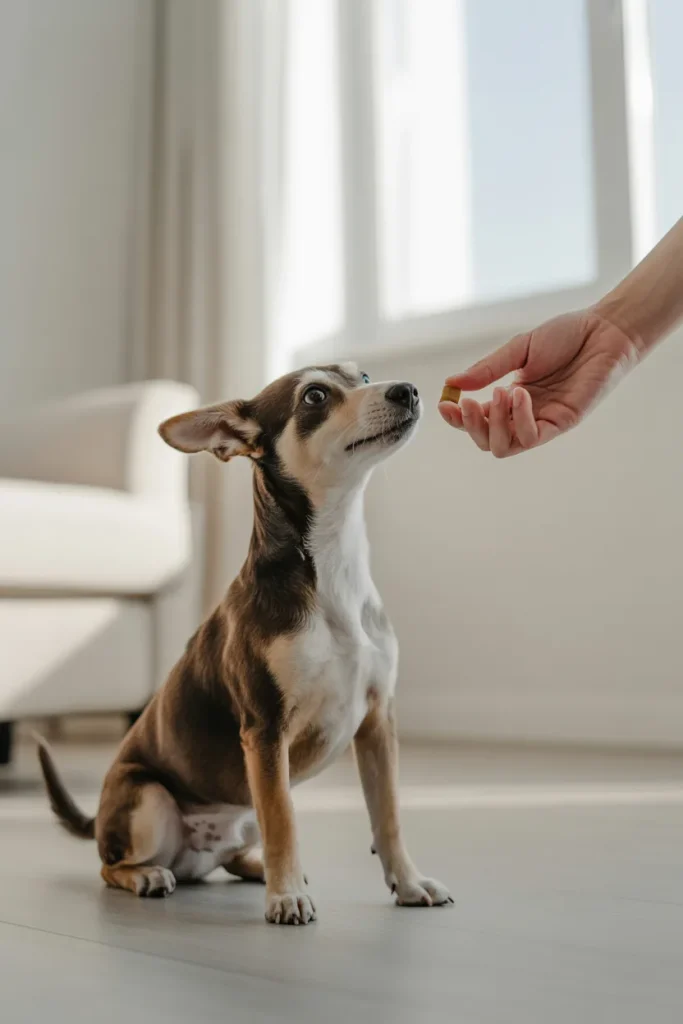
The sit command is often the first behavior I teach because it helps dogs slow down and focus.
Why Bother?
A reliable sit can prevent jumping, improve greetings, and make everyday situations easier to manage. I use it before meals, before opening doors, and when guests arrive.
How To Train
Hold a treat close to your dog’s nose and slowly move it upward. As their head follows the treat, their rear naturally lowers toward the ground.
The moment they sit, reward immediately with praise and a treat. Timing matters because dogs learn best when rewards happen right after the behavior.
Pro Tip: Keep sessions under 10 minutes.
Day 5–6: Down (Nope, Not the Sad Kind)
Teaching “down” gives your dog another way to settle and relax when excitement levels rise.
The Trick
Start with your dog sitting comfortably. Slowly move a treat from their nose toward the floor and then slightly forward.
Most dogs naturally lower themselves to follow the reward. As soon as their elbows touch the ground, mark the behavior and reward generously.
Some dogs learn quickly while others need extra patience.
Pro Tip: Use soft surfaces like rugs for comfort.
Day 7: Stay (Yes, Even With Pizza Around)

Stay is one of the most valuable commands for safety and self-control.
Teach It Like This
Ask your dog to sit or lie down. Hold your palm out and clearly say “stay.”
Take one small step backward. If your dog remains in position, return and reward them.
Gradually increase distance and duration.
Why It Matters
A reliable stay can prevent dangerous situations around doors, traffic, and guests.
Pro Tip: Always release your dog with a word like “okay.”
Day 8: Come (aka “Put Down That Dead Bird and Get Over Here”)
A strong recall can save a dog’s life.
Build a Reliable Recall
Start indoors with minimal distractions. Say “come” in an upbeat voice and reward generously when your dog reaches you.
Practice in different rooms before moving outdoors with a leash.
Why Recall Matters
Dogs are naturally curious, so recall helps maintain safety in unpredictable situations.
Pro Tip: Never punish your dog after they come to you.
Day 9–10: Loose Leash Walking (Not “Drag Me Across Town” Mode)

Loose leash walking improves daily walks significantly.
Training Tips
Walk normally. When the leash tightens, stop immediately.
Wait until your dog returns attention to you, then continue walking.
Consistency teaches that pulling does not work.
Why It Works
Dogs quickly learn that calm walking is the only way to keep moving forward.
Pro Tip: Start in quiet areas before busy streets.
Day 11–12: Leave It (Don’t Eat That Gross Thing)

This command helps prevent dangerous eating habits.
How to Teach It
Place a treat in your closed hand and say “leave it.”
When your dog stops trying and looks away, reward with a different treat.
Why It Works
Dogs learn that ignoring temptation leads to better rewards.
Pro Tip: Practice with more tempting items over time.
Day 13: Wait (Patience Training)
Wait teaches your dog impulse control in daily routines.
Quick Steps
Place food or open a door and say “wait.”
If your dog moves, reset calmly.
Reward patience with release.
Why It Helps
It improves safety and control in everyday situations.
Pro Tip: Start with just a few seconds.
Day 14: Put It All Together
Combine everything your dog has learned into real-life situations.
Practice Combinations
- Sit + Stay at doors
- Come + Down in parks
- Leave It + Wait near food
Final Thought
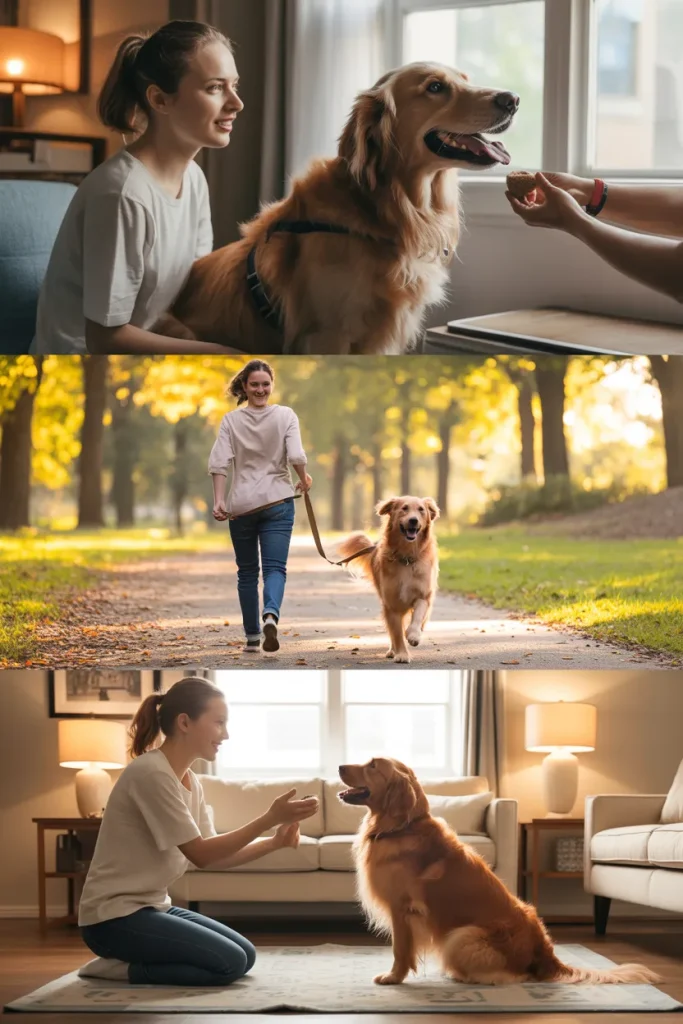
Training is about progress, not perfection. Small improvements build strong long-term behavior.
Extra Tips
Use High-Value Treats
Chicken, cheese, or meat works better for distractions than dry food.
Keep Sessions Short
5–10 minutes is ideal for beginners.
Avoid Training When Frustrated
Your mood affects your dog’s response.
End on Success
Always finish with something your dog can do well.
Expect Setbacks
Progress is not always linear.
Final Thoughts
Dog training is about communication, not control. With consistency and patience, even a beginner can build strong obedience habits in just two weeks.
Small daily efforts lead to long-term results.
FAQs
Can I train a dog in 14 days?
You can build basic obedience habits, but long-term training requires continued practice.
What age should training start?
As early as 8 weeks, but adult dogs can also learn effectively.
How long should training sessions be?
5–10 minutes is best for beginners.
What if my dog is not improving?
Reduce distractions and increase reward value.
Do I always need treats?
Treats can be reduced over time and replaced with praise or toys.


