
DIY Dog Bed Ideas That Turn Any Corner Into a Cozy Pet
Written By:

If you’ve ever looked at a basic dog bed shoved in a corner and felt it doesn’t really fit your home, you’re not alone. I’ve tried a lot of DIY pet setups over time, and what I’ve learned is simple: dogs don’t just need a bed, they need a space that feels safe, comfortable, and slightly personal.
This guide shares practical DIY dog bed ideas that actually work in real homes. These are not just decorative setups. They are builds and arrangements that improve comfort, fit different home styles, and most importantly, get used by dogs instead of ignored.
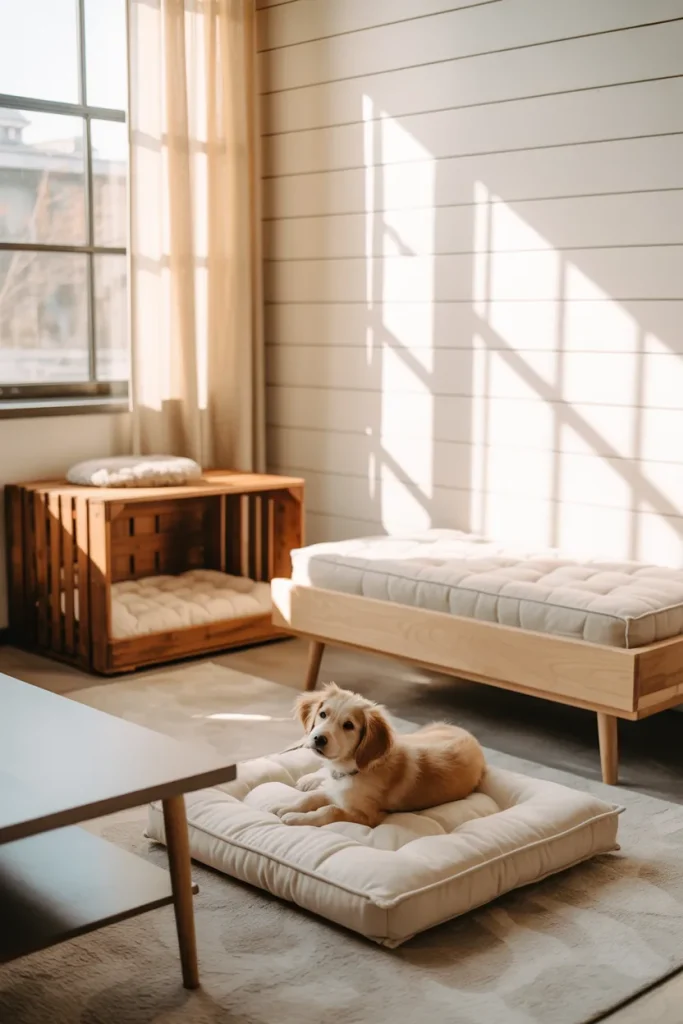
Quick Summary
DIY dog beds can be more than just cushions on the floor. With the right design, they can blend into your home while giving your dog a comfortable resting space. From hidden furniture-style beds to soft floor nests and elevated loungers, these ideas focus on real usability and comfort.
Key Takeaways
- Comfort and washability matter more than decoration
- Built-in designs save space and look cleaner in homes
- Dogs prefer defined sleeping zones instead of open random spots
- Foam quality and thickness directly affect usage
- Simple designs often get used more than overly complex ones
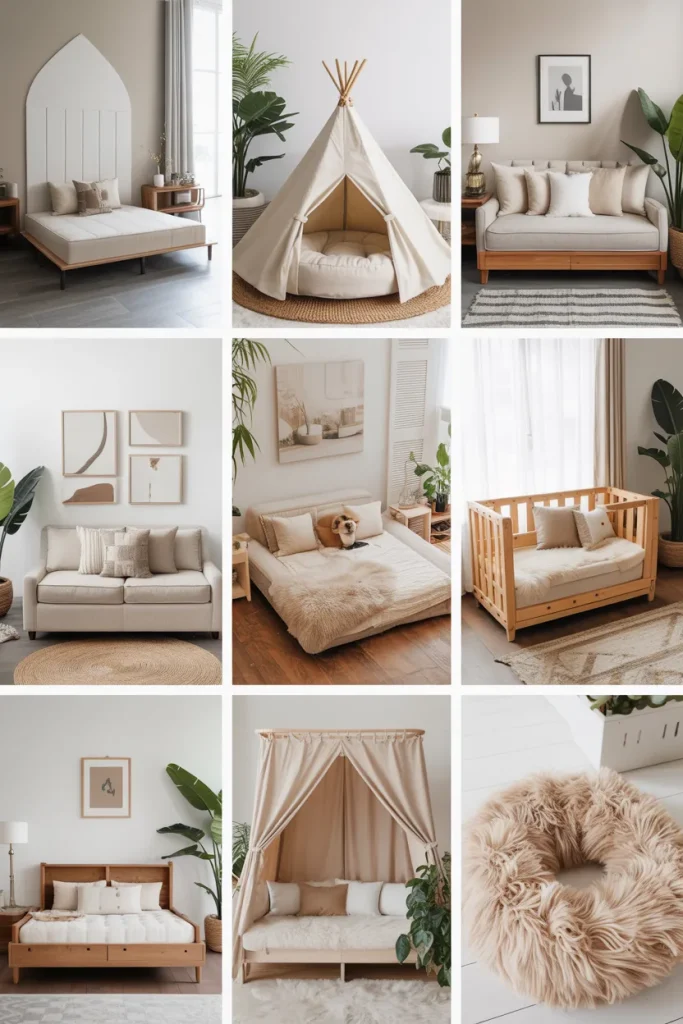
1. Botanical Corner Dog Bed Retreat

I once turned an unused corner of my room into a dog resting spot using a simple cushion and a few indoor plants. The result felt calm and surprisingly intentional.
I used a soft foam base wrapped in cotton fabric and placed it in a low basket frame. Around it, I kept safe indoor plants to create a natural vibe without overcrowding the space.
The biggest improvement was behavioral—my dog naturally started choosing that spot for naps instead of random furniture.
Tip: Always leave open space so the dog doesn’t feel trapped.
2. Concrete-Chic Side Table Dog Den
This idea works best for small spaces. I converted a hollow side table into a hidden dog den by cutting a side opening and adding a soft inner mat.
From outside, it looks like normal furniture. Inside, it’s a private sleeping space.
I finished the outer surface with a textured paint to give it a modern concrete look, which helped it blend into my living room.
Common mistake: Making the entrance too small. Dogs need easy access without bending awkwardly.
3. Couch-Top Luxe Snuggle Station
This is perfect if your dog already sleeps on the couch. Instead of fighting it, I created a defined cushion zone for them.
I used a washable faux fur cover and a non-slip base so it stays in place. It also helped reduce fur spread across the sofa.
It feels like a shared space instead of taking over the furniture.
Tip: Add Velcro strips underneath to stop shifting when your dog jumps.
4. Cloud-Like Floor Pouf Dog Bed
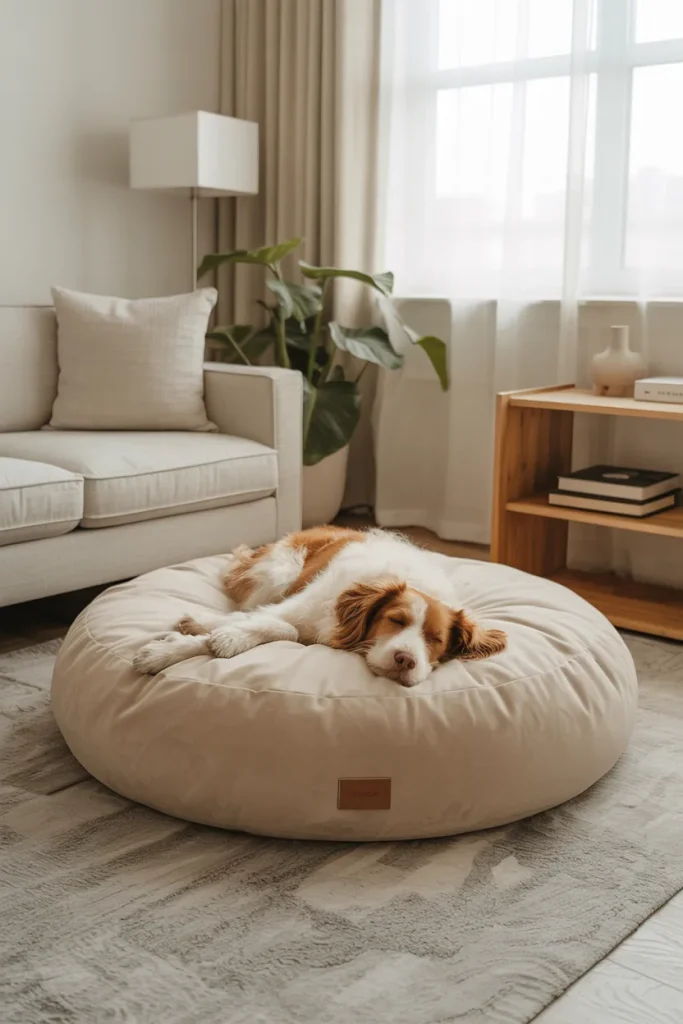
This is basically a soft oversized cushion that dogs naturally sink into.
I made mine using a circular fabric pattern and filled it with foam scraps mixed with polyfill. The goal was softness, not structure.
My dog tends to curl up tightly in it, especially during colder months.
Tip: Always use a removable cover for easy cleaning.
5. Scandinavian-Inspired Dog Daybed
This design is ideal if you like minimal interiors. I built a simple low wooden frame and placed a thin mattress on top.
It blends into the room instead of standing out, which makes the space look cleaner overall.
What surprised me most was how quickly my dog adapted to it compared to bulky beds.
Mistake to avoid: Making the bed too high off the ground.
6. Airy A-Frame Dog Teepee
This is a simple structure made from wooden dowels and light fabric. It creates a semi-enclosed space that dogs naturally feel safe in.
Inside, I placed a soft round cushion, and it quickly became a quiet resting spot.
It also helps during noisy situations because it gives a sense of privacy.
Tip: Use breathable fabric so airflow stays natural.
7. Heirloom-Style Wooden Crate Bed
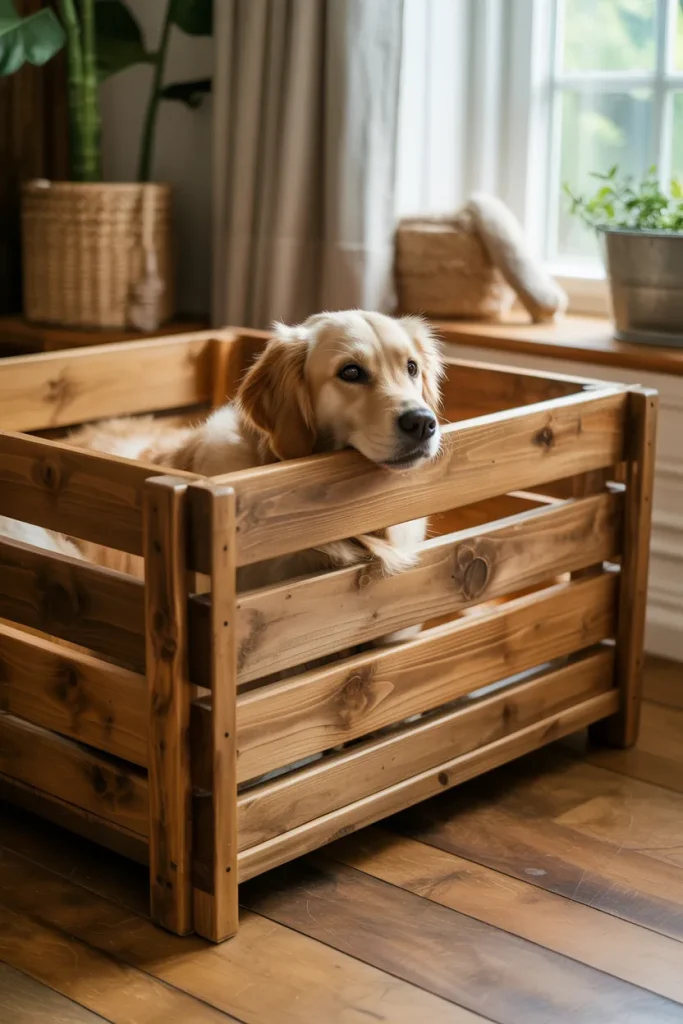
This is one of the most durable designs I’ve built. It uses solid wood and creates a strong frame that doubles as furniture.
It feels stable and long-lasting, especially for larger dogs.
I finished mine with a warm wood stain that hides scratches over time.
Real insight: Heavier dogs benefit most from sturdy builds like this.
8. Ultra-Modern Platform Dog Bed
This is a clean, simple platform built using plywood and short legs.
One benefit I noticed is that elevated beds stay cleaner because dust doesn’t settle easily.
I added a removable cushion so cleaning is easier.
Tip: Round off edges for safety.
9. Mini Bedroom Dog Bed Setup
This is a playful setup where I built a small bed frame that looks like a miniature human bed.
It sounds decorative, but dogs actually respond well to familiar sleeping structures.
I added a tiny blanket and soft pillow, and it quickly became a favorite sleeping spot.
Mistake: Overdecorating and making it uncomfortable to use.
10. Fairytale Canopy Dog Bed Dreamscape
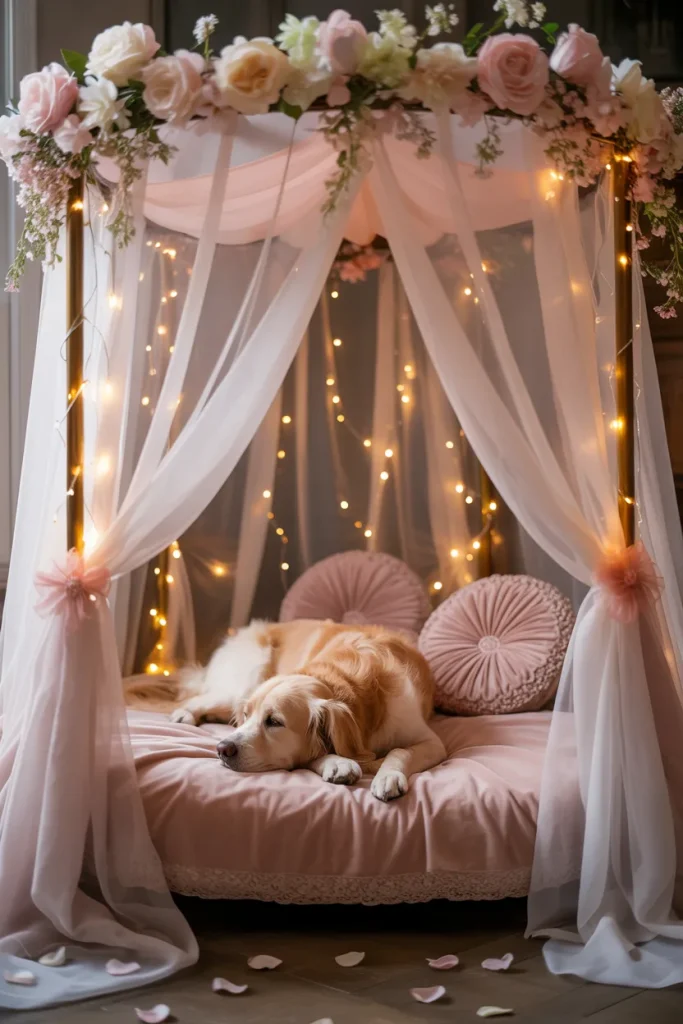
This design uses a soft canopy over a low bed frame to create a cozy sleeping area.
It gives a sense of enclosure without fully closing the space.
It works especially well for anxious dogs who prefer calmer environments.
Tip: Use washable fabric because dust collects faster in draped setups.
Common Mistakes to Avoid
- Using thin foam that flattens quickly
- Ignoring cleaning and maintenance needs
- Making designs too decorative and less functional
- Forgetting non-slip bases on smooth floors
- Not sizing the bed according to your dog’s real sleeping posture
Final Thoughts

After building and testing different DIY dog beds, one thing is clear: simplicity and comfort always win.
The best setup is not the most expensive or complicated one. It’s the one your dog actually uses every day without hesitation.
If your dog likes curling, go for enclosed styles. If they stretch out, choose open platforms. And if space is limited, multi-use furniture designs are the smartest option.
A good DIY dog bed isn’t just decoration—it becomes part of your dog’s daily routine.


