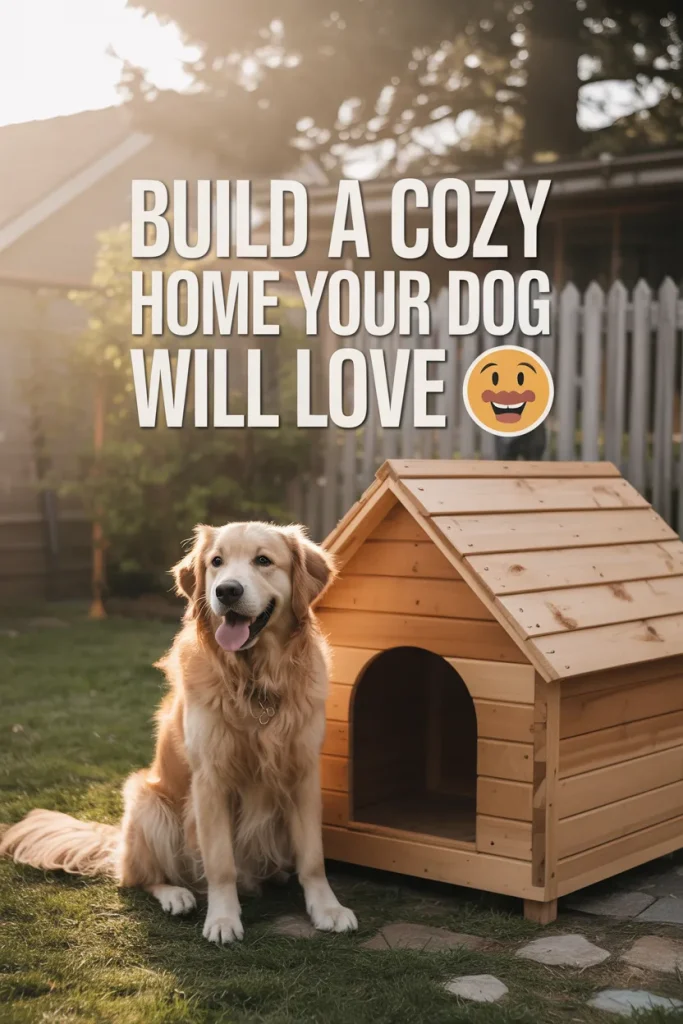
7 Inspiring Dog House DIY Plans for Your Pup
Written By:

In this article, I share my personal experience building different DIY dog house ideas that are practical, budget-friendly, and comfortable for pets. I tested several styles like pallet wood shelters, insulated winter houses, and even solar-powered ventilation setups.
Above the Fold Summary (Complete Overview)
From my experience, I learned that comfort, safety, and proper sizing matter more than complex designs. Simple things like airflow, insulation, and raised flooring can completely change how much a dog actually uses the house.
I also found that using safe materials, smooth edges, and weather protection makes a big difference in long-term durability. This guide includes real insights, mistakes I made, and practical fixes that helped improve every design.
Key Takeaways
- I learned comfort and safety matter more than design complexity
- Insulation and ventilation directly affect dog behavior and health
- Recycled materials like pallets and tires can still build strong houses
- Custom colors and design help dogs adapt faster
- Proper sizing prevents rejection of the dog house
- Small upgrades like bedding or shade significantly improve usage

When I first started building dog houses, I thought it would be a simple DIY task. After trying multiple designs, I realized it’s actually about understanding how dogs react to space, temperature, and comfort.
Through trial and error, I figured out what works in real conditions like heat, cold, and rain. In this guide, I’m sharing everything I personally tested so you can avoid common mistakes.
Cedar-Shingle Roof Design Ideas

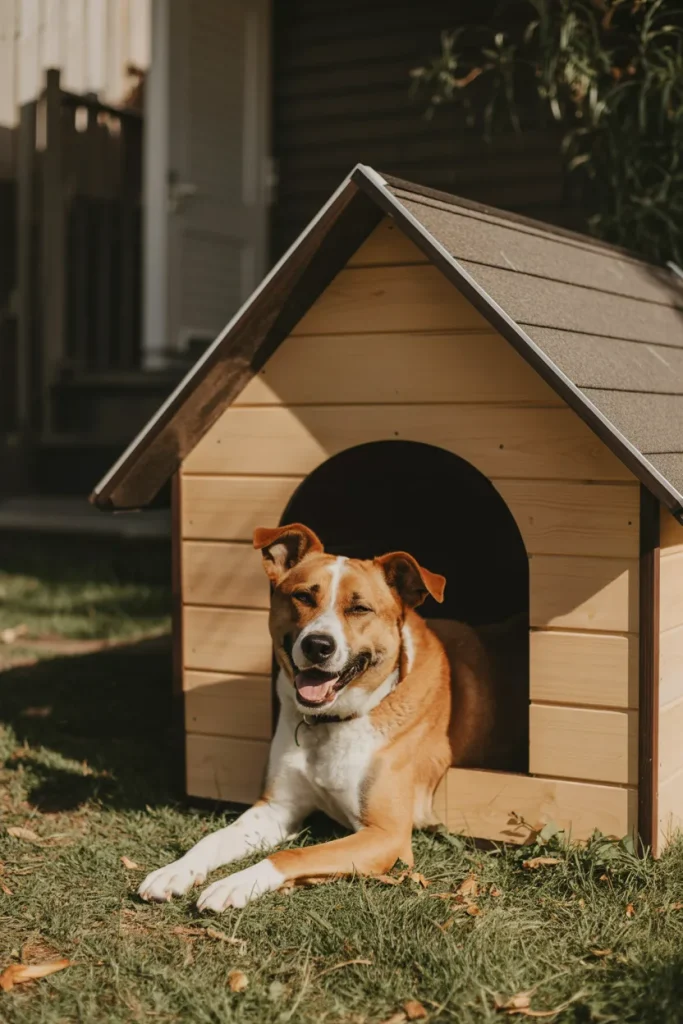
I started with a cedar-shingle roof because I wanted something durable and weather-resistant. From my experience, cedar performs well in both heat and moisture conditions.
I learned that proper overlapping of shingles is important because even small gaps can lead to leaks. A strong roof frame also helps prevent long-term bending or damage.
This design also improved insulation naturally, which made the interior more stable in different weather conditions.
Our Collection
After building multiple dog houses, I realized there is no single perfect design. Every dog has different needs depending on size, behavior, and climate.
In my collection, I focused on variety—rustic, modern, eco-friendly, and insulated options. Each build gave me new insights into durability, comfort, and cost efficiency.
1. Rustic Pallet Wood Design

This was my most budget-friendly project using recycled pallets. It gave a natural rustic look and was easy to build with basic tools.
From experience, sanding is very important because rough wood can harm dogs. I also added a slanted roof to improve rain protection.
Adding a soft bed inside made it more comfortable and helped dogs adjust quickly.
2. Custom Color Schemes
When I wanted a more stylish design, I experimented with paint customization. It completely changed the visual appeal of the dog house.
I learned that pet-safe paint is essential to avoid health risks. A waterproof coating also helped protect the paint from weather damage.
Simple designs like paw prints or names made the house feel more personal and welcoming.
3. Unique Arc-Shaped Roof Design

This design required more effort but delivered better airflow and rain protection. The curved roof also added extra interior space.
From my experience, precise cutting is very important for this structure. Even small errors can affect stability.
Once completed, it looked more premium compared to standard box-style dog houses.
4. Recycled Tire Dog House
This was one of my most creative eco-friendly builds. I used old tires to create a compact and durable shelter.
I learned that cleaning and smoothing tires properly is necessary for safety. Strong base support is also important to prevent movement.
It turned out to be a low-cost, long-lasting option for medium-sized dogs.
5. Solar-Powered Ventilation System
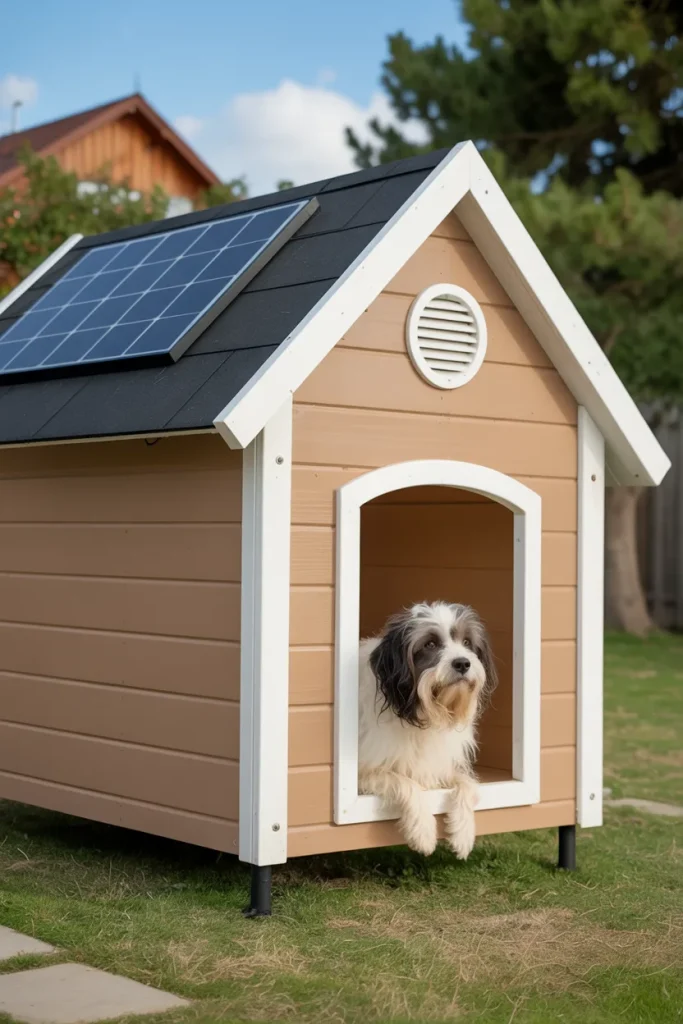
During hot weather, I realized airflow is critical. So I added a solar-powered fan system to improve ventilation.
From testing, I found that good airflow keeps dogs calmer and more comfortable in summer heat. Proper placement of the solar panel is key for consistent performance.
This upgrade significantly improved usability during hot days.
6. Insulated Winter Dog House
For winter conditions, I added insulation using foam inside the walls. This helped maintain stable indoor temperatures.
I learned that lifting the house slightly from the ground prevents cold and moisture from entering.
Adding blankets inside further improved warmth and comfort during cold nights.
7. Indoor Dog House Options

For indoor setups, I focused more on comfort and home design integration. These houses are mainly for small or indoor dogs.
Soft bedding and proper size made a big difference in how often dogs used the space. Blending it with home decor also improved overall aesthetics.
Extra Tips & Ideas
From all my builds, I learned that planning is more important than tools. A clear design avoids waste and mistakes.
Dogs prefer simple, comfortable, and safe spaces over overly complex designs. Ventilation, shade, and insulation always matter more than decoration.
One tip I always follow is testing paint and materials before full construction to ensure safety.