
Top Dog Bathing Tips Every Owner Should Know 2026
Written By:

Bathing a dog sounds easy until you’re dealing with a wet, nervous pup that would rather be anywhere else. Over the years, I’ve learned that a successful bath is less about the shampoo and more about preparation. A few simple changes can make the experience safer, cleaner, and far less stressful for both you and your dog.
Regular bathing helps remove dirt, allergens, loose fur, and odor from your dog’s coat. While most healthy dogs only need a bath every 4 to 8 weeks, factors like breed, activity level, and skin condition can change that schedule. The tips below are the same steps I follow to make bath time smoother and help maintain a healthy coat and skin.
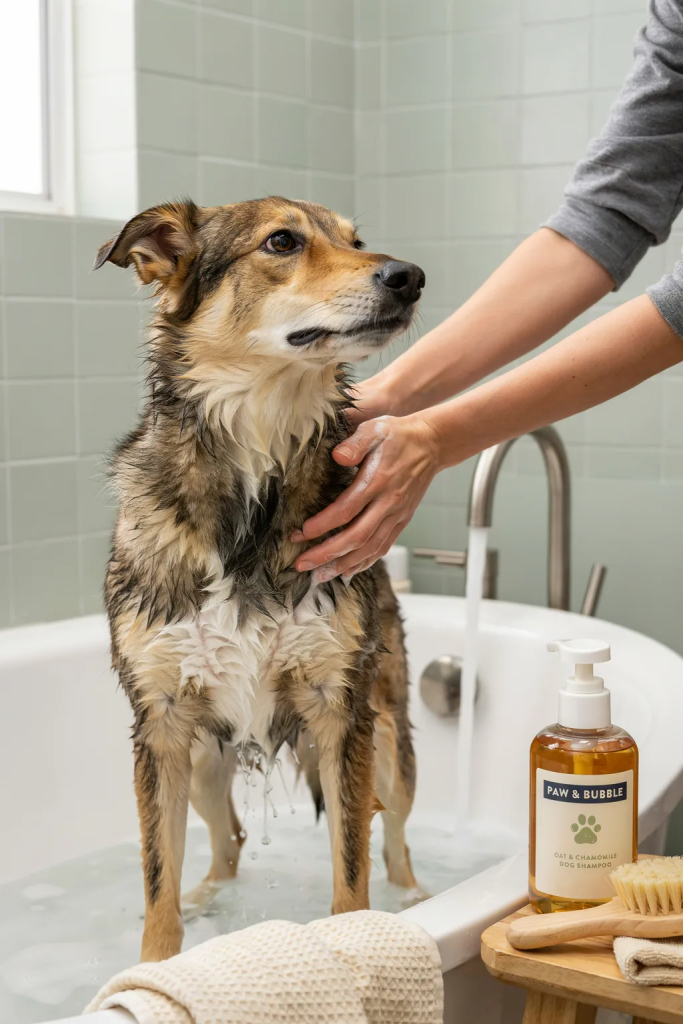
Key Takeaways
- Brush your dog’s coat before every bath.
- Use lukewarm water to avoid discomfort and skin irritation.
- Always choose a shampoo made specifically for dogs.
- Wash from the neck down and protect sensitive areas.
- Rinse thoroughly to prevent itchy skin and residue buildup.
- Dry your dog properly to reduce moisture-related skin issues.
1. Brush First, Bathe Later
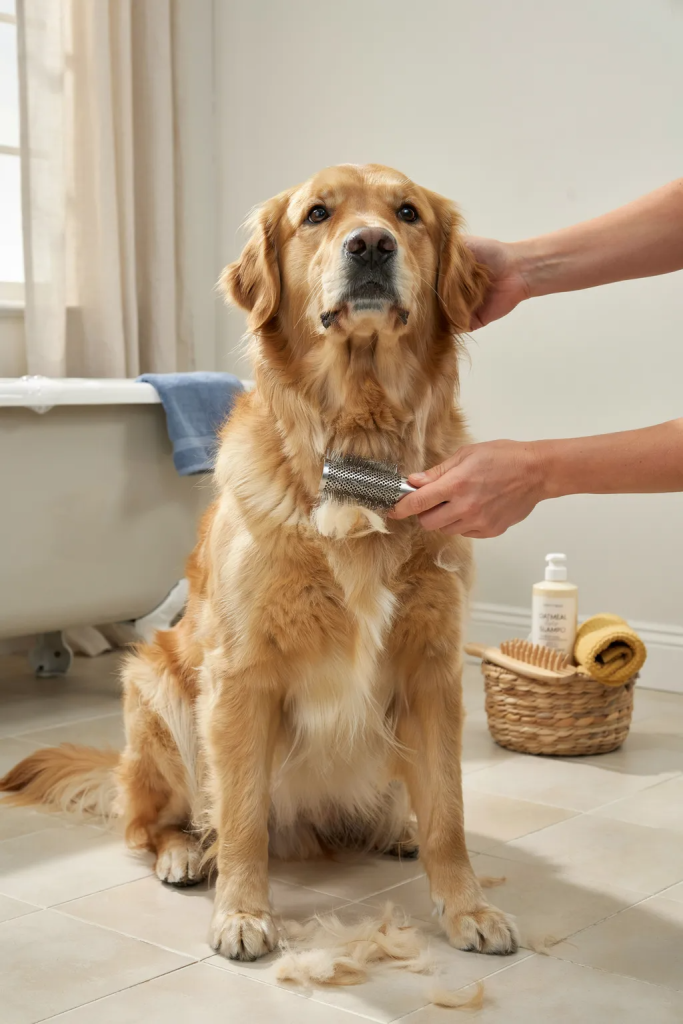
One mistake I see many owners make is skipping the brushing step. Before I start any bath, I spend a few minutes removing loose fur, dirt, and tangles.
When mats get wet, they tighten and become much harder to remove. Brushing first also helps water and shampoo reach the skin instead of sitting on top of the coat. This is especially important for long-haired breeds that can trap dirt beneath thick fur.
I also notice that a short brushing session helps many dogs relax before bath time. It creates a calmer transition and reduces anxiety.
Pro Tip: If your dog sheds heavily, brushing before bathing can significantly reduce the amount of fur left in the tub and around your home afterward.
2. Use Lukewarm Water (Not Too Hot or Too Cold)
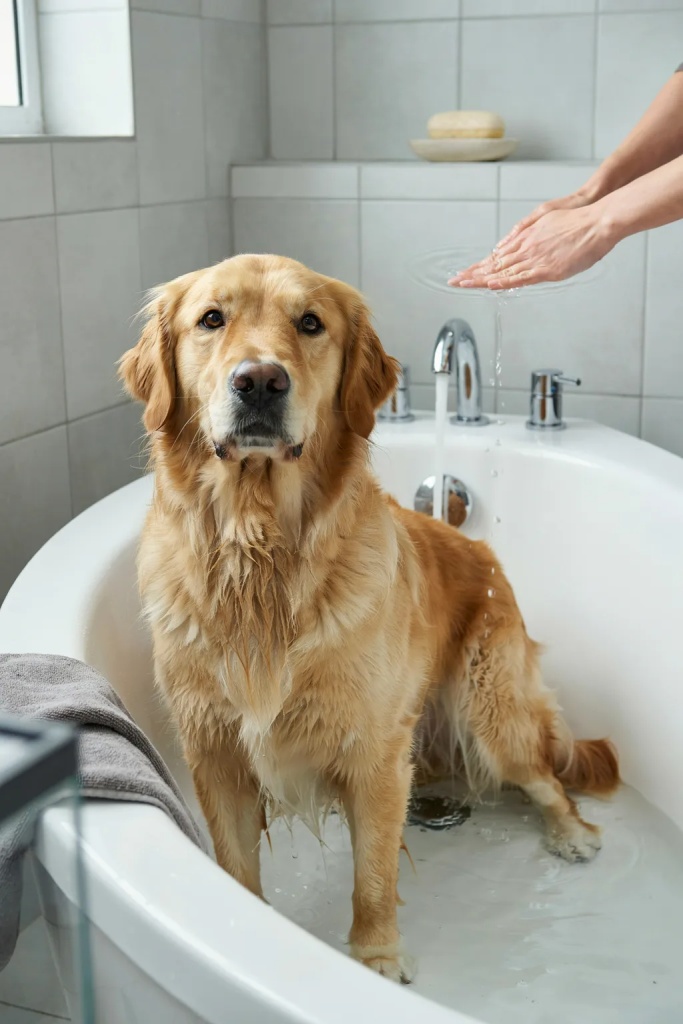
Water temperature can make a bigger difference than many people realize. I always test the water on my wrist before bringing my dog into the bath area.
Water that feels too hot can dry out or irritate your dog’s skin. Water that’s too cold can make the experience uncomfortable and stressful. Lukewarm water usually works best because it keeps dogs comfortable throughout the bath.
Some dogs become nervous when they hear running water. If that’s the case, I fill the tub or bathing area beforehand to reduce stress.
Pro Tip: Place a rubber bath mat or towel under your dog to provide traction. A stable surface can help nervous dogs feel more secure.
3. Pick the Right Shampoo (And Don’t Use Yours)
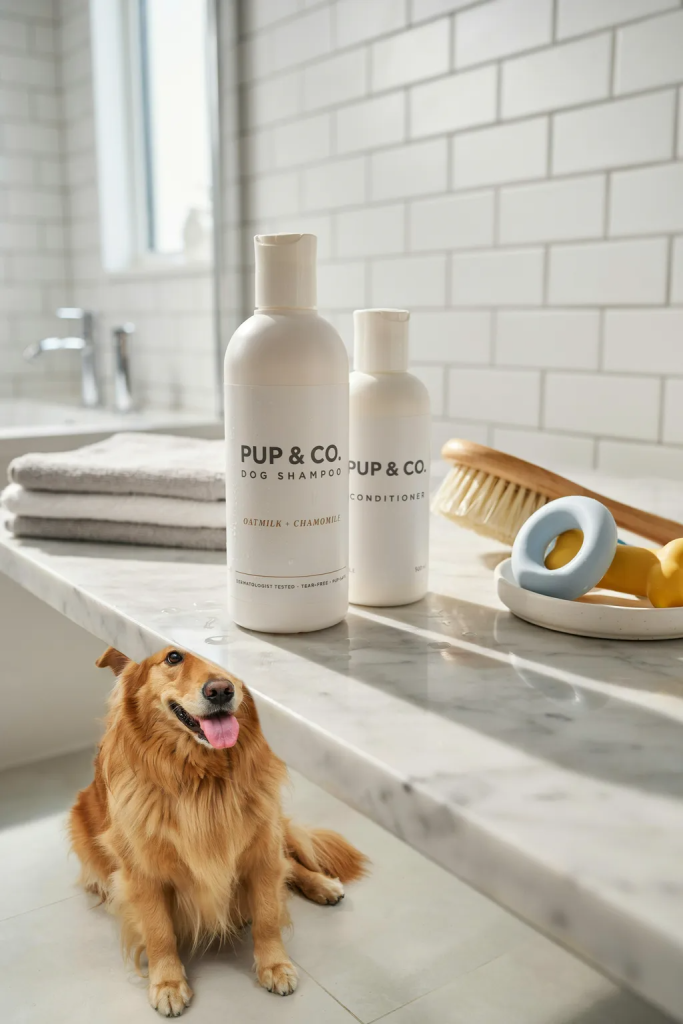
I never recommend using human shampoo on dogs. Human products are formulated for different skin pH levels and can strip away natural oils that protect your dog’s coat.
Instead, I choose a shampoo based on my dog’s specific needs. Dogs with dry skin often benefit from oatmeal formulas, while dogs with certain skin conditions may require veterinarian-recommended medicated shampoos.
Many dog owners don’t realize that some ingredients found in essential oils can be harmful to pets. That’s why I carefully read labels before trying any new grooming product.
Important: Always consult your veterinarian before using medicated shampoos if your dog has ongoing skin issues, redness, or excessive itching.
4. Start at the Neck, Work Your Way Down
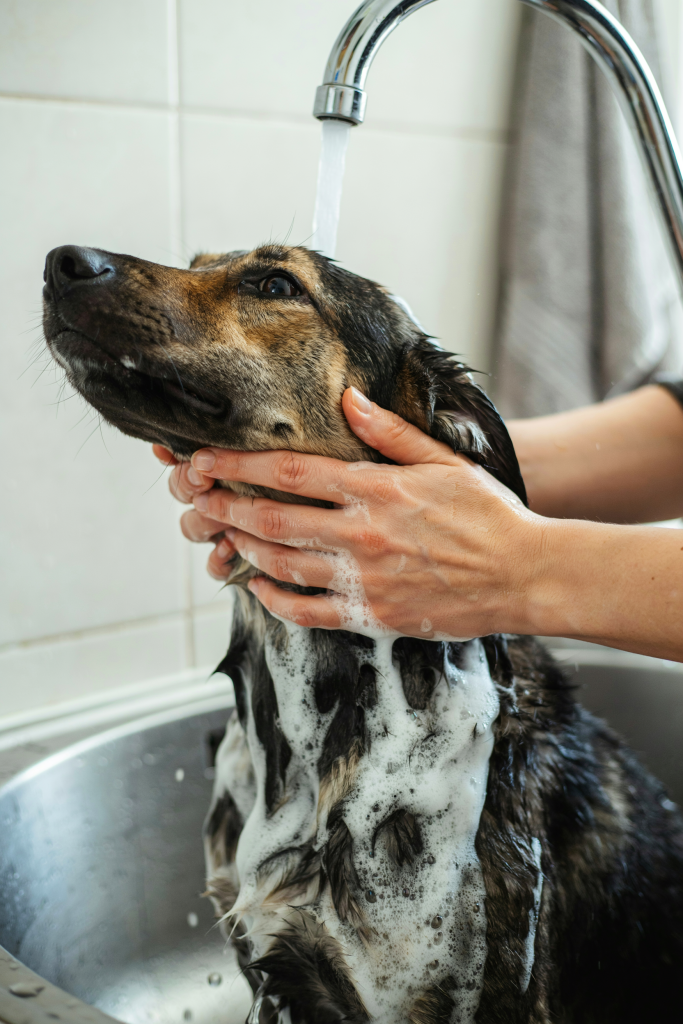
When it’s time to wash, I work methodically instead of scrubbing randomly. Starting at the neck and moving toward the tail helps distribute shampoo evenly across the body.
I gently massage the shampoo through the coat until it reaches the skin. This removes dirt, excess oils, and odors more effectively than washing only the surface fur.
The face requires extra care. I usually use a damp washcloth around the eyes and muzzle rather than pouring water directly over the head.
Dogs are much more cooperative when sensitive areas are handled gently and calmly.
5. Rinse Like You Mean It
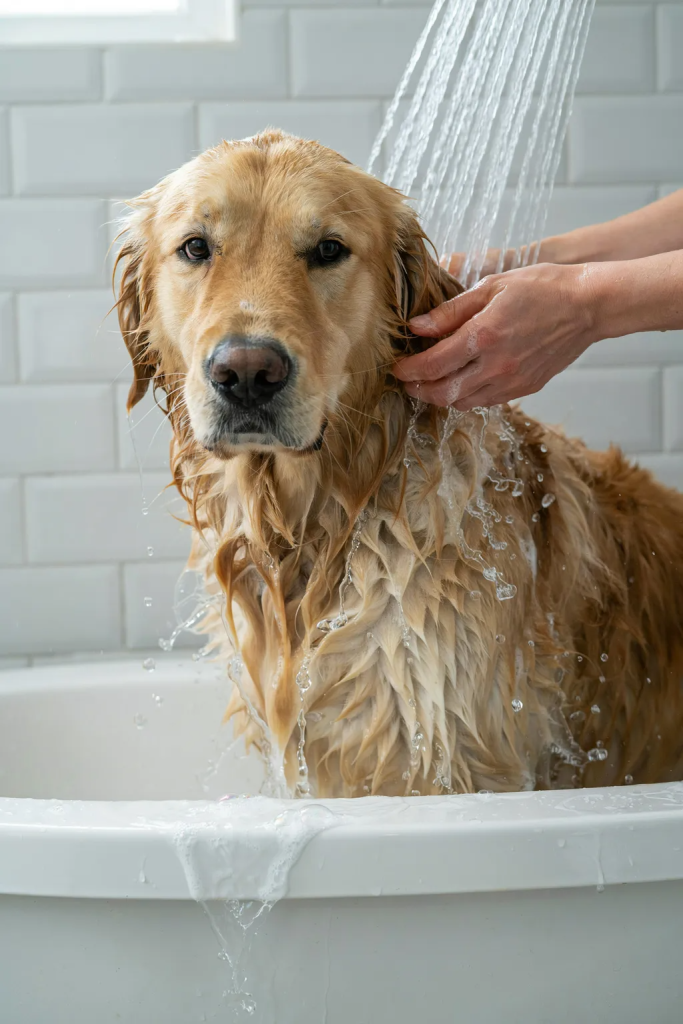
If there’s one bathing step I never rush, it’s rinsing. Leftover shampoo can cause itching, irritation, and flaky skin.
I rinse slowly while running my hands through the coat to make sure no soap remains trapped underneath. Long-haired and double-coated breeds often need extra attention because shampoo can hide deep within the fur.
A thorough rinse leaves the coat cleaner and helps prevent future skin discomfort.
Pro Tip: If you think you’ve finished rinsing, spend another minute checking high-density areas such as the chest, neck, and hindquarters.
6. Dry Smart (Before the Zoomies Begin)
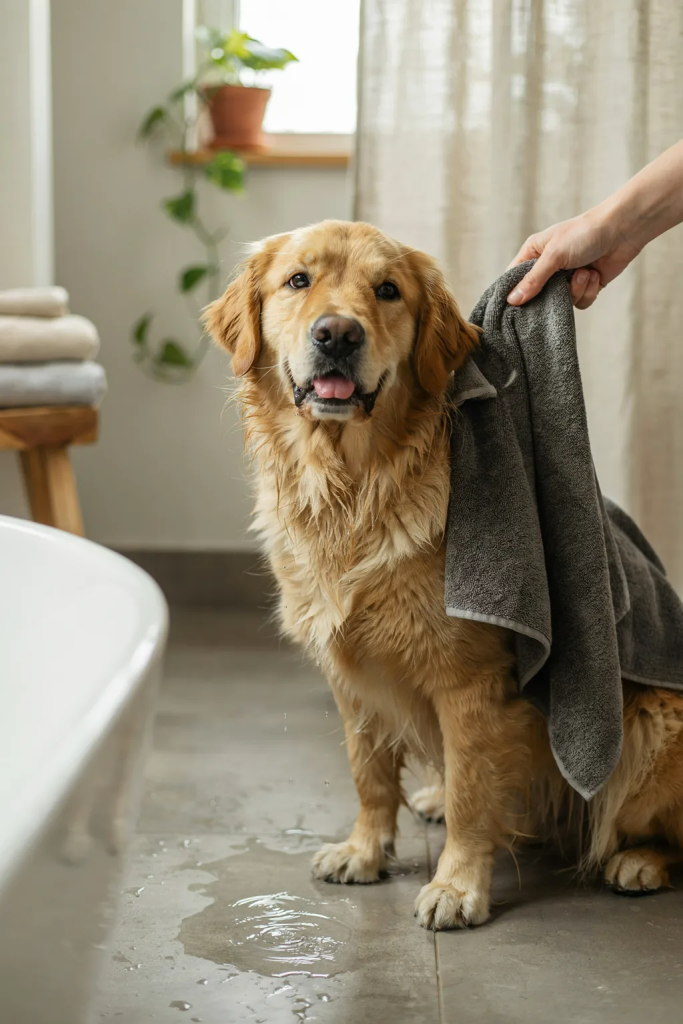
The bath isn’t truly over until your dog is dry. I start with a highly absorbent towel to remove as much moisture as possible before considering any drying tools.
For thick-coated dogs, a blow dryer on low heat and low airflow can speed up the process. I keep it moving constantly to avoid overheating any one area.
Some dogs dislike dryers, and that’s perfectly fine. In those cases, I let them air dry in a warm, comfortable space where they can relax safely.
Keeping the coat damp for long periods may encourage skin irritation, especially in dogs with dense fur.
Pro Tip: Microfiber towels can absorb significantly more water than standard cotton towels, helping reduce drying time.
Final Thoughts
I’ve found that successful dog baths come down to preparation, patience, and the right technique. When I brush first, use the correct shampoo, rinse thoroughly, and dry properly, the entire process becomes easier for everyone involved.
A clean dog isn’t just about appearance. Regular grooming supports skin health, helps you spot potential problems early, and strengthens the bond between you and your pet.
Quick Recap
- Brush before bathing.
- Use lukewarm water.
- Choose a dog-safe shampoo.
- Wash from the neck downward.
- Rinse thoroughly.
- Dry completely.
- Finish with praise or a treat.
A little preparation can turn bath time from a stressful chore into a routine part of keeping your dog healthy and comfortable.
FAQS
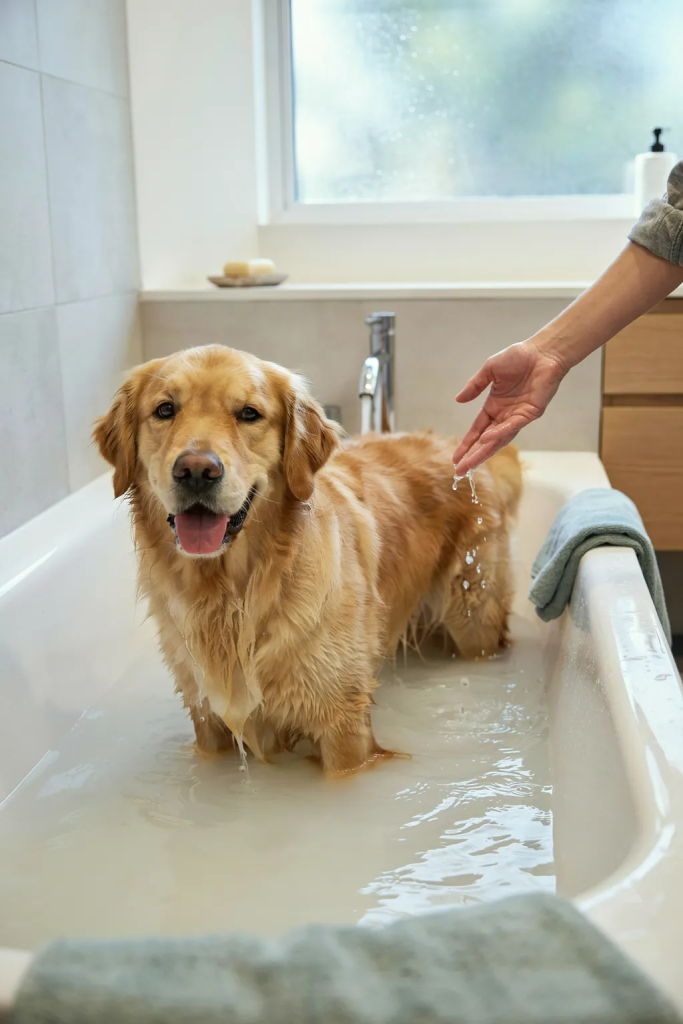
How Often Should I Bathe My Dog?
The ideal bathing schedule depends on your dog’s breed, coat type, lifestyle, and skin health. Most dogs do well with a bath every 4 to 8 weeks, but active dogs that spend a lot of time outdoors may need more frequent baths.
Can I Use Human Shampoo on My Dog?
No, human shampoo is not designed for a dog’s skin. Dogs have a different skin pH level, and human products can cause dryness, irritation, and damage to the natural protective oils in their coat.
What Water Temperature Is Best for Bathing a Dog?
Lukewarm water is usually the safest and most comfortable option. Water that is too hot can irritate the skin, while cold water may make your dog uncomfortable and anxious during the bath.
Should I Brush My Dog Before or After a Bath?
I recommend brushing before the bath. Removing loose fur, dirt, and tangles beforehand helps shampoo reach the skin more effectively and prevents mats from becoming tighter when wet.
What Should I Do If My Dog Hates Bath Time?
Start slowly and use positive reinforcement such as treats, praise, and calm handling. Creating a predictable routine and making the bathing area feel safe can help reduce stress over time.
How Can I Prevent Water From Getting Into My Dog’s Ears?
Avoid spraying water directly at the head. Instead, use a damp washcloth to clean around the face and ears. Keeping water out of the ears can help reduce the risk of irritation and infections.
How Long Should I Leave Dog Shampoo on the Coat?
Most dog shampoos should remain on the coat for a few minutes before rinsing, especially if your dog is very dirty. Always check the product label and follow the manufacturer’s instructions.
Why Is My Dog Still Smelly After a Bath?
A lingering odor may be caused by incomplete rinsing, skin infections, ear problems, dental issues, or underlying health conditions. If the smell continues after proper bathing, consult your veterinarian.
Is It Safe to Blow Dry My Dog After a Bath?
Yes, but only on a low heat and low speed setting. Keep the dryer moving continuously and avoid directing airflow at the face, eyes, or ears to prevent discomfort.
What Are the Signs That My Dog Needs a Bath?
Common signs include a noticeable odor, greasy fur, visible dirt, excessive shedding, or buildup on the coat. However, avoid overbathing, as frequent washing can dry out the skin and coat.


