
10 Dog Training Tips for Beginners That Actually Work (Easy Step-by-Step Guide)
Written By:

Bringing home a new dog is exciting, but it can also be challenging. I still remember the first few weeks with my own dog. I expected a loyal companion who would instantly understand house rules. Instead, I got a curious puppy who chewed furniture, ignored his name, and treated every room like his personal playground.
The good news is that successful dog training doesn’t require special talent. It comes down to consistency, patience, and understanding how dogs learn. Whether you’ve adopted a puppy or welcomed an older rescue dog, these dog training tips for beginners can help you build better habits and create a stronger relationship with your pet.
Quick Summary
- Start with basic commands before teaching advanced skills.
- Keep training sessions short and engaging.
- Reward good behavior immediately.
- Use the same commands consistently.
- Introduce your dog to new experiences gradually.
- Practice leash skills daily.
- Make crate training a positive experience.
- Be patient with setbacks.
- Turn training into a game.
- Seek professional help when needed.
Key Takeaways
- Dogs learn through repetition and rewards.
- Consistency matters more than long training sessions.
- Positive reinforcement produces better long-term results.
- Training strengthens trust between you and your dog.
- Every dog learns at a different pace.
1. Start with the Basics
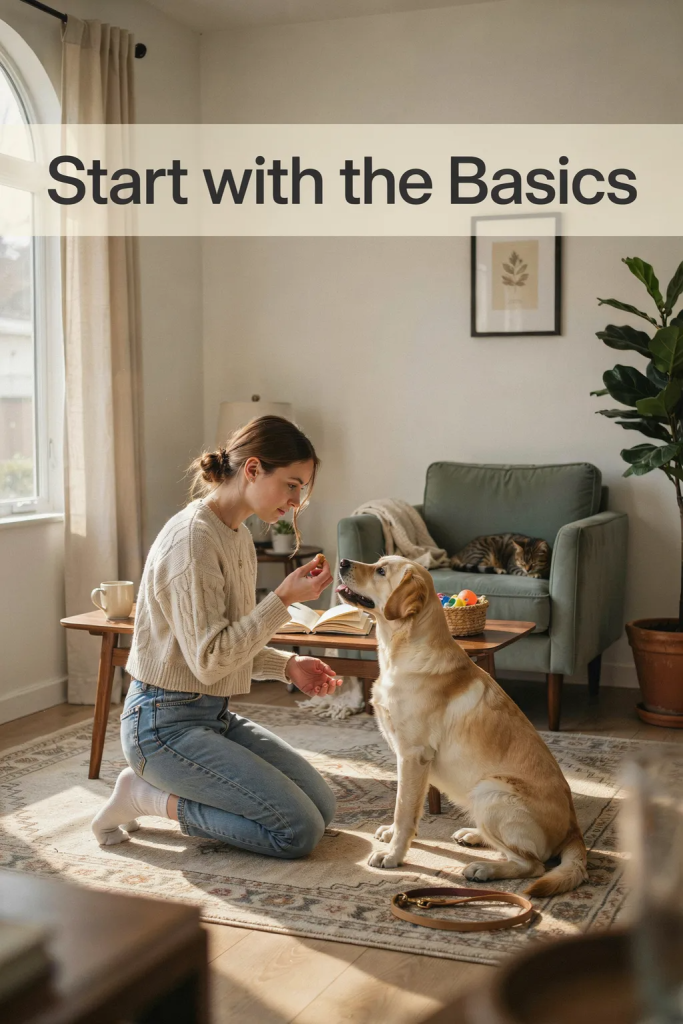
One of the biggest mistakes new owners make is trying to teach too much at once. Before working on fancy tricks, focus on essential commands such as sit, stay, come, and down.
These simple commands create the foundation for everything else. I always recommend mastering one command before introducing another. This prevents confusion and helps dogs gain confidence.
Use clear, single-word cues and reward every successful attempt. Even small improvements deserve recognition during the early stages.
Pro Tip
Practice basic commands in a quiet room before moving to distracting environments like parks or busy sidewalks.
2. Keep Training Sessions Short
Dogs learn best in short bursts. Most puppies and young dogs can focus effectively for only five to ten minutes at a time.
Early on, I made the mistake of turning training into a long lesson. My dog lost interest, and progress slowed dramatically. Once I shortened sessions, results improved almost immediately.
Aim for multiple short sessions throughout the day instead of one lengthy session. This keeps learning fun and prevents mental fatigue.
Common Mistake
Stopping only when your dog gets frustrated can create negative associations with training. End sessions while your dog is still engaged and successful.
3. Use Positive Reinforcement
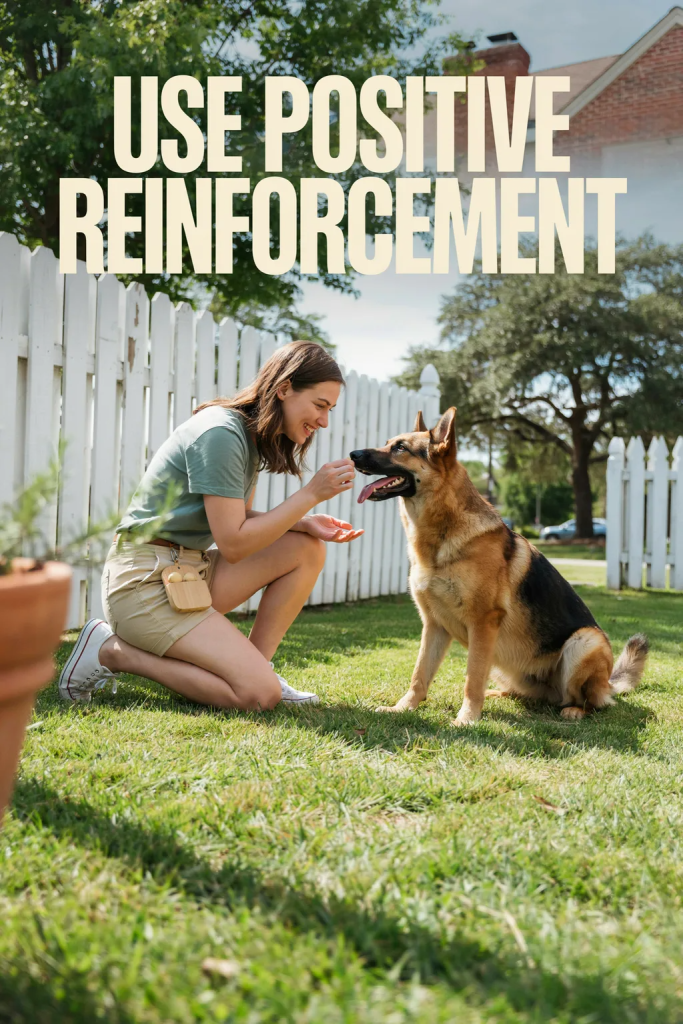
Positive reinforcement is one of the most effective dog training methods available. When a dog receives something enjoyable after performing a behavior, they’re more likely to repeat it.
Rewards can include:
- Small training treats
- Verbal praise
- Toys
- Playtime
- Physical affection
Timing matters. Deliver the reward within seconds of the desired behavior so your dog clearly understands what earned the reward.
Research consistently shows that reward-based training improves learning while strengthening the bond between dogs and their owners.
4. Be Consistent
Dogs thrive on predictability. If family members use different commands for the same behavior, learning becomes much harder.
For example, one person saying “down” while another says “lie down” can confuse a beginner dog. Choose one command and ensure everyone follows the same approach.
Consistency also applies to household rules. If jumping on the couch is allowed one day but forbidden the next, your dog won’t understand the expectation.
Pro Tip
Create a simple list of commands and share it with everyone in the household.
5. Socialize Early and Often
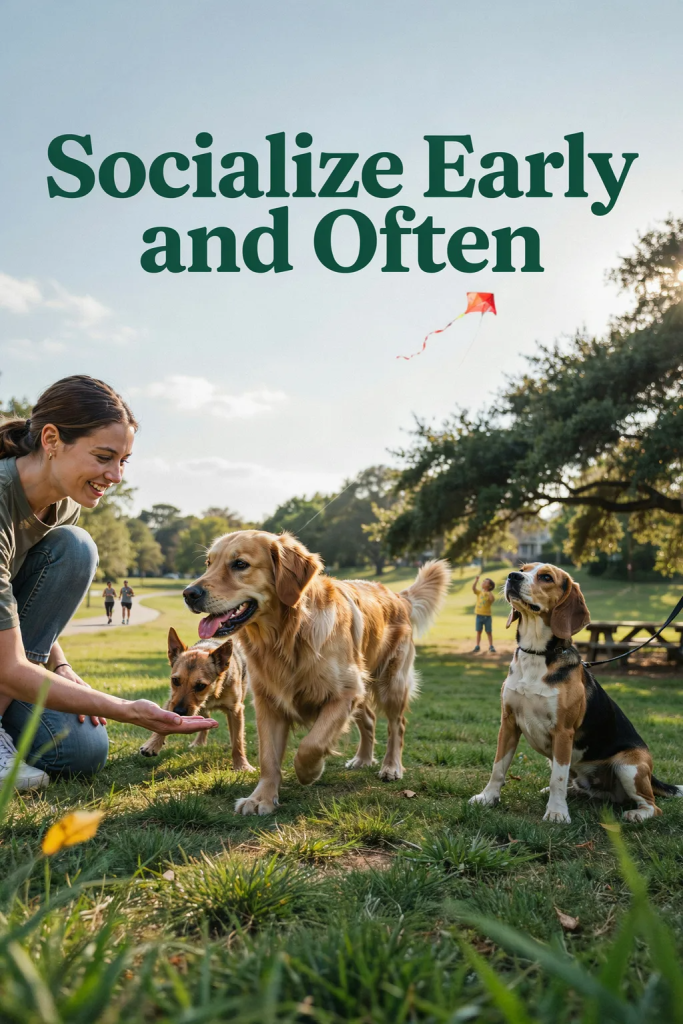
Proper socialization helps dogs become confident and well-adjusted adults. During the first months of life, puppies are especially receptive to new experiences.
Introduce your dog to:
- Different people
- Friendly dogs
- New environments
- Household sounds
- Various surfaces and textures
The goal isn’t overwhelming your dog. Instead, create positive experiences that teach them the world is safe.
I’ve found that dogs exposed to a variety of situations early in life are generally calmer and more adaptable later on.
Common Mistake
Forcing interactions can backfire. Allow your dog to approach new experiences at a comfortable pace.
6. Leash Training is a Must
Few things are more frustrating than being dragged down the street by an excited dog. Leash training should begin as early as possible.
Start indoors where distractions are minimal. Reward your dog for walking beside you and checking in regularly.
When your dog pulls, stop moving forward. Walking resumes only when the leash becomes loose. This teaches that pulling doesn’t lead to progress.
Consistency is key. If pulling occasionally gets your dog where they want to go, the behavior becomes harder to eliminate.
Quick Tip
Bring high-value treats on walks to reward calm leash behavior.
7. Don’t Skip Crate Training
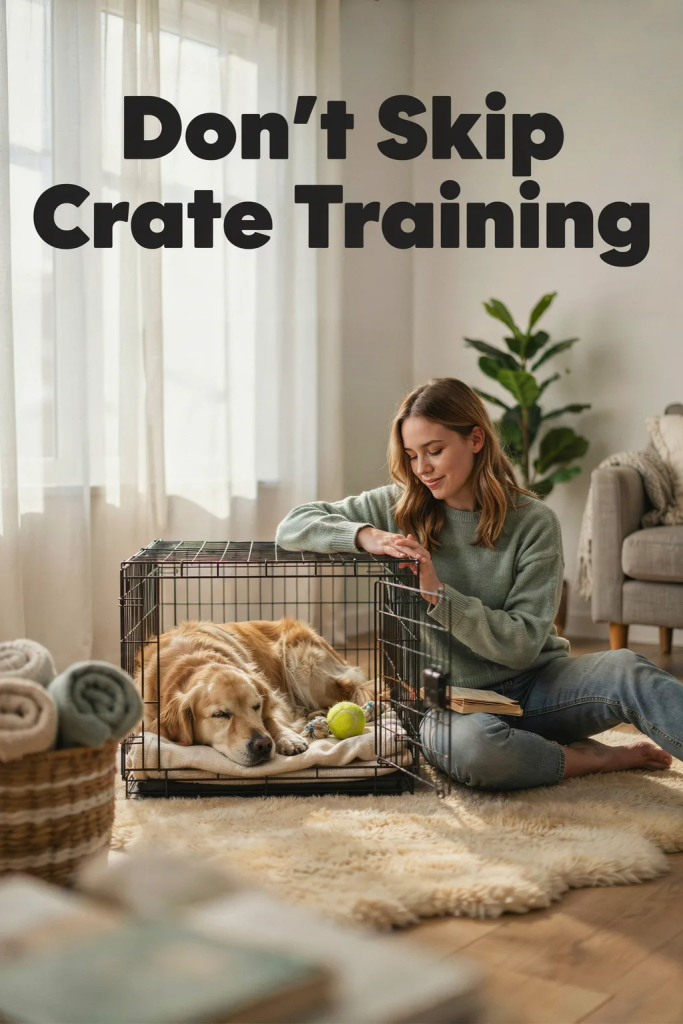
Many new owners misunderstand crate training. When introduced properly, a crate becomes a safe and comfortable retreat rather than a punishment.
Dogs naturally seek secure spaces where they can relax undisturbed. A properly sized crate can provide that sense of security.
Benefits of crate training include:
- Easier house training
- Improved safety when unsupervised
- Reduced destructive behavior
- A designated resting area
Make the crate inviting with soft bedding and positive experiences. Never use it as a place for punishment.
8. Patience Pays Off
Every dog learns at a different speed. Some dogs understand a command after a few repetitions, while others require weeks of practice.
There were times when I felt like my dog wasn’t making progress at all. Then suddenly, everything seemed to click.
Training is rarely a straight line. Expect setbacks, distractions, and occasional regression. That’s completely normal.
Remember
Focus on gradual improvement rather than perfection. Small victories eventually become lasting habits.
9. Keep Things Fun
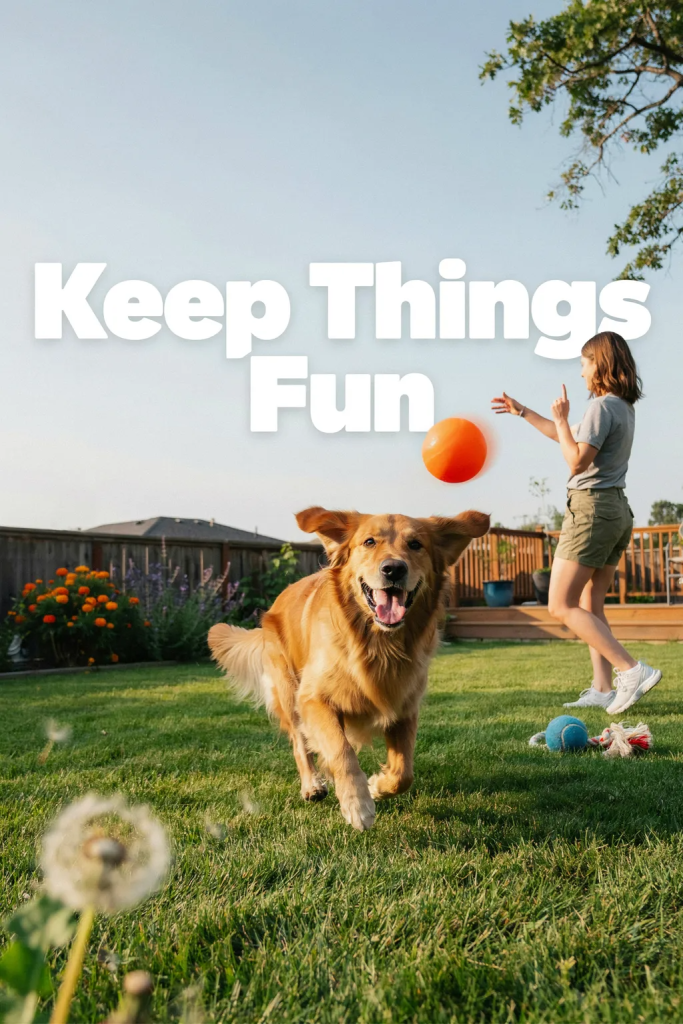
Dogs learn faster when they enjoy the process. Training shouldn’t feel like work for either of you.
Turn lessons into games whenever possible. Practice recall using hide-and-seek. Use puzzle toys to encourage problem-solving. Reward successful commands with a quick game of fetch.
When training feels rewarding and entertaining, dogs remain motivated to participate.
I often notice that the sessions my dog enjoys most are also the ones where he learns the fastest.
Fun Training Ideas
- Hide-and-seek recall games
- Treasure hunts with treats
- Obstacle courses in the backyard
- Fetch combined with drop-it practice
10. Know When to Get Help
Not every training challenge can be solved alone. Some behavioral issues require professional guidance.
Consider working with a qualified trainer if your dog shows:
- Aggressive behavior
- Severe fearfulness
- Resource guarding
- Extreme separation anxiety
- Persistent training difficulties
Seeking help isn’t a sign of failure. In many cases, early intervention prevents small problems from becoming major ones.
Choose trainers who use reward-based methods and prioritize positive interactions.
Bonus Tip: Enjoy the Journey
It’s easy to become focused on goals and forget to appreciate the process.
Some of my favorite memories involve imperfect training sessions—the moments when my dog finally understood a command or did something unexpectedly funny.
Training is about more than obedience. It’s an opportunity to build communication, trust, and a lasting partnership.
Take photos, celebrate progress, and enjoy the small wins along the way.
Recipes for Training and Enrichment
Healthy rewards can make training more effective while keeping your dog motivated.
Homemade Turkey Training Bites
Small, protein-rich treats that work well for frequent rewards during practice sessions.
Peanut Butter Pumpkin Treats
Easy to prepare and perfect for interactive toys or crate training activities.
Frozen Yogurt Dog Snacks
A great option during warm weather and useful for encouraging calm crate time.
Always introduce new foods gradually and consult your veterinarian if your dog has dietary restrictions.
Conclusion

Learning how to train a dog for the first time can feel overwhelming, but success comes from simple habits repeated consistently. Start with basic commands, reward good behavior, stay patient, and keep training enjoyable.
The most important lesson I’ve learned is that dog training isn’t really about teaching commands. It’s about creating clear communication and building trust. Every short session, every reward, and every small success strengthens your relationship.
Stay consistent, enjoy the process, and remember that progress happens one step at a time. Before long, you’ll have a happier, more confident, and better-behaved companion by your side.


