
13 Smart Dog Washing Area Ideas for Every Home
Written By:

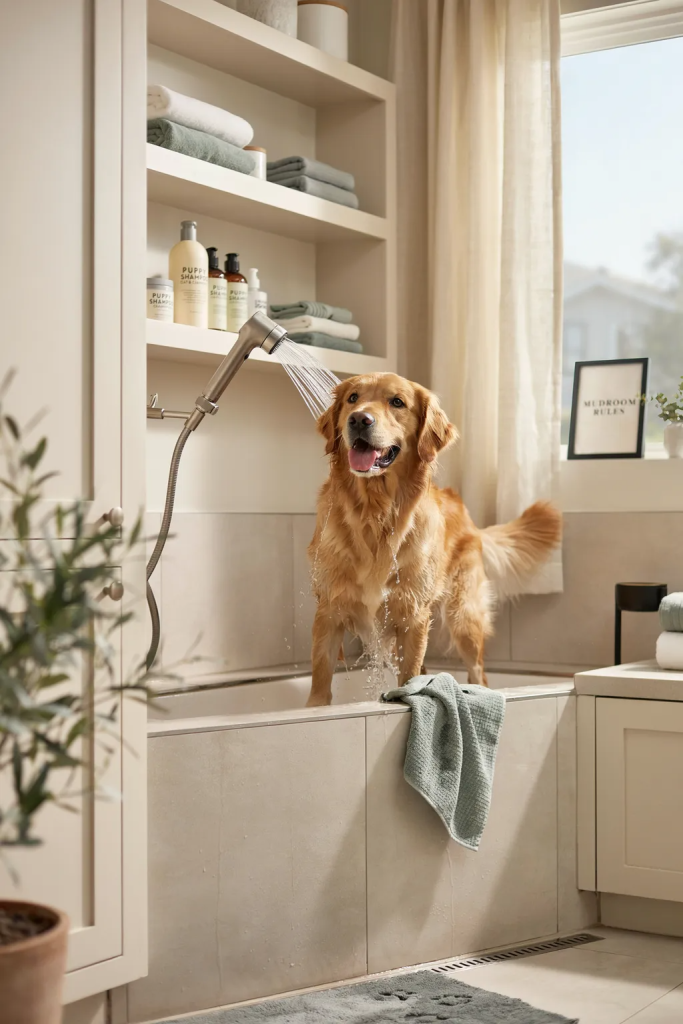
Bathing a dog sounds simple until you’re dealing with muddy paws, wet floors, fur-covered drains, and a dog that suddenly thinks it’s a race car. I’ve gone through enough chaotic bath days to know that the right washing setup can make a huge difference.
Dog Washing Area Ideas That Make Bath Time Easier and Less Messy
A dedicated dog washing area isn’t just about convenience. It helps keep the rest of the house cleaner, makes grooming easier, and can even reduce stress for dogs that dislike bath time. Whether you live in a large house, a small apartment, or somewhere in between, there are practical solutions that fit almost any space and budget.
In this guide, I’m sharing smart dog washing area ideas that work for different home layouts. You’ll find simple DIY options, space-saving designs, and premium setups that can turn bath time into a much smoother experience.
Key Takeaways
- A dedicated dog washing area helps reduce dirt, fur, and water mess inside the home.
- Mudrooms, garages, laundry rooms, and outdoor spaces all work well for dog wash stations.
- Non-slip flooring and handheld sprayers improve safety and convenience.
- Raised tubs can reduce strain on your back during bathing sessions.
- Proper drainage and waterproof materials are essential for long-term durability.
- Even small homes can benefit from portable or space-saving dog wash solutions.
- Positive training helps dogs become more comfortable during baths.
1. Mudroom Dog Washing Area Ideas
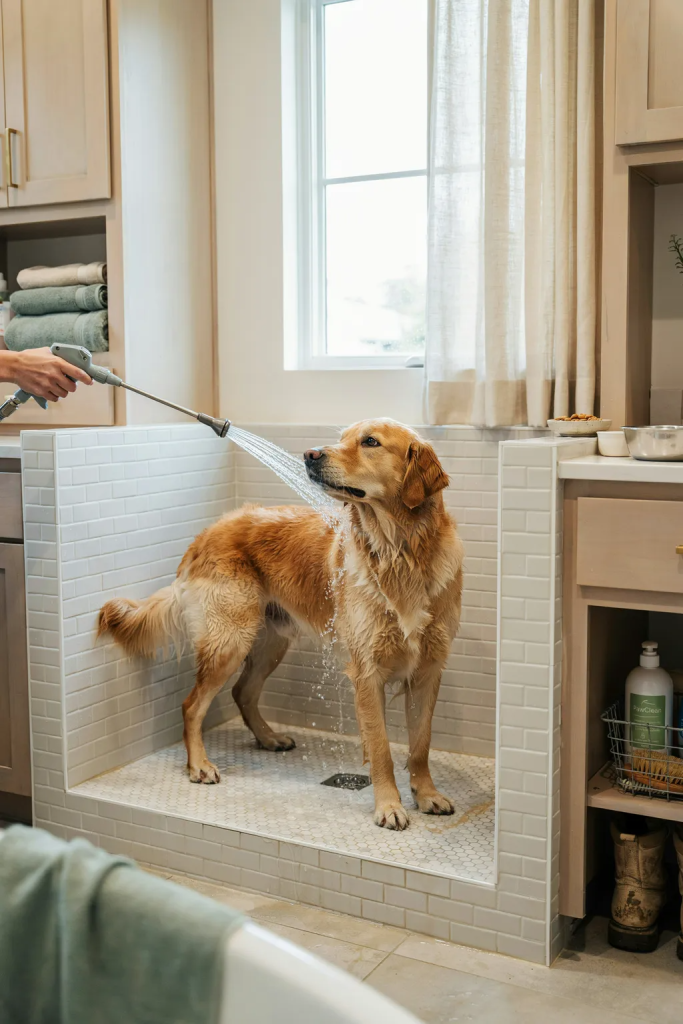
If I had to choose one location for a dog wash station, the mudroom would be near the top of my list. It naturally acts as a transition area between outdoors and indoors, making cleanup much easier.
When my dog comes inside after playing in the yard, I can wash away dirt before it reaches carpets and furniture. This simple setup can save a surprising amount of cleaning time each week.
Why It Works Well
- Keeps mud away from living spaces.
- Convenient access to water and storage.
- Ideal for active dogs that spend time outdoors.
- Makes cleanup part of the arrival routine.
Pro Tip
Install textured tile flooring and a handheld sprayer. These two upgrades improve safety and make rinsing much faster.
2. Outdoor Dog Shower Station
For dogs that seem determined to find every muddy puddle in the neighborhood, an outdoor shower station can be a lifesaver.
I especially like this option during warmer months because it prevents wet fur and muddy water from traveling through the house. A basic setup can be created with a mounted showerhead, hose connection, and a drain-friendly surface.
Benefits
- Keeps mess outside.
- Quick cleanup after walks and hikes.
- Works great during summer.
- Easy and affordable to install.
According to pet grooming professionals, removing mud and debris immediately after outdoor activities can help reduce skin irritation and matting in some breeds.
3. Built-In Garage Dog Wash
The garage is one of the most practical locations for a dog washing station. It offers enough space for larger breeds and can handle water splashes without causing household disruption.
I like garage setups because they can accommodate larger tubs, grooming tables, and drying equipment all in one place.
Advantages
- Excellent for large dogs.
- Easy floor cleanup.
- Plenty of room for supplies.
- Convenient year-round access.
Adding wall hooks and waterproof storage bins helps keep everything organized and within reach.
4. Laundry Room Wash Zone
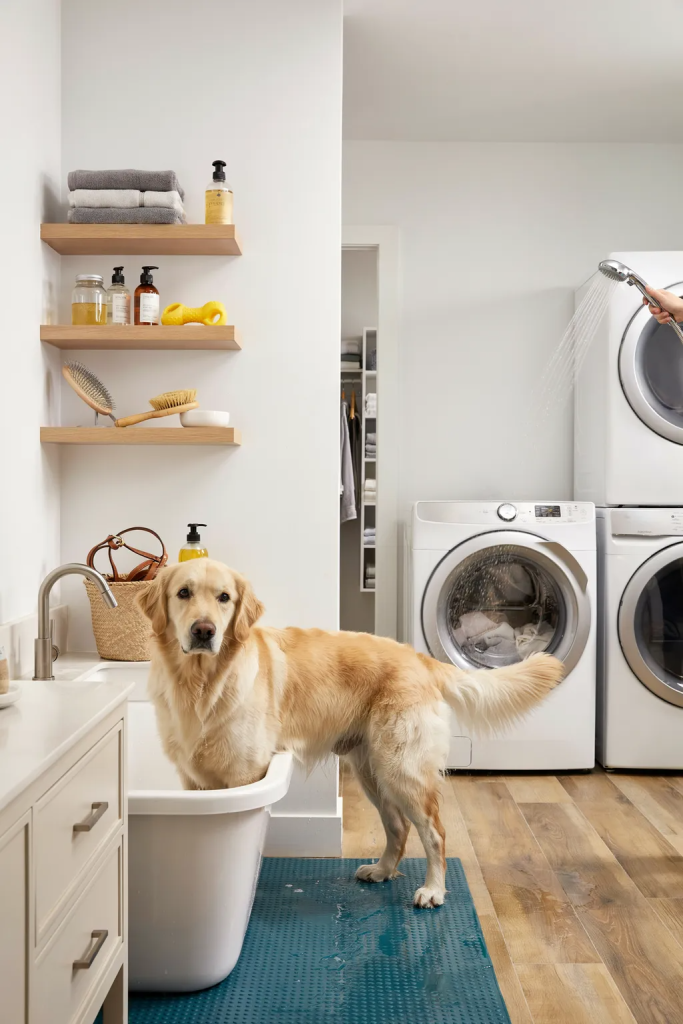
A laundry room already has plumbing, drainage, and water access, which makes it a logical place for a dog wash area.
I’ve found that combining pet care and laundry tasks in one space can make household routines more efficient. Towels, shampoos, and cleaning supplies are usually already nearby.
Why I Like It
- Indoor bathing throughout the year.
- Existing water connections.
- Built-in storage opportunities.
- Easy cleanup after baths.
A utility sink works well for smaller breeds, while a custom basin can accommodate medium-sized dogs.
5. Under-the-Stairs Dog Shower
Unused space beneath a staircase can become a surprisingly functional dog washing station.
I’ve seen homeowners transform these overlooked areas into stylish pet care zones that blend perfectly with the home’s design.
What You’ll Need
- Waterproof wall surfaces.
- Proper drainage.
- Compact shower fixture.
- Moisture-resistant flooring.
This approach is ideal for maximizing every square foot of available space.
6. Portable Dog Washing Station
Not everyone wants to renovate their home, and honestly, that’s completely understandable.
A portable dog washing station can provide many of the same benefits without requiring permanent construction. These options work especially well in apartments, rental properties, and smaller homes.
Why They’re Popular
- Budget-friendly.
- Easy to store.
- Portable and lightweight.
- Suitable for small and medium dogs.
Some foldable dog tubs can be stored in closets or garages when not in use.
7. Walk-In Dog Shower

Large dogs can be difficult to lift into traditional tubs. That’s why walk-in dog showers have become increasingly popular.
I appreciate this design because it reduces physical strain while giving dogs enough room to move comfortably during washing.
Key Features
- Low-entry access.
- Spacious bathing area.
- Modern appearance.
- Easier handling of large breeds.
Pairing the shower with slip-resistant flooring can improve safety and confidence for older dogs.
8. Backyard Grooming Corner
A backyard grooming corner combines bathing and basic grooming in one convenient location.
I like this setup because it allows brushing, drying, and washing to happen outdoors where cleanup is simple.
Useful Additions
- Storage hooks.
- Waterproof bins.
- Shade cover.
- Raised platform.
Creating a dedicated grooming space can make regular coat maintenance much easier throughout the year.
9. Bathtub Divider for Dogs
Sometimes the easiest solution is improving what you already have.
A bathtub divider reduces the amount of space a dog occupies during bathing. This can help smaller dogs feel more secure and prevent excessive movement.
Helpful Accessories
- Handheld shower wand.
- Non-slip bath mat.
- Grooming restraint if needed.
- Waterproof storage shelf.
This option requires minimal investment while improving bath time efficiency.
10. Hidden Pull-Out Dog Bath Drawer
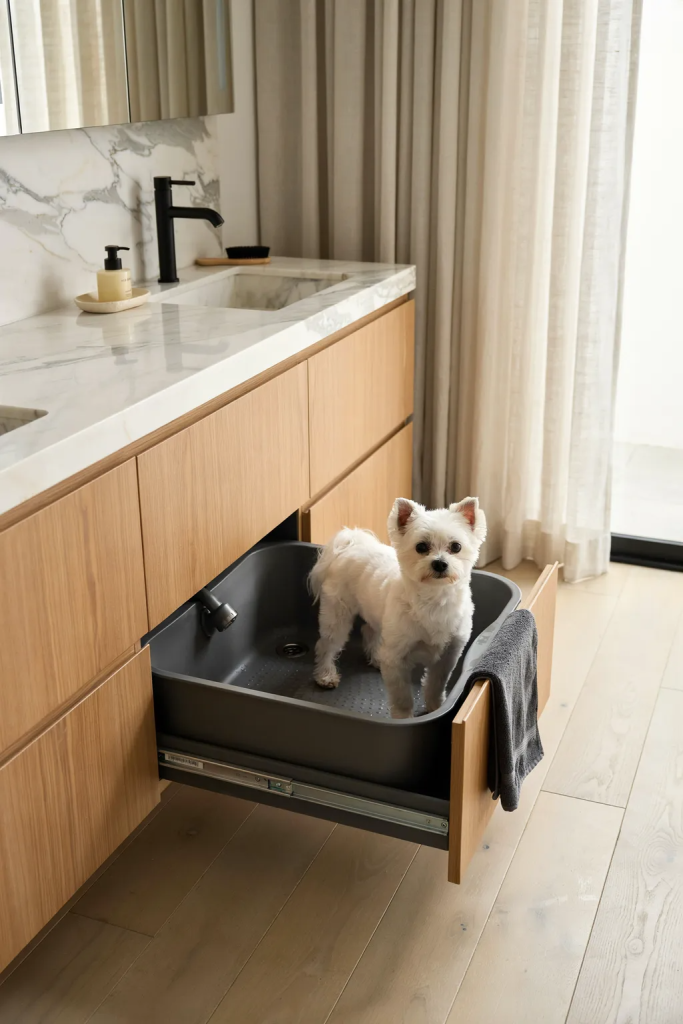
Modern homes continue to introduce creative space-saving solutions, and hidden dog bath drawers are one of the most innovative ideas I’ve seen.
These compact systems slide out when needed and remain concealed the rest of the time.
Why Homeowners Love Them
- Saves floor space.
- Maintains clean design aesthetics.
- Convenient for small breeds.
- Easy to clean after use.
They’re especially useful in homes where every inch of space matters.
11. DIY Pallet Dog Wash
For homeowners who enjoy DIY projects, a pallet-based dog wash station can be both affordable and rewarding.
Using treated wood, waterproof finishes, and basic plumbing components, it’s possible to build a practical bathing area without spending a fortune.
Benefits
- Low construction costs.
- Customizable design.
- Rustic appearance.
- Great weekend project.
Proper sealing is important to help the structure withstand moisture over time.
12. Raised Dog Wash Tub
After years of bending over during baths, I can confidently say that raised tubs make a noticeable difference.
Keeping your dog at a comfortable working height reduces physical strain and improves control during washing.
Why They’re Worth Considering
- Easier on the back and knees.
- Better access while grooming.
- Faster washing process.
- More comfortable for owners.
This design is especially helpful for senior pet owners and professional groomers.
13. Luxury Dog Spa Zone

For pet owners who want the ultimate bathing experience, a luxury dog spa setup offers premium comfort and convenience.
These spaces often include custom tile work, drying systems, built-in storage, and advanced water controls.
Premium Features
- Temperature-controlled water.
- Integrated drying stations.
- High-quality waterproof finishes.
- Professional grooming functionality.
While the initial investment can be higher, frequent groomer visits may become less necessary over time.
Design Tips for a Smart Dog Washing Area
No matter which design you choose, certain features can dramatically improve functionality.
Use Waterproof Materials
Moisture-resistant surfaces such as tile, sealed concrete, and waterproof vinyl tend to last longer and require less maintenance.
Create Accessible Storage
Keeping shampoos, brushes, towels, and grooming tools nearby makes bath time more efficient.
Prioritize Safety
Non-slip flooring is one of the most important features in any dog washing area. Slippery surfaces can increase stress and injury risk.
Plan Effective Drainage
Proper drainage prevents standing water, unpleasant odors, and long-term moisture problems.
Focus on Comfort
Good lighting, warm water, and a calm environment can help many dogs remain relaxed during bathing sessions.
Dog Wash Essentials You’ll Actually Use

Over the years, I’ve learned that having the right tools can make a bigger difference than having the fanciest setup.
Handheld Sprayer
Provides better control and speeds up rinsing.
Gentle Dog Shampoo
Look for formulas designed specifically for dogs. Oatmeal-based products are commonly recommended for sensitive skin.
Quick-Dry Towels
Highly absorbent towels reduce drying time and help limit wet dog odor.
Detangling Brush
Especially important for long-haired and double-coated breeds.
Training Treats
Positive reinforcement can improve cooperation and reduce bath-time stress.
Personal Tip: Train Early and Keep It Fun
One lesson I’ve learned is that early exposure makes a huge difference. Puppies that experience regular, positive bath routines often adapt much faster than dogs introduced later.
I try to keep sessions short, use plenty of praise, and reward calm behavior with treats. Even dogs that initially dislike baths can become much more comfortable when the experience remains predictable and positive.
Patience usually works far better than force.
Final Thoughts

Creating a dog washing area isn’t about building something expensive. It’s about making life easier for both you and your dog.
The best setup depends on your available space, your dog’s size, and your daily routine. For some owners, a simple outdoor rinse station is enough. Others may benefit from a dedicated indoor wash zone or raised grooming tub.
What matters most is creating a safe, comfortable space that simplifies bath time and helps keep your home cleaner. Once you find a setup that works, you’ll probably wonder how you managed without it.
FAQ,s
What is the best location for a dog washing station?
Mudrooms, garages, and laundry rooms are among the most practical locations because they provide easy access to water, drainage, and cleanup areas.
How much space do I need for a dog wash area?
A compact station can fit in as little as 3–4 square feet, while larger walk-in showers may require significantly more room.
Are outdoor dog washing stations a good idea?
Yes. Outdoor stations are excellent for active dogs that frequently get muddy and can help keep indoor areas cleaner.
What flooring works best in a dog wash area?
Non-slip tile, textured concrete, and waterproof vinyl are popular choices because they provide traction and resist water damage.
Is a raised dog wash tub worth it?
For many dog owners, especially those with large dogs or back problems, a raised tub can make bathing safer and more comfortable.
How can I make bath time less stressful for my dog?
Use warm water, positive reinforcement, treats, calm handling, and consistent routines to build a more positive association with bathing.
Do I need professional plumbing for a dog wash station?
Simple portable and outdoor setups often don’t require major plumbing work, but permanent indoor stations usually benefit from professional installation.
Can small homes have a dog washing area?
Absolutely. Portable tubs, bathtub upgrades, and compact laundry room stations work well in smaller homes and apartments.
What dog shampoo is best for regular bathing?
Gentle dog-specific shampoos with ingredients like oatmeal or aloe are commonly recommended for routine use.
How often should I bathe my dog?
Most dogs benefit from bathing every 4–8 weeks, though breed, coat type, lifestyle, and veterinary recommendations can affect the schedule.


