
Dog Sitting Guide: How to Get Started and Build Trust
When I first started dog sitting, I honestly thought it would just be about feeding and walking a dog. I quickly learned it’s much more about understanding behavior, building trust, and creating a calm environment where a dog feels safe without its owner.
Dog sitting is not just a casual side task—it’s a responsibility that requires patience, observation, and consistency. Every dog reacts differently to a new person, so the real skill is learning how to adapt.
In this guide, I’ll walk you through how I got started with dog sitting, what actually works in real situations, and how I learned to build trust with dogs that were complete strangers at first.
Quick Summary & Key Takeaways
Consistency is more powerful than affection alone
Dog sitting is about trust-building, not just care tasks
First impressions matter more than people think
Dogs need time, calm energy, and predictable routines
Reading body language is essential for safety and bonding
Small actions like tone of voice and posture make a big difference
Mistakes early on can slow down trust-building
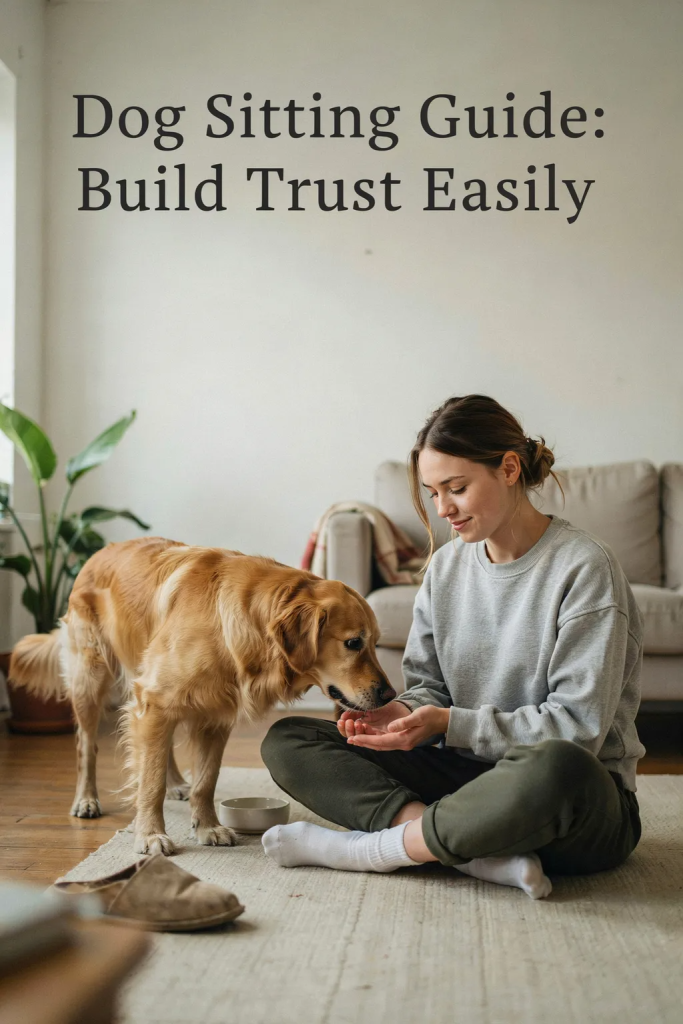
Why Dog Sitting Is More Than Just Pet Care
When I started, I assumed dog sitting meant feeding a dog, taking it for walks, and maybe playing for a bit. But real experience taught me that dogs don’t instantly trust a stranger just because they’re being fed.
Dogs rely heavily on routine and familiar scents. When a sitter enters their space, everything changes for them. Some dogs hide, others bark, and a few just observe quietly from a distance.
What I realized is that dog sitting is really about becoming a temporary part of their world without disrupting it too much
1. Know What Dog Sitting Actually Involves

Dog sitting isn’t only about cuddling. You’ll likely feed, walk, clean up, and sometimes give medicine. It might mean staying overnight, visiting for short breaks, or even hosting dogs at your place. Your role is to keep the dog’s routine steady so they stay happy while their owner is away.
2. Build Some Experience First

People won’t hand over their pets without trust. A good start is helping friends, neighbors, or family with their dogs. Volunteering at a shelter also adds experience. Keep a record of what kinds of dogs you’ve handled, including any special needs. That way, owners can see you’ve managed everything from playful puppies to older dogs needing extra care.
3. Set Yourself Up on Trusted Platforms
Once you have some practice, sign up on sites like Rover, Wag!, or Care.com. These platforms connect sitters with dog owners. A strong profile should share your background, availability, and clear photos of you with dogs. Most platforms check your information for safety, which helps owners feel more comfortable.
4. Set Your Rates (Without Underselling Yourself)

Your pay depends on where you live, what services you offer, and how many pets are involved. In the beginning, you might charge less to get reviews, but you should never work for free. With good feedback, you can raise your rates for walks, daycare, or overnight stays.
5. Meet & Greet Like a Pro

Before the job, arrange to meet the dog and owner. This visit helps everyone feel at ease. Use the time to ask about feeding, walking routines, quirks, and health needs. Taking a short walk together often helps the dog warm up. If it doesn’t feel like a good match, it’s better to step back.

6. Keep It Professional (and Pup-Focused)

Treat every job seriously. Show up on time, give updates with photos, and follow the owner’s instructions. Keep their home tidy if you’re staying overnight. If anything unusual happens, let the owner know right away. Reliability matters more than perfection.
7. Collect Reviews Like Treats in a Kong
Reviews make a big difference. After finishing a job, politely ask for feedback. A strong review builds trust and helps you book more work in the future. Over time, these ratings become your best advertisement.
Final Thoughts
Dog sitting has taught me that trust is not something you demand—it’s something you earn quietly over time. Every dog is different, but they all respond to calm energy, consistency, and respect.
If you’re just starting out, don’t focus on being perfect. Focus on being predictable, patient, and observant. That alone will take you further than any fancy technique.
FAQs
Conclusion of Dog Sitting
Dog sitting can turn a love for animals into steady work. Start small, build trust, and treat every dog like they’re your own. With experience and good reviews, you’ll soon become the sitter pet owners rely on.