Pro Tips for Planning an Adorable Dog Photoshoot Design
Written By:
I have learned that taking beautiful photos of my dog is not about having an expensive camera or a perfect studio. Most of the best pictures come from choosing the right moment, understanding my dog’s personality, and creating a simple setup where my pup feels comfortable.
From outdoor adventures to cozy indoor portraits, I have found that small details like natural lighting, camera angle, background colors, and even the timing of the shoot can completely change the final result. A relaxed dog with the right environment will always create a better photo than a forced pose.
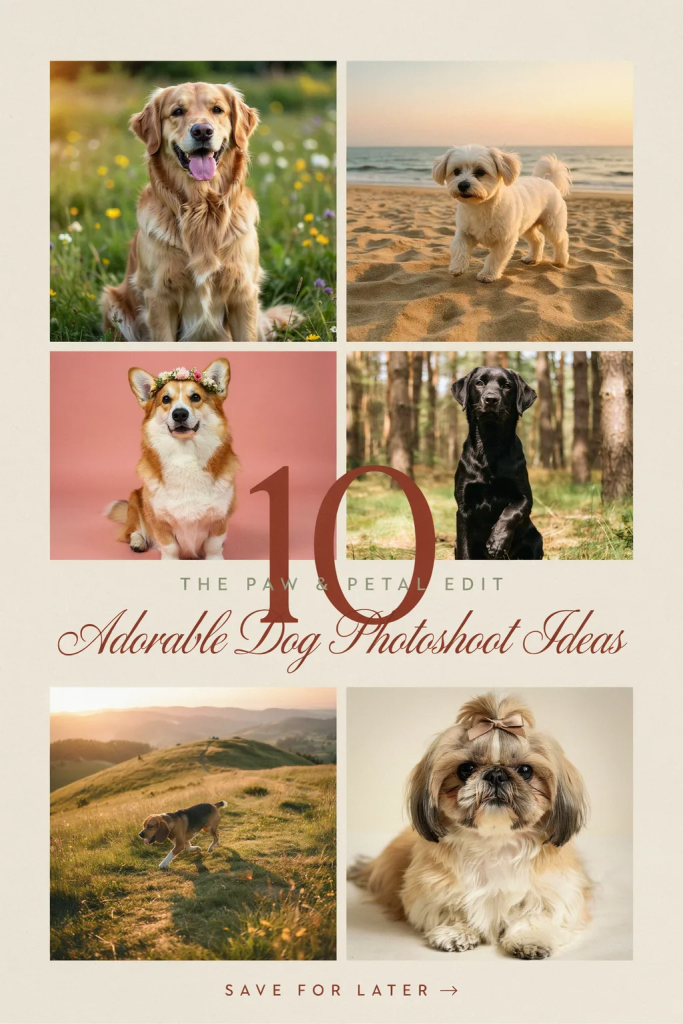
In this guide, I am sharing 10 adorable dog photoshoot ideas that can help you capture professional-looking pictures at home, in your backyard, or during outdoor trips. I will cover creative themes, easy prop ideas, lighting techniques, and practical tips that make the process easier for both you and your dog.
Whether you want a seasonal photo, a funny personality shot, or a frame-worthy portrait for your home, these ideas can help you create pictures that truly show your dog’s character.
Key Takeaways
- I always focus on my dog’s comfort first because relaxed pets create the most natural photos.
- Good lighting, especially early morning or golden hour, can make simple photos look professional.
- Shooting at my dog’s eye level creates a stronger connection and makes portraits feel more personal.
- Simple backgrounds and carefully chosen props usually work better than complicated setups.
- A short walk before the shoot helps my dog stay calm and focused during photos.
1: The Vitruvian Dog Photoshoot — A Creative Art-Inspired Portrait Idea
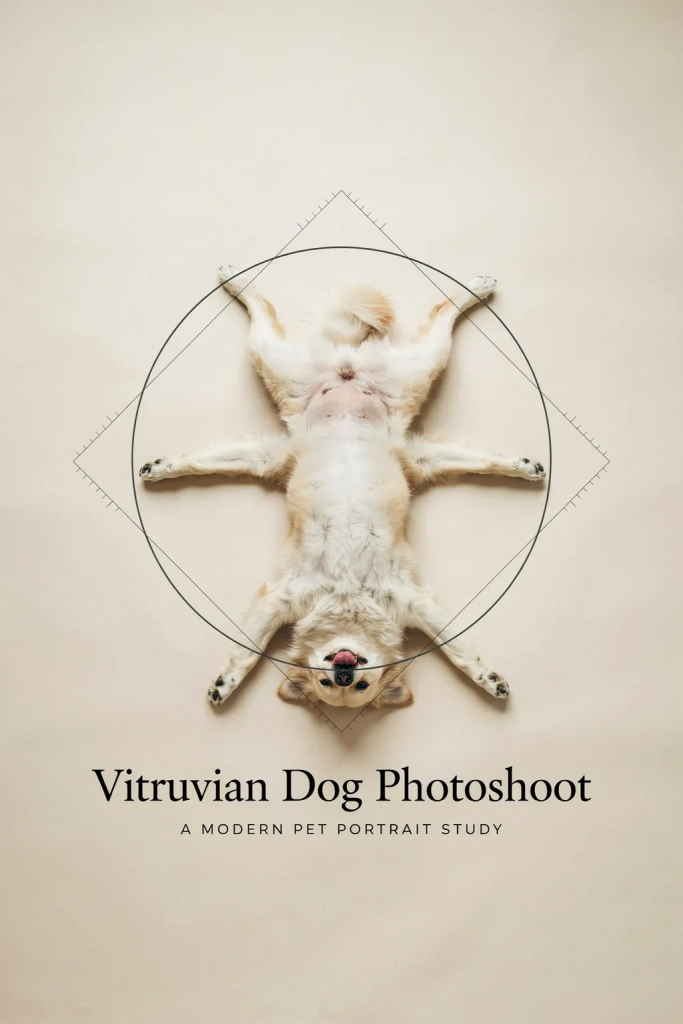
One of my favorite ways to create a unique dog photo is by turning my pup’s natural behavior into a creative concept. When dogs lie on their backs with their legs stretched out, they often create a funny and perfectly balanced pose that works beautifully for an art-inspired photoshoot.
This idea takes inspiration from Leonardo da Vinci’s famous Vitruvian Man drawing and transforms it into a playful dog portrait. The dog is photographed from directly above while lying on a simple, neutral background. A circle and square design can then be added during editing to create the classic artistic effect.
I do not need a complicated studio for this setup. A plain light-colored blanket, large paper backdrop, or clean floor can work well. The most important part is getting a straight overhead angle, which means using a stable step stool or ladder while keeping safety in mind.
The easiest way I have found to encourage this pose is by starting with belly rubs or relaxing playtime. Many dogs naturally stretch their legs and stay comfortable when they feel calm.
For the best result, I recommend taking this photo after a walk or active play session. A slightly tired dog is usually more willing to stay still, which makes capturing the perfect overhead shot much easier.
Photography Tip: Use editing apps like Canva or Photoshop to add simple geometric lines after taking the photo. Keeping the design minimal helps your dog remain the main focus.
2: The “Double Trouble” Duo Shot — Capturing Two Dogs’ Real Personalities
Photographing two dogs together can feel challenging because each dog has a different personality and attention span. However, some of the most memorable photos happen when I stop trying to make everything perfectly posed and capture their natural interaction instead.
A two-dog portrait works best when it shows their relationship. One dog may look directly at the camera while the other looks away, moves, or reacts to a sound. Those small differences often make the picture feel more alive and authentic.
For this type of photoshoot, I prefer using a simple background that does not distract from the dogs. Neutral shades like warm gray, beige, or soft brown help different coat colors stand out while keeping the photo clean.
A seamless backdrop can create a professional studio appearance, but I can also recreate a similar effect using a large blanket, curtain, or plain wall with matching flooring. The goal is to remove visual distractions.
The camera angle also makes a big difference. Shooting from a lower position, around your dog’s chest or eye level, creates a more powerful portrait and makes the front dog appear closer and more expressive.
When photographing two dogs, I usually ask another person to stand behind me with a treat or toy. This keeps their attention in the same direction and creates those natural alert expressions without forcing a pose.
Photography Tip: Do not wait for both dogs to look perfectly still at the same time. The unexpected moments often become the photos you love the most.
3: Blue-Eyed Merle in the Fall Forest — The Moody Woodland Photoshoot
I have always noticed that some of the most beautiful dog photos happen when I stop trying to control every detail. A forest walk during autumn can naturally create a stunning background because fallen leaves, soft sunlight, and earthy colors already provide everything needed for a memorable portrait.
This type of photoshoot works especially well for dogs with unique coat patterns, such as blue merle or multi-colored fur. The contrast between warm autumn leaves and cool eye colors can make your dog’s features stand out without needing extra props.
For this setup, I focus on finding a location with natural textures. A forest path, leaf-covered ground, tree trunks, and small plants can add depth to the image. The goal is to make the environment feel like part of the story while keeping my dog as the main subject.
Lighting plays a major role in outdoor photography. I prefer shooting during the late afternoon when sunlight becomes softer and warmer. This period, often called golden hour, usually creates gentle highlights on fur without producing harsh shadows.
A shallow depth of field can also improve the final result. If using a camera, settings around f/1.8 to f/2.8 can help blur the background and keep attention on your dog’s face. Phone users can create a similar effect with portrait mode.
I recommend getting down to your dog’s eye level instead of taking photos from above. This simple change makes the image feel more personal because viewers connect directly with your dog’s expression.
Photography Tip: Do not worry if your dog gets a little dirty during an outdoor shoot. Wet fur, muddy paws, and natural surroundings can add texture and make the photo feel more authentic.
4: The “Dressed for the Weather” Winter Wonderland Dog Photoshoot
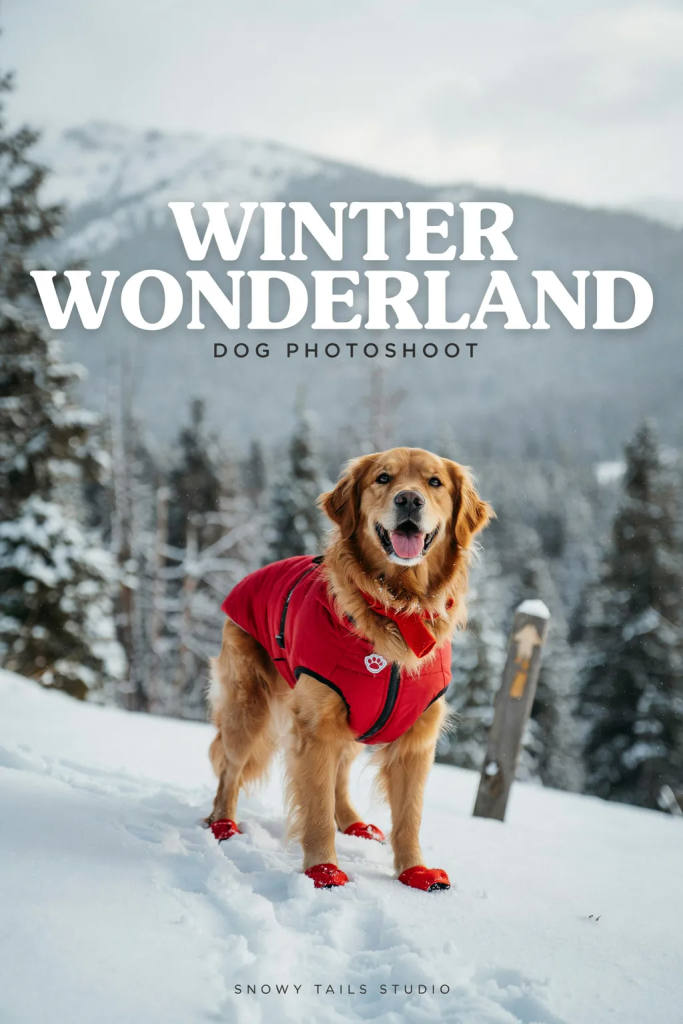
Winter gives me one of the best opportunities to create eye-catching dog photos because snowy backgrounds naturally create strong contrast. A colorful jacket, simple accessories, and soft winter lighting can turn an everyday walk into a beautiful photoshoot.
A bright dog coat, especially shades like red, pink, or orange, stands out beautifully against snow and gray winter landscapes. The contrast helps my dog become the clear focus of the picture instead of blending into the background.
For this type of shoot, I like using practical accessories rather than adding decorations just for appearance. A weatherproof jacket and protective boots not only look good but also keep my dog comfortable during colder outdoor sessions.
Dog boots are especially useful when walking on icy surfaces or areas treated with salt. Protecting paws allows my dog to spend more time outside, which gives me more chances to capture the right moment.
The location does not need to be complicated. A snowy trail, raised pathway, park area, or rocky viewpoint can work well. What matters most is finding a spot where my dog can stand safely and where the background does not look too busy.
Winter lighting is often softer than summer sunlight, which helps prevent strong shadows and squinting. Overcast days can actually create beautiful, evenly lit portraits.
I always try to shoot from my dog’s eye level. Getting low in the snow may not feel comfortable, but this angle makes the final photo look more dramatic and helps my dog appear confident.
Photography Tip: Let your dog explore the area before taking photos. A few minutes of walking and sniffing helps reduce nervous energy and creates more natural expressions.
5: The Romantic Floral Studio Shoot — Valentine’s Day Style Photos
I have found that floral setups can make dog photos feel special without requiring complicated decorations. A few carefully chosen colors, comfortable props, and soft lighting can create a portrait that looks professionally planned.
This style works well for special occasions like Valentine’s Day, birthdays, or simply creating a beautiful memory of your dog. The key is choosing decorations that support your dog instead of distracting from them.
For a romantic floral theme, I like using soft colors such as blush pink, cream, red, and burgundy. These shades create a warm background while allowing different coat colors to stand out.
A simple chair, blanket, or small decorated corner can become the main setup. Large artificial flowers, paper flowers, or fresh blooms placed around the area can add depth without making the scene overwhelming.
I prefer keeping accessories minimal. A small flower collar, ribbon, or matching bandana is often enough because too many items can make dogs uncomfortable and take attention away from their expression.
When taking the photo, I position myself at my dog’s eye level. This captures their personality better and creates a stronger emotional connection in the final image.
Soft window light works extremely well for indoor floral portraits. It creates a natural glow and avoids the harsh shadows that direct flash can produce.
Photography Tip: Keep treats near the camera lens. A small reward helps your dog look toward the camera naturally while keeping their expression relaxed.
6: The Tuxedo & Rose Valentine’s Day Photoshoot — A Classic Formal Portrait
I have noticed that simple styling often creates the most impressive dog portraits. A formal outfit, one meaningful accessory, and good lighting can completely change the mood of a photo without making the setup stressful for my dog.
This photoshoot idea focuses on creating a classy and charming look by using a tuxedo-style bandana or bow tie with a single flower. The combination gives the portrait a special occasion feel while still allowing my dog’s personality to remain the center of attention.
I do not need expensive pet clothing for this setup. A simple tuxedo-print bandana, bow tie collar, or small formal accessory can create the same effect. The goal is not to dress my dog heavily but to add one detail that makes the photo memorable.
Adding a fresh flower, such as a rose or carnation, can bring a pop of color to the image. I always make sure any accessory is comfortable and safely placed so my dog can move naturally during the shoot.
The background can stay very simple. A plain wall, soft curtain, or clean indoor space works well because the formal styling becomes the main focus. A heart-shaped light effect or soft shadow can also add a romantic touch without requiring professional equipment.
Natural window light is usually enough for this type of portrait. I prefer shooting when sunlight enters from the side because it creates gentle highlights and adds depth to my dog’s face.
Using a raised surface like a stable pet cot or bench can make positioning easier, but safety should always come first. I never leave my dog unattended on an elevated surface.
Photography Tip: Take several quick shots instead of waiting for a perfect pose. Dogs often show their best expressions between planned moments.
7: The Seaside “Nose Boop” Shot — Capturing Genuine Connection’
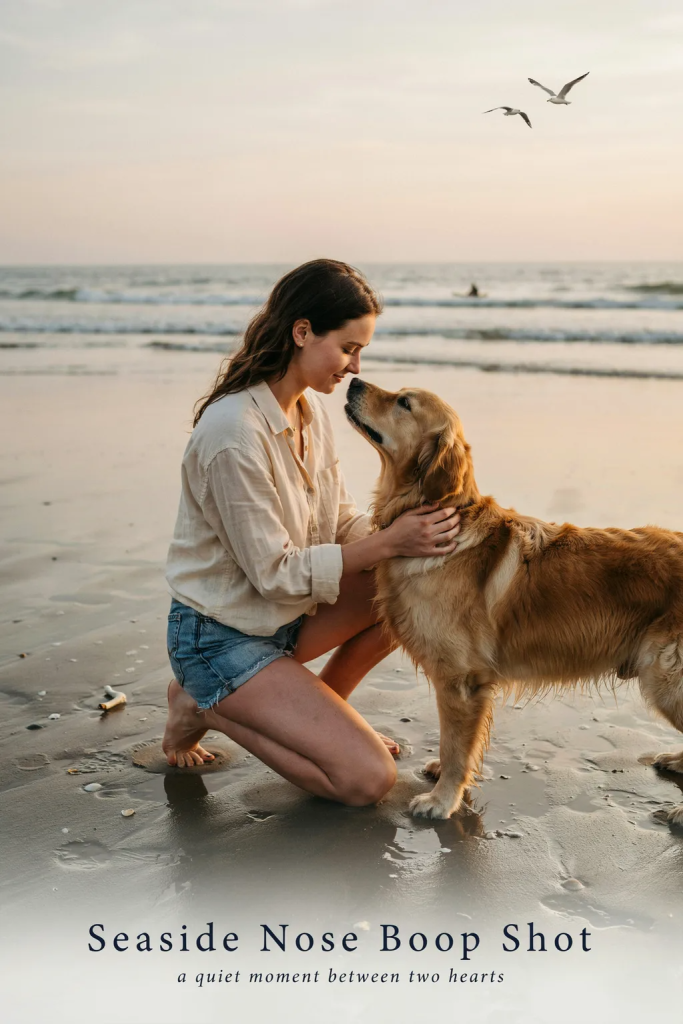
Some of my favorite dog photos are not traditional portraits. They are the moments that show the bond between me and my dog. A simple nose boop, face-to-face greeting, or excited greeting can create a photo full of emotion.
This seaside photoshoot idea works because it combines natural interaction with a beautiful background. The focus is not only on the dog but also on the relationship between the dog and owner.
A beach, waterfront path, or coastal walkway provides a naturally appealing setting. The combination of blue water, warm sunlight, and open space creates a clean background that helps the subjects stand out.
For the best lighting, I prefer shooting close to sunset. The softer golden light adds warmth to my dog’s coat and creates a more emotional atmosphere compared to harsh midday sunlight.
The location setup does not need to be complicated. A low wall, promenade edge, or safe raised surface can help bring my dog closer to my face for that nose-touching moment.
The most important part is keeping the interaction natural. Instead of forcing my dog to stay still, I let them approach me, play, and react normally. Those genuine expressions usually create the strongest photos.
I always shoot from my dog’s eye level. This angle makes the connection feel more personal and helps viewers feel like they are part of the moment.
Photography Tip: Keep your camera ready after the main pose. Some of the best emotional shots happen immediately before or after the planned picture.
8: Golden Hour Forest Lay-Down Shot — A Warm Natural Portrait
I have learned that sometimes the simplest dog photos become the ones I treasure most. A relaxed dog lying outdoors during golden hour can create a portrait that looks artistic without needing props or complicated preparation.
This idea works especially well in forests, parks, and open areas with warm seasonal colors. Fallen leaves, grass, and trees naturally create layers in the background and help the photo feel deeper.
The ideal pose is simple. I usually let my dog lie down comfortably with their front paws forward and head raised. A small sound, toy, or treat can help create that curious expression that makes the photo feel alive.
Golden hour is one of the biggest advantages for outdoor dog photography. The sunlight during the first hour after sunrise or before sunset is softer and warmer, which helps bring out details in fur.
If using a camera, a portrait lens such as a 50mm or 85mm with a wider aperture can create a beautiful blurred background. For phone photography, portrait mode can achieve a similar effect.
The angle matters just as much as the location. I always move down to my dog’s level instead of photographing from above. This creates a stronger connection and makes the dog appear more confident.
Photography Tip: Bring your dog’s favorite toy or a small sound-making item. A quick reaction can create a natural head tilt that makes the portrait more engaging.
9: Spring Blossom Dog Photoshoot — Creating a Floral Outdoor Portrait
Spring is one of my favorite seasons for dog photography because nature provides a beautiful background without requiring extra decoration. Flowering trees, fresh greenery, and soft sunlight can make a simple walk feel like a professional photoshoot.
A blooming magnolia, cherry tree, or garden area can create a colorful backdrop for your dog’s portrait. The combination of natural flowers and your dog’s coat color often creates a balanced and visually appealing image.
I pay close attention to color combinations when planning this type of photo. Matching accessories, such as a pink or pastel harness, can help connect the dog with the surrounding flowers and make the image feel more intentional.
The timing of the shoot matters because flowers look their best when they are fully open. Early morning light is often softer and can highlight the details of petals without creating strong shadows.
Instead of placing my dog directly in the center every time, I like experimenting with slightly angled poses. Turning my dog around 45 degrees can create a more natural profile while allowing the flowers to frame the portrait.
As always, I focus on eye-level photography. Getting lower helps capture my dog’s expression and gives the image a professional portrait style.
Photography Tip: Check the location before bringing your dog. Popular flowering areas can become crowded, and a quieter spot usually creates a calmer photo session.
10: Blue Eyes, Gold Coat, and Total Magic — The Natural Light Close-Up Shot
I have found that some of the most powerful dog portraits are the simplest ones. A close-up photo focusing on my dog’s eyes, expression, and natural features can create a much stronger connection than a photo filled with unnecessary props.
This style works especially well for dogs with unique eyes, colorful coats, or interesting facial markings. The contrast between warm fur tones and eye color can make the portrait feel almost like a professional magazine photograph.
The best part about this setup is that I do not need a complicated location. A grassy area, backyard, park, or open outdoor space with good natural light can work perfectly.
The biggest factor is timing. I prefer shooting during the last 30 to 60 minutes before sunset because the softer sunlight creates a warm glow on fur while reducing harsh shadows.
Getting close to my dog’s face helps capture important details like eye color, fur texture, and small expressions. These small features are often what make a photo feel personal and memorable.
I always lower myself to my dog’s eye level, and sometimes even place my camera slightly below their face. This angle creates a confident and engaging portrait instead of the common overhead phone photo.
For phone users, portrait mode can help separate the background and keep attention on the dog’s face. For camera users, a wider aperture can create a soft background blur.
Photography Tip: Focus on the eyes first. Sharp, expressive eyes are usually the strongest part of any dog portrait.
The Golden Hour Trick That Makes Every Dog Photo Look Better
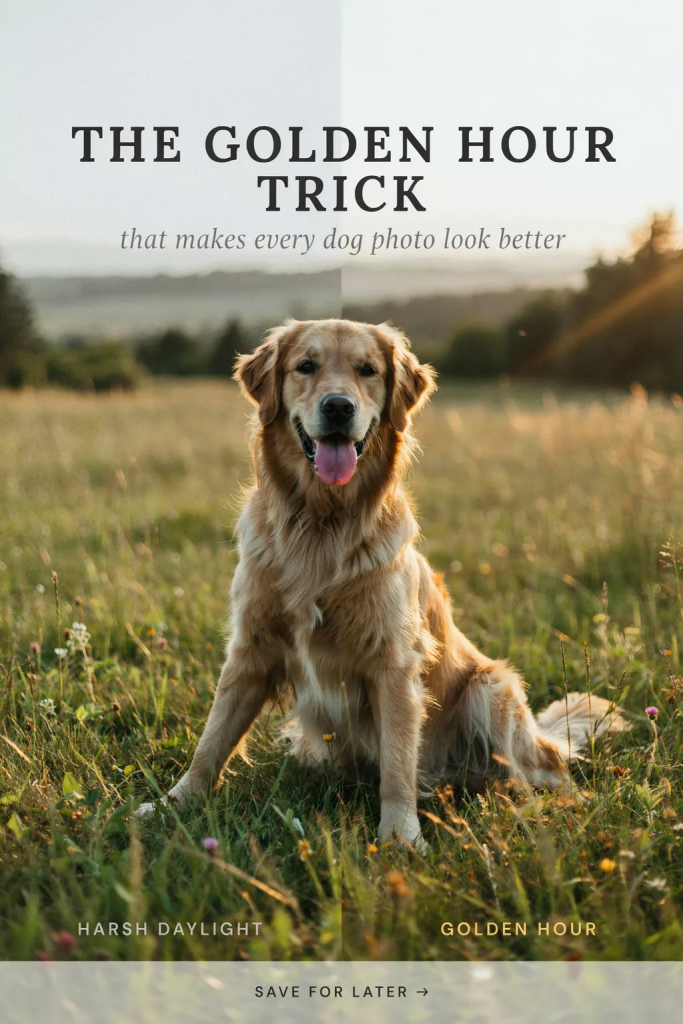
I have learned that lighting can completely change the quality of a dog photo. Many people think they need a better camera, but the time of day often matters more than expensive equipment.
Golden hour, which happens shortly after sunrise and before sunset, creates soft natural light that makes fur colors look richer and more detailed. During midday, strong sunlight can create harsh shadows and make dogs squint.
For dogs with golden or cream-colored coats, this lighting is especially helpful because it enhances warm tones instead of washing them out. The same dog can look completely different depending on when the photo is taken.
One mistake I see often is trying to capture photos when a dog has too much energy. A quick walk or play session before the shoot can help my dog relax and stay focused.
A 15–30 minute activity session is usually enough to reduce extra excitement without making my dog too tired. The goal is a calm and happy pet, not an exhausted one.
Camera settings are helpful, but the basics matter more. A clean background, good lighting, and a comfortable dog will usually create better results than complicated equipment.
I also recommend getting down to my dog’s eye level. This simple adjustment creates a more emotional photo because the viewer sees the world from the dog’s perspective.
Photography Tip: Before taking serious photos, spend a few minutes letting your dog explore the location. A comfortable dog is much easier to photograph naturally.
How to Prepare Your Dog Before a Photoshoot
I have realized that preparation makes the biggest difference between a stressful photoshoot and an enjoyable experience. Dogs do not understand the idea of posing for pictures, so creating a relaxed environment is important.
Before the session, I make sure my dog has enough exercise, water, and time to adjust to the location. A rushed dog is usually distracted, while a comfortable dog is more likely to show natural expressions.
Grooming also plays an important role. A clean coat, brushed fur, and trimmed nails can improve the overall appearance of photos. However, I avoid making major grooming changes right before the shoot because some dogs need time to adjust.
I prepare treats, toys, and any accessories before starting. This keeps the session moving and prevents my dog from becoming bored while waiting.
Short sessions usually work better than long ones. Many dogs lose interest after 20–30 minutes, so I prefer taking breaks and ending the shoot while my dog is still enjoying the experience.
The goal is not a perfectly controlled photo. The best images usually capture personality, curiosity, and the unique relationship between me and my dog.
Final Thoughts: Creating Photos That Show Your Dog’s Personality
I have learned that the best dog photos are not always the most perfect ones. The images I value most are the ones that capture my dog’s personality, habits, and little expressions that make them special.
Whether I choose an outdoor adventure, a seasonal theme, or a simple close-up portrait, the most important things remain the same: good lighting, patience, and making my dog feel comfortable.
I do not need expensive equipment or a professional studio to create meaningful photos. A phone camera, natural light, and a little planning can create memories that last for years.
Every dog has a different personality, so I encourage experimenting with different locations, angles, and ideas until finding what feels natural. The goal is not just to take a picture but to capture a moment that represents the bond shared with your dog.
A beautiful dog photoshoot is really about celebrating the little things that make your pet unique.
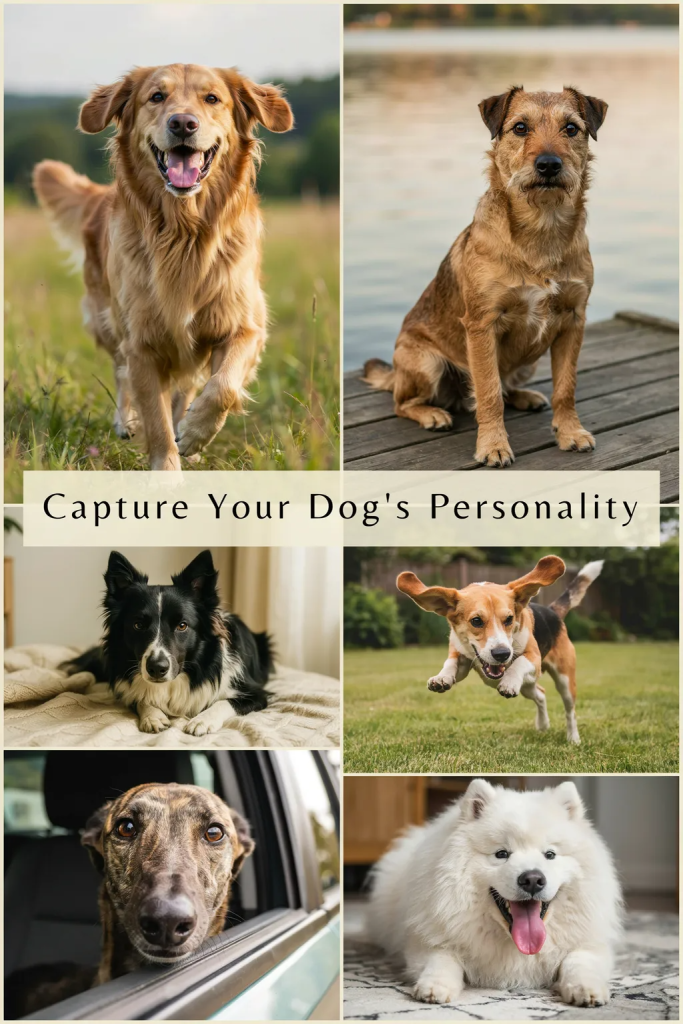
Frequently Asked Questions About Dog Photoshoots
1. How do I prepare my dog for a photoshoot?
I prepare my dog by giving them some exercise before the session, brushing their coat, and bringing their favorite treats or toys. A relaxed dog usually gives more natural expressions and is easier to photograph.
2. What is the best time of day for a dog photoshoot?
The best time for outdoor dog photography is usually golden hour, which is shortly after sunrise or before sunset. The softer light reduces harsh shadows and makes fur colors look warmer and more detailed.
3. Can I take professional-looking dog photos with my phone?
Yes, I can create beautiful dog portraits using a smartphone. Using portrait mode, natural lighting, a clean background, and shooting from my dog’s eye level can make phone photos look much more professional.
4. What camera angle is best for dog photography?
I usually get the best results by photographing my dog at eye level. This angle creates a stronger emotional connection and makes the photo feel more natural compared to shooting from above.
5. How can I make my dog look at the camera?
I use treats, toys, squeaky sounds, or my dog’s name to get their attention. Quick reactions often create better expressions than forcing my dog to hold a pose.
6. What should my dog wear for a photoshoot?
I prefer simple accessories like bandanas, collars, jackets, or small seasonal items. Comfortable clothing that does not restrict movement works best because my dog stays relaxed.
7. How long should a dog photoshoot last?
Most dogs do best with short sessions of around 20–30 minutes. Longer sessions can make dogs tired or distracted, so taking breaks helps keep the experience enjoyable.
8. What background works best for dog photos?
Simple backgrounds usually create the best results. Natural locations like forests, beaches, gardens, or clean indoor spaces help keep attention on my dog instead of distracting details.
9. How do I take action photos of my dog?
I use a fast shutter speed, keep treats or toys nearby, and take multiple photos quickly. Capturing movement works best when my dog is comfortable and having fun.


