
DIY Dog Puzzles: 6 Easy Brain Games to Keep Your Dog Busy and Happy
Written By:

If you’ve ever looked at your dog after a long walk and wondered why they still have enough energy to sprint through the house, you’re not alone. I used to think physical exercise was the answer to every behavior problem. Then I learned something that changed how I entertain my dogs: mental stimulation can be just as important as physical activity.
Dogs were bred to solve problems, track scents, retrieve objects, and work alongside humans. When their brains don’t get enough challenges, that energy often shows up as barking, chewing, digging, or endless zoomies. That’s where DIY dog puzzles and dog enrichment games come in.
The best part is that you don’t need expensive toys. Many of the most effective mental stimulation activities for dogs can be made from items already sitting around your home.
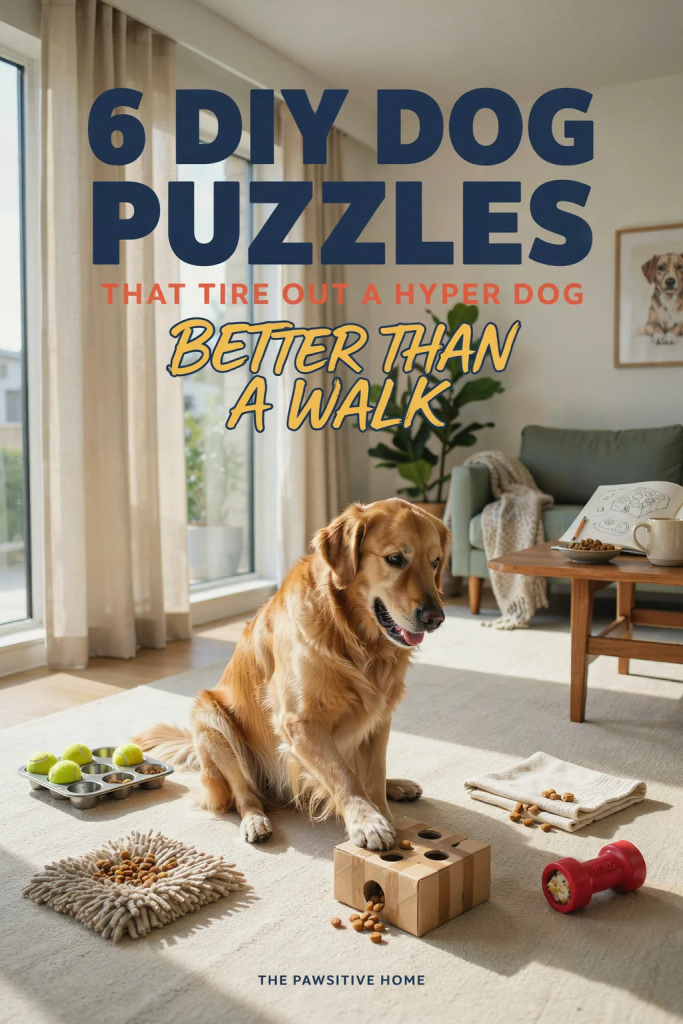
Quick Summary & Key Takeaways
- DIY dog puzzles help reduce boredom and destructive behavior.
- Mental exercise can tire dogs out faster than physical activity alone.
- Most enrichment games can be made using household items.
- Start with easy puzzles before increasing difficulty.
- Always supervise your dog when introducing new puzzles.
- Rotate games regularly to keep them interesting.
- Use part of your dog’s daily meal as puzzle rewards to avoid overfeeding.
#1: Muffin Tin Dog Puzzle — The Treat-Hiding Game That’ll Buy You 20 Minutes of Peace
One of the first dog enrichment games I ever tried was a simple muffin tin puzzle. It took less than five minutes to set up and immediately became a favorite.
What You’ll Need
- Standard muffin tin
- Tennis balls or small dog-safe balls
- Dry kibble or treats
How to Make It
Place treats in some of the muffin cups, then cover every cup with a ball. Your dog must sniff, nudge, and remove the balls to discover which spots contain rewards.
Why It Works
Dogs rely heavily on their sense of smell. This puzzle encourages scent detection, problem-solving, and patience. I especially like using part of my dog’s breakfast instead of extra treats, which turns mealtime into a fun challenge.
Pro Tip
Begin with only a few covered cups if your dog is new to puzzle games. Making it too difficult right away can lead to frustration.
#2: The Tennis Ball Treat Dispenser (Your Dog Will Lose Their Mind Over This One)
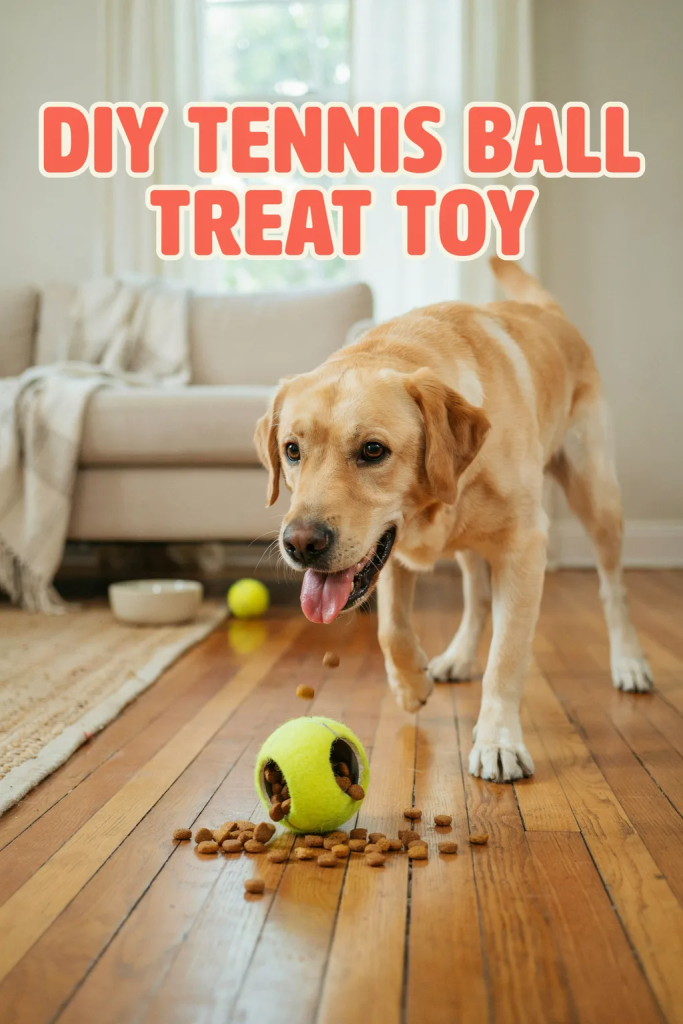
This homemade puzzle is perfect for dogs that enjoy batting toys around the house.
What You’ll Need
- Tennis ball
- Sharp utility knife
- Small treats or kibble
How to Make It
Carefully cut a small slit into the tennis ball. Fill the ball with treats and place it on the floor.
As your dog pushes, rolls, and paws at the ball, treats slowly fall out.
Why It Works
Unlike eating from a bowl in seconds, dogs must work for every reward. The movement keeps them engaged while encouraging persistence and focus.
Common Mistake to Avoid
Many owners make the opening too large. If treats fall out immediately, the challenge disappears. Keep the slit narrow enough that your dog has to work for the reward.
#3: The Hol-ee Roller Sniff Ball — Stuff It With Socks, Treats, and a Whole Fish
If your dog loves using their nose, this enrichment activity can provide surprisingly long-lasting entertainment.
What You’ll Need
- Hol-ee Roller or similar lattice-style ball
- Old socks
- Small treats
- Optional high-value reward such as dried fish
How to Make It
Stuff the ball loosely with socks or fabric strips. Hide treats throughout the layers and leave a few scent clues near the openings.
Your dog must pull, sniff, and investigate to uncover the hidden rewards.
Why It Works
Scent work is one of the most effective forms of mental stimulation for dogs. Research has shown that sniffing activities can help lower stress levels while satisfying natural instincts.
I often use this puzzle on rainy days when outdoor activities aren’t possible.
Pro Tip
Freeze the completed puzzle for an hour before offering it. The challenge lasts much longer.
#4: The Toilet Paper Roll Treat Puzzle (Free & Done in Minutes)
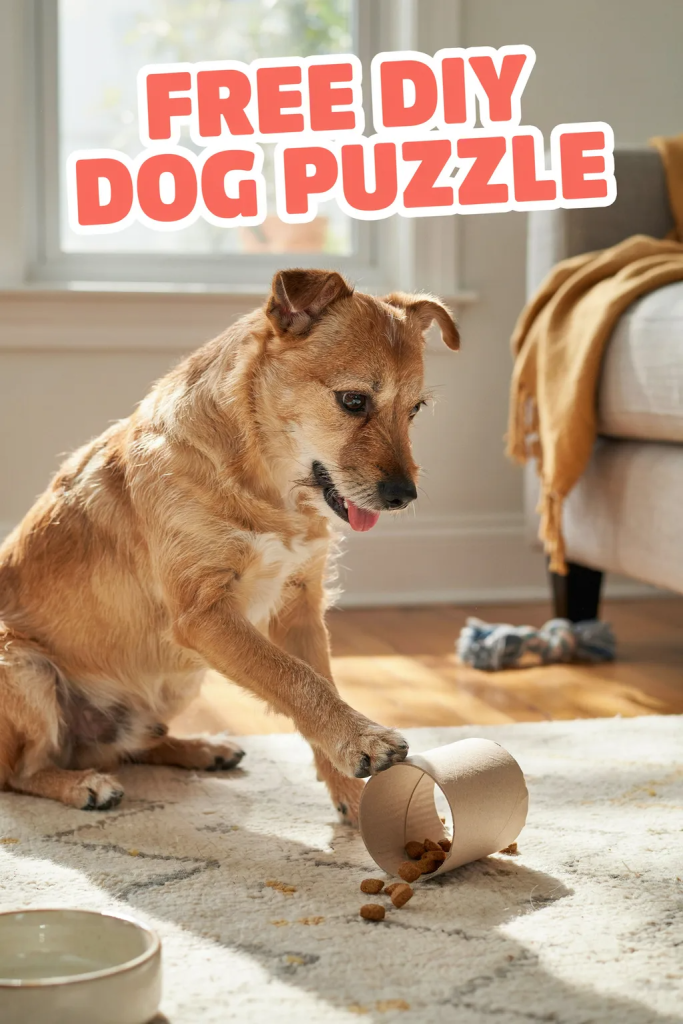
Sometimes the simplest ideas work best.
Whenever I finish a roll of toilet paper, I save the cardboard tube because it makes an excellent beginner puzzle.
What You’ll Need
- Empty toilet paper roll
- Small treats or kibble
How to Make It
Fold one end closed, add treats, and fold the other end shut.
Give the tube to your dog and let them figure out how to access the rewards.
Why It Works
The puzzle encourages problem-solving while satisfying the natural urge to shred and investigate objects.
Safety Reminder
Always supervise your dog during cardboard-based activities. Most dogs spit out the cardboard, but some may try to swallow pieces.
#5: The Toilet Paper Roll Puzzle Bowl (Yes, Really)
This puzzle turns ordinary cardboard tubes into a surprisingly effective nose-work challenge.
What You’ll Need
- Several empty toilet paper rolls
- Medium-sized bowl
- Treats or kibble
How to Make It
Stand the cardboard tubes upright inside the bowl. Hide treats inside only some of the tubes.
Place the bowl on the floor and allow your dog to search for the rewards.
Why It Works
Dogs quickly learn that not every tube contains food. This forces them to use scent discrimination rather than randomly knocking everything over.
I find this activity particularly useful for dogs that become bored with simpler puzzles.
Pro Tip
Change the arrangement each time so your dog cannot memorize the pattern.
#6: The Egg Carton Sniff-and-Search Puzzle
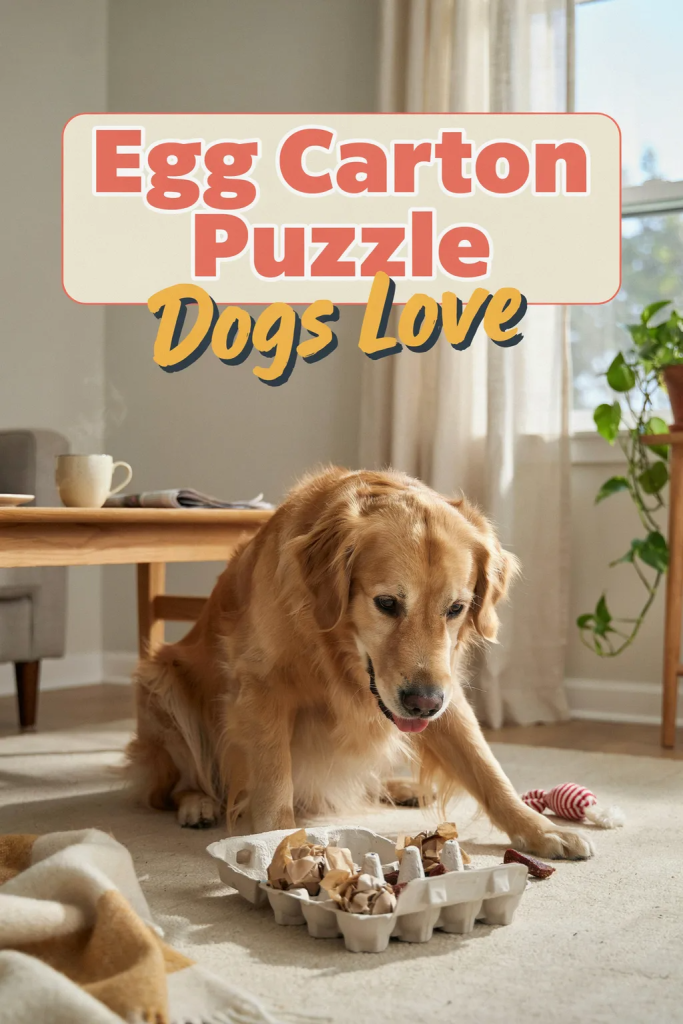
This is one of the easiest DIY dog puzzles for beginners.
What You’ll Need
- Cardboard egg carton
- Treats or kibble
- Small pieces of paper
How to Make It
Place treats inside several egg compartments. Cover them with crumpled paper and close the carton.
Your dog must sniff, paw, and investigate each section to find the rewards.
Why It Works
This game combines scent work with light problem-solving. It also encourages slower, more thoughtful interaction compared to simply eating from a bowl.
Common Mistake to Avoid
Don’t make every compartment contain food every time. Leaving some empty encourages your dog to use their nose rather than guessing.
The Puzzle Difficulty Trick Most People Get Completely Wrong
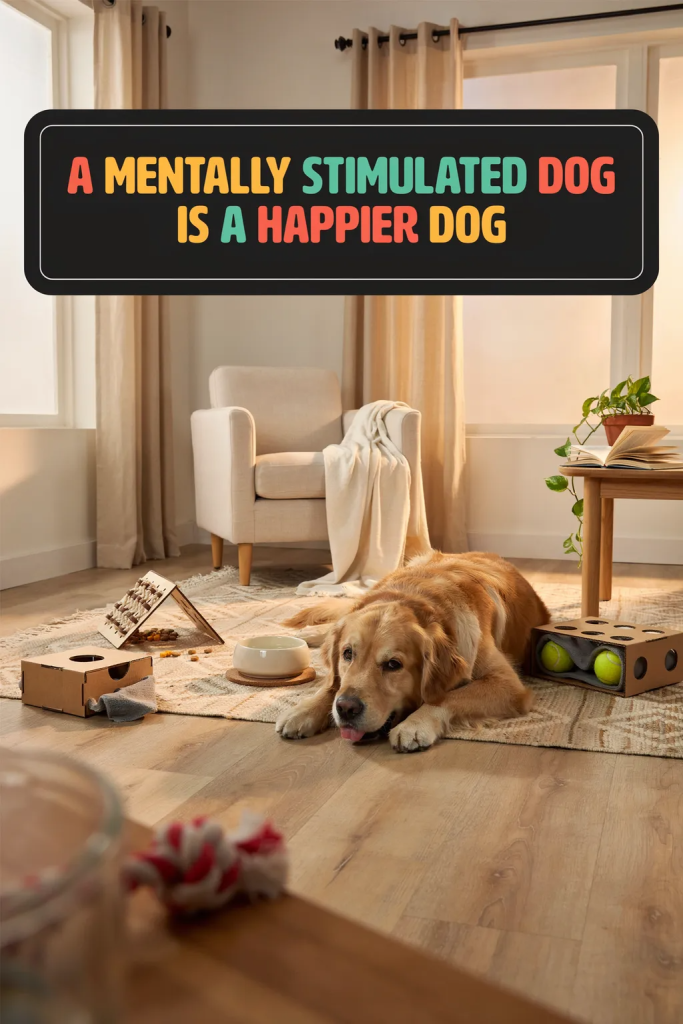
One mistake I made early on was constantly making puzzles harder.
I assumed adding more layers, more boxes, and more obstacles would automatically make enrichment better. In reality, dogs can become frustrated if a challenge exceeds their skill level.
Instead of making puzzles harder, make them different.
Rotate between:
- Sniffing puzzles
- Rolling puzzles
- Lifting puzzles
- Digging puzzles
- Search-and-find games
Novelty often creates more engagement than complexity.
Another mistake is using the same treats every time. Changing rewards occasionally keeps the experience exciting and encourages continued interest.
Signs the Puzzle Is Too Easy
- Solved in under one minute
- Dog loses interest quickly
- Little sniffing or investigation
Signs the Puzzle Is Too Hard
- Walking away repeatedly
- Frustration barking
- Chewing the puzzle instead of solving it
The goal is to create a challenge that keeps your dog thinking without becoming discouraged.
Your Dog Deserves More Than Physical Exercise
Many dog owners focus almost entirely on walks, fetch, and outdoor play. Those activities are important, but they don’t fully satisfy a dog’s need to think, explore, and solve problems.
Since adding regular dog enrichment games to my routine, I’ve noticed fewer unwanted behaviors, better focus, and a calmer dog overall. Even ten to fifteen minutes of mental stimulation activities for dogs can make a noticeable difference.
If you’re dealing with boredom, excessive energy, or destructive habits, try one of these DIY dog puzzles this week. You don’t need fancy equipment or expensive toys. A few household items and a little creativity can provide your dog with the mental workout they’ve been craving.


