
15 Best Dog Fence Ideas to Keep Your Pet Safe, Secure and Escape-Proof Backyard Designs
Written By:

I still remember the first time my dog slipped out of the yard. One small gap in the fence, and she was gone. I was calling her name, heart racing, thinking the worst, only to find her happily exploring the neighbor’s garden like nothing happened.
That moment changed how I look at backyard fencing. It’s not just about marking boundaries. It’s about safety, control, and peace of mind when you’re not watching every second.
Over time, I’ve seen which fence setups actually hold up in real homes and which ones fail quickly. The ideas below come from real-world use, not theory, and each one solves a different type of problem dog owners face.
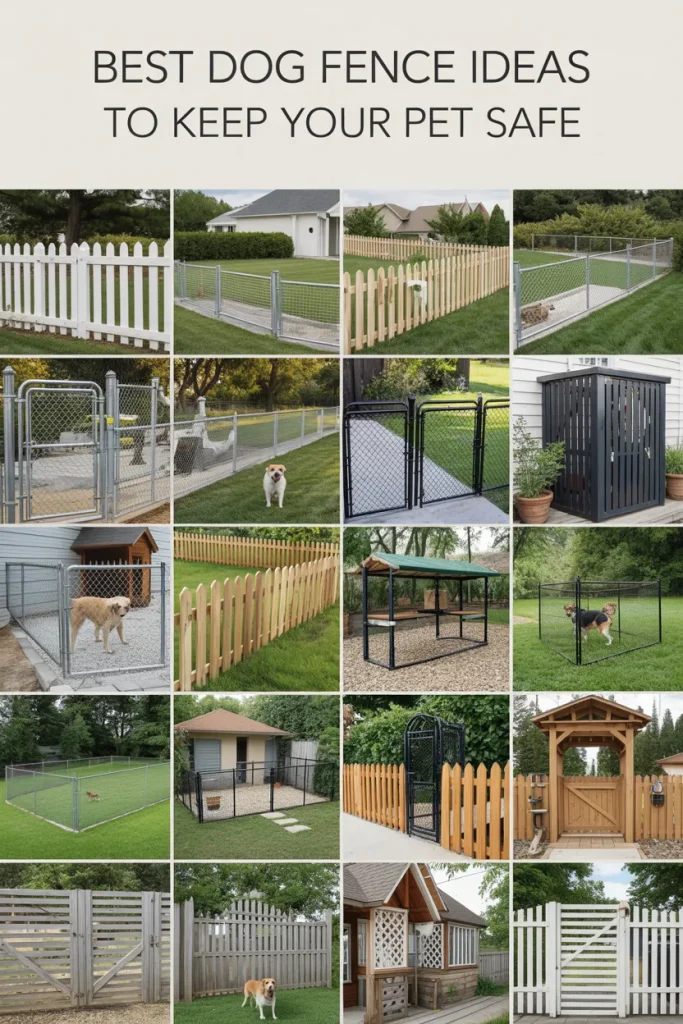
Quick summary
A good dog fence is strong at the base, properly latched, and suited to your dog’s behavior. Looks matter, but function decides whether it works or fails.
Key takeaways
- Most escapes happen at gates or weak bottoms, not over the top
- Digging control matters as much as fence height
- Visibility helps calm active dogs
- Gravel and stone reduce mess and maintenance
- Material choice should match your climate and dog size
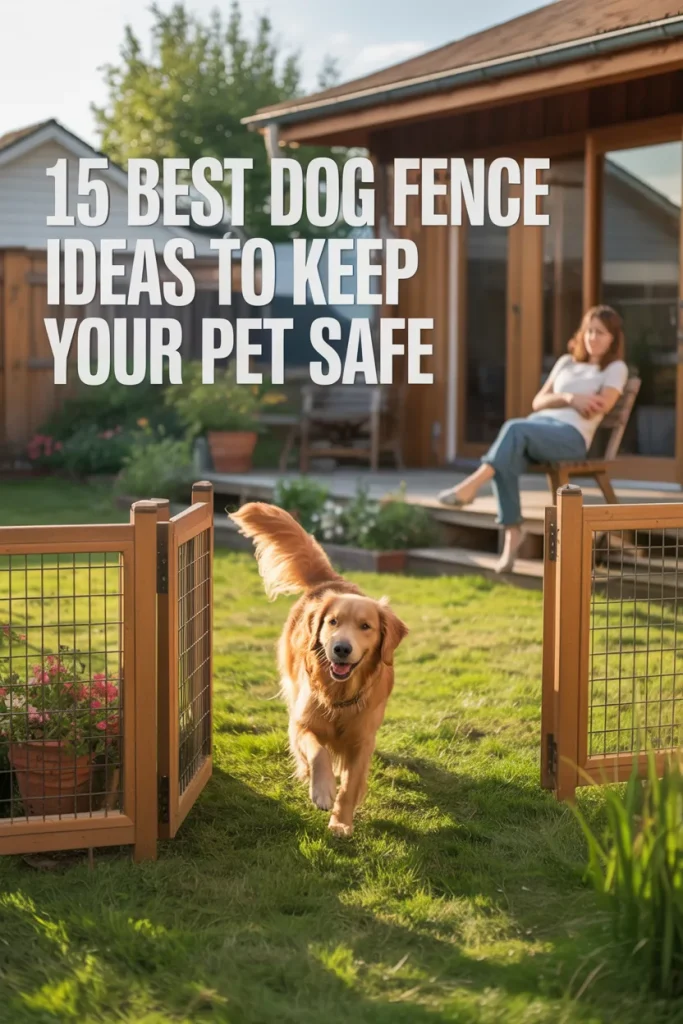
#1: Cedar Frame + Wire Panel Fence With a Clean Open-View Design
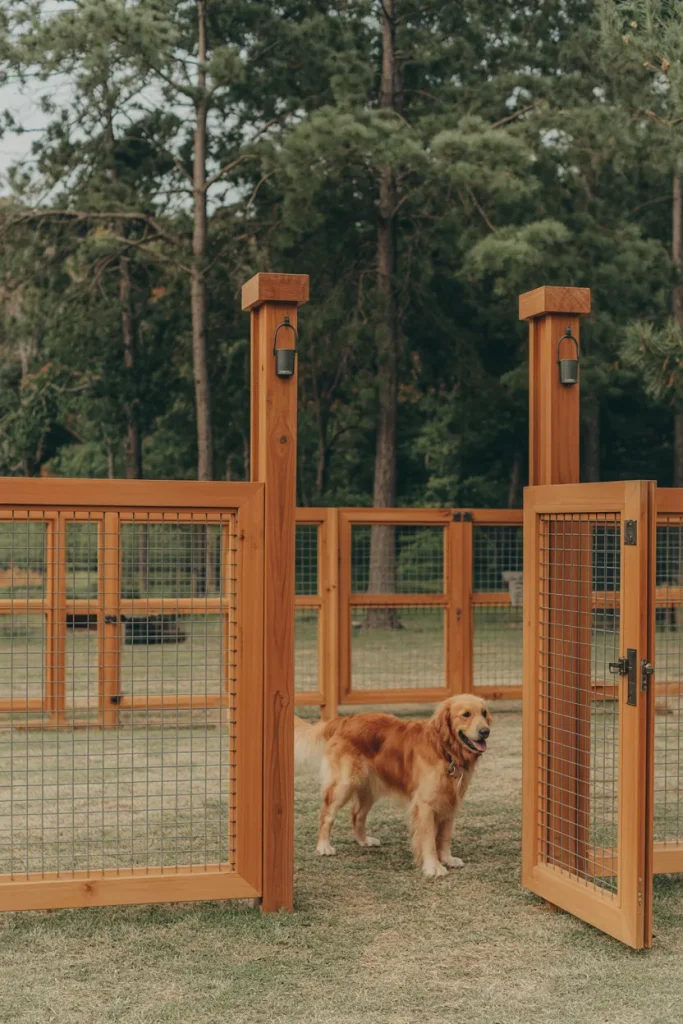
This is one of the most practical backyard setups I’ve come across. Cedar posts paired with welded wire panels give strength without blocking your view of the yard.
What makes it work is stability. When posts are set deep and panels are tightly fixed, even dogs that lean or push don’t find weak spots.
Cedar also holds up well outdoors and doesn’t need heavy treatment, which is safer for dogs that like to chew edges.
Pro tip: Set posts at least 24–30 inches deep and add gravel at the base before pouring concrete. It improves drainage and prevents early rotting.
#2: Brindle Dog Barking at a Wooden Picket Gate on a Backyard Deck
Wood picket gates look simple, but they only work when the latch system is strong. Many setups fail because the latch is too low or too easy to open.
Raised decks help reduce mud inside, but they also bring dogs closer to gate hardware. A higher double-lock latch solves most escape attempts.
Pro tip: Install the latch at shoulder height of your dog when standing on hind legs. That alone prevents most “nose-open” escapes.
#3: Lazy Afternoon at the Dog Park With a Fetch-Obsessed Pup
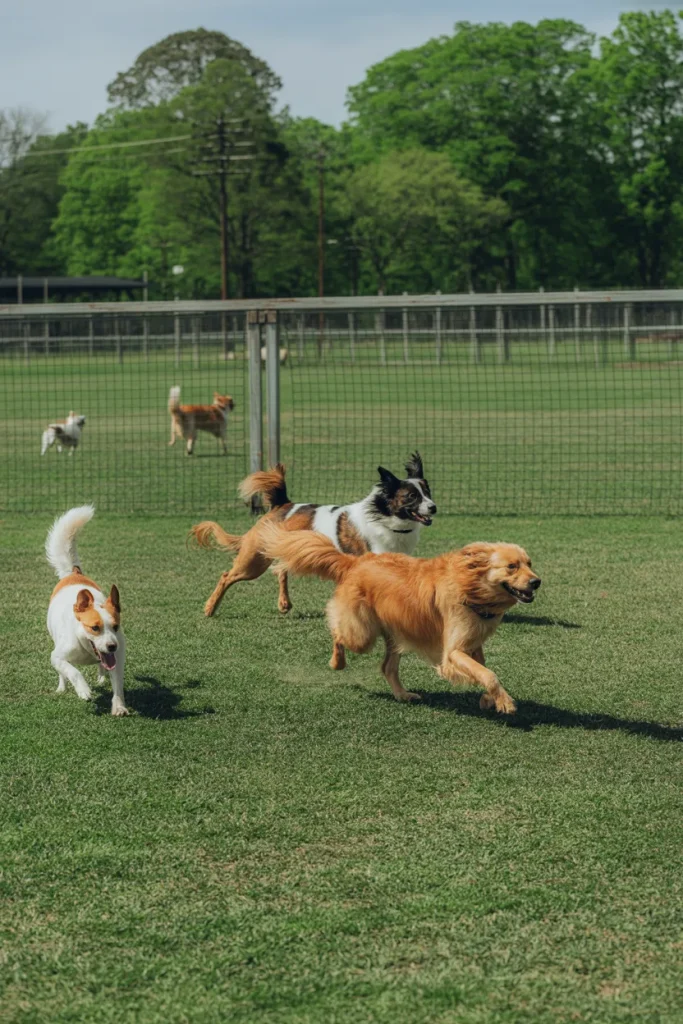
Open fenced areas work differently from home yards. Instead of restriction, they give controlled freedom.
Dogs burn energy faster in open runs than in small backyards, which usually leads to calmer behavior at home.
Mesh fencing keeps visibility high, which helps reduce anxiety in active dogs.
Pro tip: Bring a consistent toy (same ball or frisbee every time). Dogs respond faster and return more reliably when the reward is predictable.
#4: The Black Chain-Link Dog Run Tucked Into a Snowy Backyard
Chain-link runs are still one of the most durable options available.
The black coating helps it blend into natural surroundings instead of standing out visually.
The inward-angled top section is useful because it discourages climbing without increasing fence height.
Pro tip: Secure the bottom edge with landscape staples every 12–18 inches. Most escapes start by lifting the base, not climbing.
#5: Decorative Black Metal Fence Panels for the Front Yard
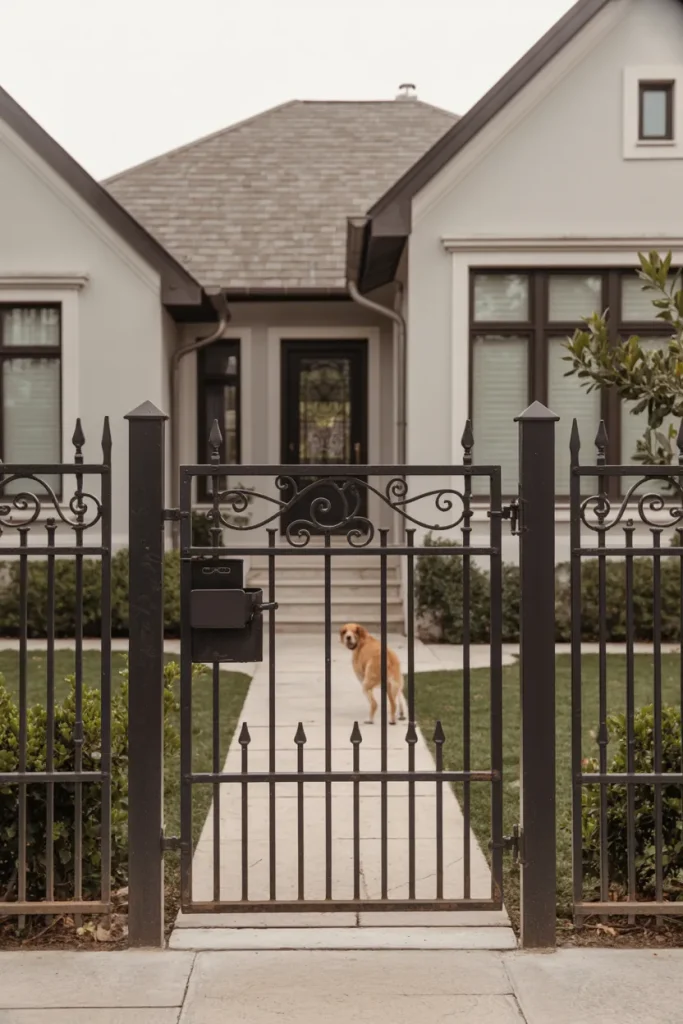
Front yard fencing needs to balance appearance with control.
Decorative metal panels work well for smaller dogs or contained zones. Spacing between bars matters more than height in many cases.
Visibility is a major benefit here because dogs can see outside activity without feeling trapped.
Pro tip: Keep ground clearance under 4 inches. Many small dogs squeeze out under decorative panels when gaps are left unchecked.
#6: Decorative Metal Garden Fence That Actually Keeps Your Dog Out of the Flower Beds
Flower beds are usually the first target for curious dogs. A low decorative fence with tight mesh helps protect plants without fully blocking the garden.
Curved layouts are more effective than straight lines because they reduce pressure points and guide movement naturally.
Pro tip: Add mulch or stone borders inside the fence. It discourages digging more effectively than fencing alone.
#7: Freestanding White Slatted Pet Gate (Accordion-Style, No Tools Needed)
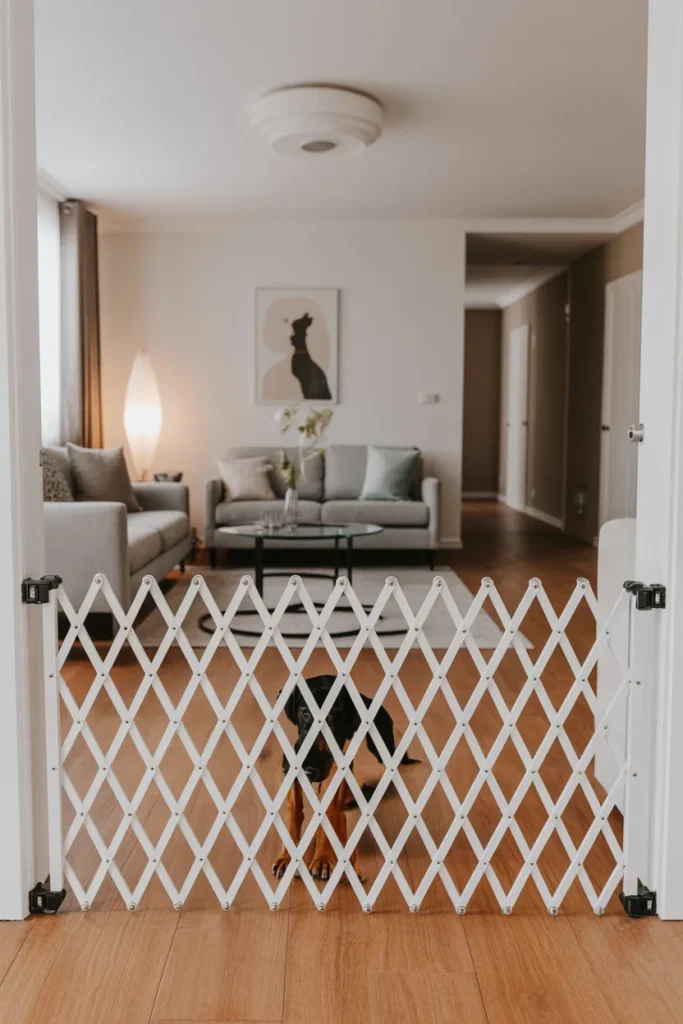
This gate works well indoors or on patios when temporary control is needed.
It’s flexible and can be reshaped depending on the space, making it useful during training or gatherings.
Floor grip is the most important factor here since it is not fixed.
Pro tip: Place rubber pads under each leg to stop sliding on tile or wood floors.
#8: Rustic Log Rail Fence for Your Backyard Dog Zone
Log rail fencing blends naturally into outdoor spaces and works best in open yards.
Spacing between rails must be controlled to prevent squeezing or slipping through.
When properly installed, it can last many years with minimal maintenance.
Pro tip: Sand all cut edges to prevent splinters, especially if your dog likes to chew or lean on wood.
#9: Raised Timber Garden Bed With Patio Surround
This setup acts more like a visual boundary than a strict enclosure.
Dogs naturally learn to avoid raised edges over time, especially when paired with gravel or stone surfaces.
It also reduces digging behavior in garden areas.
Pro tip: Keep the lawn slightly lower than timber edges so soil doesn’t wash onto the patio during rain.
#10: Curved Aluminum Slat Fence with Natural Boulder Accent Garden
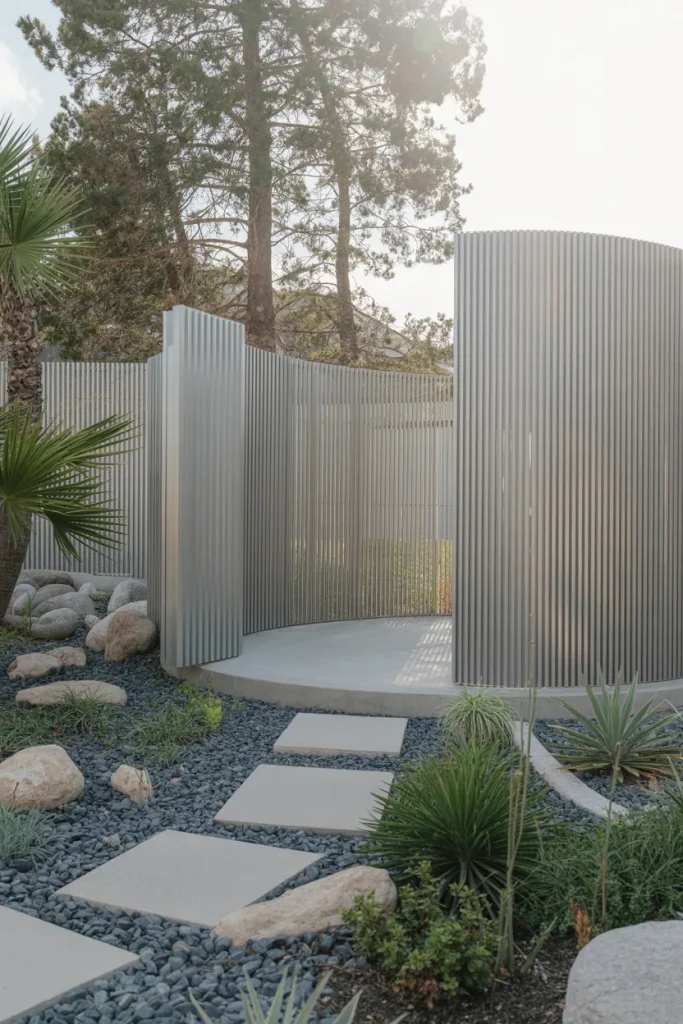
Aluminum fencing is low maintenance and resistant to weather damage.
It doesn’t rot or warp, which makes it ideal for long-term use.
Curved layouts guide movement naturally and reduce fence testing.
Pro tip: Use irregular curves instead of perfect arcs. Dogs are less likely to challenge natural-looking boundaries.
#11: Black Steel Panel Dog Run With Gravel Ground Cover and Built-In Kennel
This setup is designed for active dogs that need structure.
Gravel flooring prevents digging, reduces mud, and keeps paws clean.
A built-in kennel provides a resting zone inside the run.
Pro tip: Install edging borders around gravel to stop stones from spreading into your lawn.
#12: Backyard Kennel Run With Black Wire Fencing and a Tire Swing View
Wire fencing is simple but effective when properly installed.
It keeps visibility high, which reduces frustration in active dogs.
Strong anchoring is key for long-term stability.
Pro tip: Always reinforce corners first. That’s where pressure and movement are highest.
#13: Cedar Side Yard Run With Flagstone Path and Hog Wire Gates
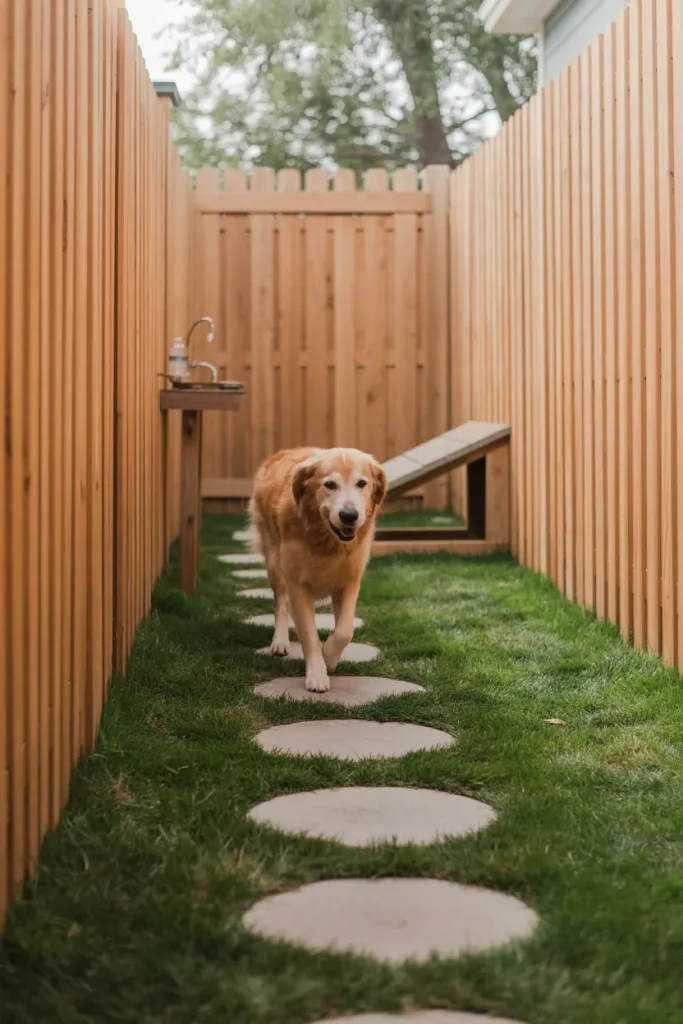
Side yards can be turned into useful dog runs with minimal changes.
Cedar and hog wire create a strong but breathable structure.
Flagstone paths help control mud and improve footing.
Pro tip: Space stepping stones according to natural walking stride to prevent slipping.
#14: Fresh Cedar Privacy Fence with Gravel Path and Gate
Privacy fences work well for dogs that react to outside distractions.
Cedar handles weather well and gives long-term durability.
Gravel paths help reduce mess inside the home.
Pro tip: Seal post bases before installation to prevent rot from ground moisture.
#15: Desert Pathway Dog Run With Mountain Views
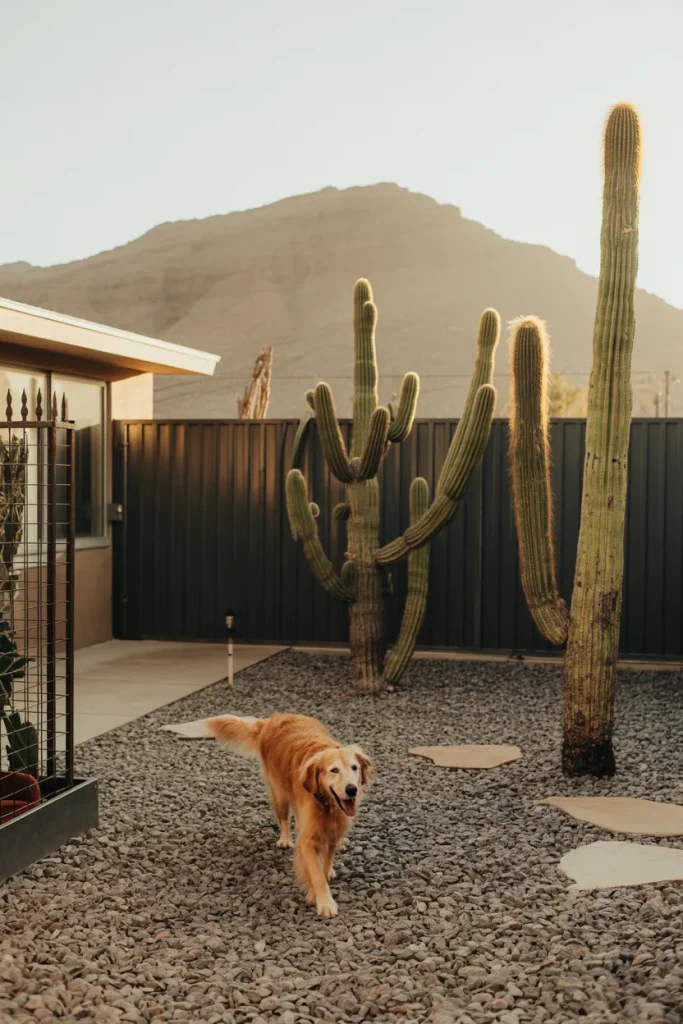
This setup focuses on guided movement rather than full restriction.
Gravel paths naturally guide walking patterns and reduce random running.
Steel fencing holds up well in dry environments.
Pro tip: Add landscape fabric under gravel to block weed growth and reduce maintenance.
The Underground Secret Most Dog Fence Guides Never Tell You
Soil type has a bigger impact on fence strength than most people realize.
Clay soil holds moisture and weakens posts over time. Sandy soil drains faster and stays more stable.
A simple test helps. If soil holds shape when squeezed, it’s clay. If it breaks apart, it’s sandy.
Digging is another major issue. Many dogs escape by going under fences, not over them. A buried barrier or gravel trench stops this effectively.
Dogs also behave better when they have stimulation. A bored dog tests boundaries more often than an active one.


