

The First 30 Days with Your New Puppy: A Real-Life Survival Guide
Written By:

So you just brought home a puppy. I remember that feeling – equal parts excitement and “what did I get myself into?” The first 30 days are messy, tiring, and absolutely wonderful. In this guide, I’ll walk you through exactly what worked for me: from setting up a safe zone to handling nipping, potty accidents, and sleepless nights. I’ve also included key takeaways below so you don’t miss the essentials.

Key Takeaways (at a glance):
- Create a puppy-proof zone before day one – saves your furniture and your sanity.
- Crate training cuts potty accidents by nearly 40% if done right (American Kennel Club).
- Take puppies out every 1–2 hours for potty; consistency beats punishment.
- Socialize within the first 12 weeks – missed window leads to fear later.
- Nipping stops with redirection, not yelling. Most puppies grow out of it by 5 months.
- Puppies need 18–20 hours of sleep daily – overtired pups bite more.
- Start “sit” and “come” on day one. Five minutes a day is enough.
First 72 Hours With A New Puppy
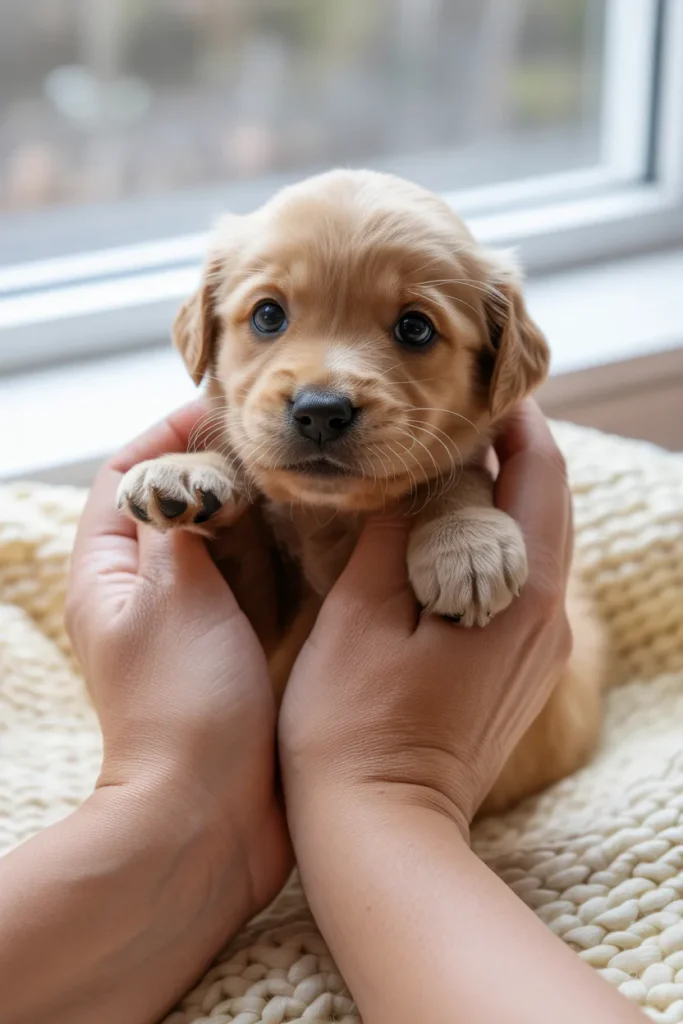
Those first three days are the hardest. I learned quickly that puppies don’t know the rules yet. They’re scared, curious, and have zero bladder control. My best advice? Lower your expectations. The first 72 hours are about survival – bonding, showing them where to sleep, and watching for signs of stress like hiding or shaking.
I kept a notebook to track potty times. That small habit saved me so much guesswork.
1. Set Up a Puppy-Proof Zone
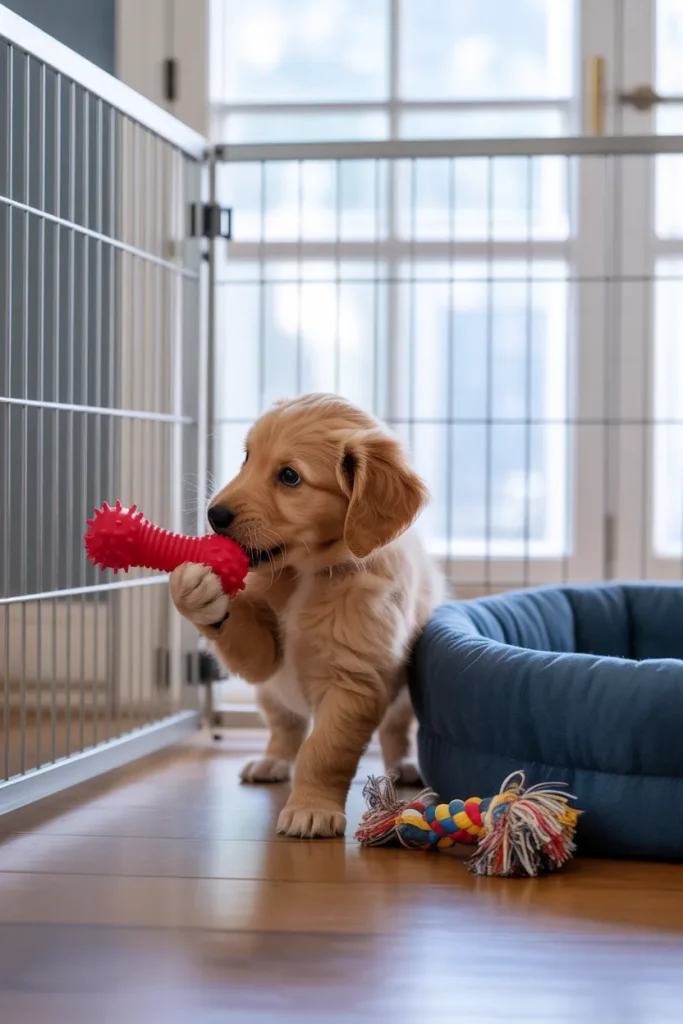
Before I even brought my puppy home, I picked a small area – my kitchen corner – and blocked it off with a baby gate. This became her “safe zone.” I learned that puppies explore with their mouths, and within minutes they’ll find a charging cable or a shoe.
Pro tip: Use an ex-pen or a gated laundry room. Inside, I placed a cheap fleece blanket (easy to wash), two chew toys, a water bowl, and potty pads near the door. This zone gave me 10-minute breaks without worry.
2. Crate Training: Not as Scary as It Sounds
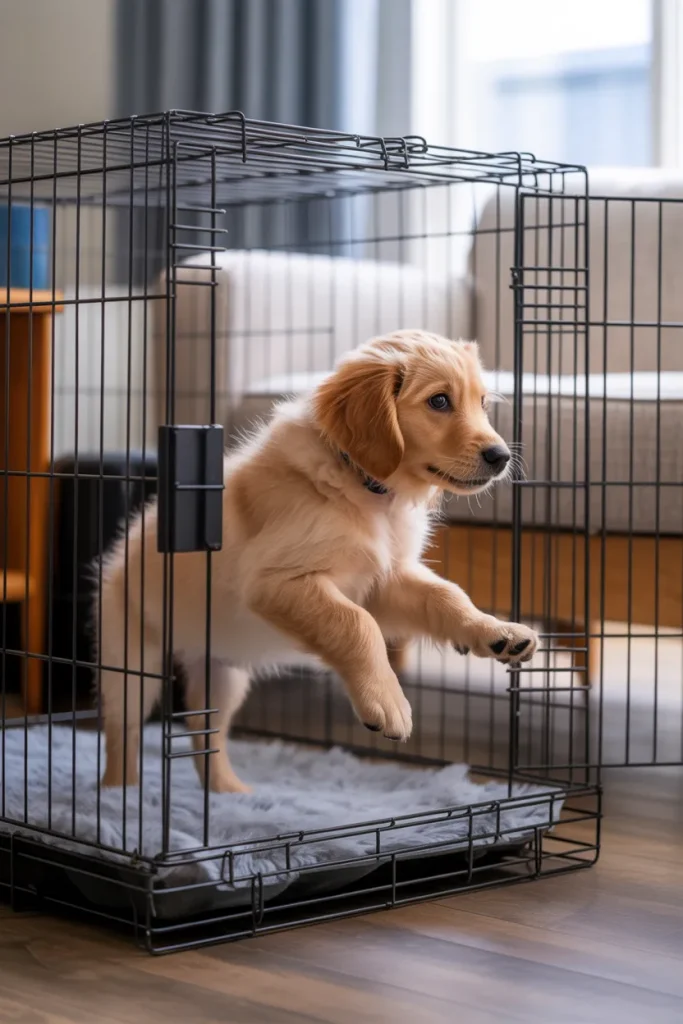
Honestly, I was nervous about crates. I thought it felt mean. But here’s what I discovered: puppies naturally seek small, den-like spaces. The first night, I left the crate door open with treats inside. She walked in on her own after 20 minutes.
Fact: According to veterinary behaviorists, properly crate-trained puppies have 30% fewer housebreaking accidents. I started with 5-minute closed-door sessions while I sat beside her. Never use the crate as punishment. Now she naps in there even when the door is open.
3. Potty Training: Patience and Persistence
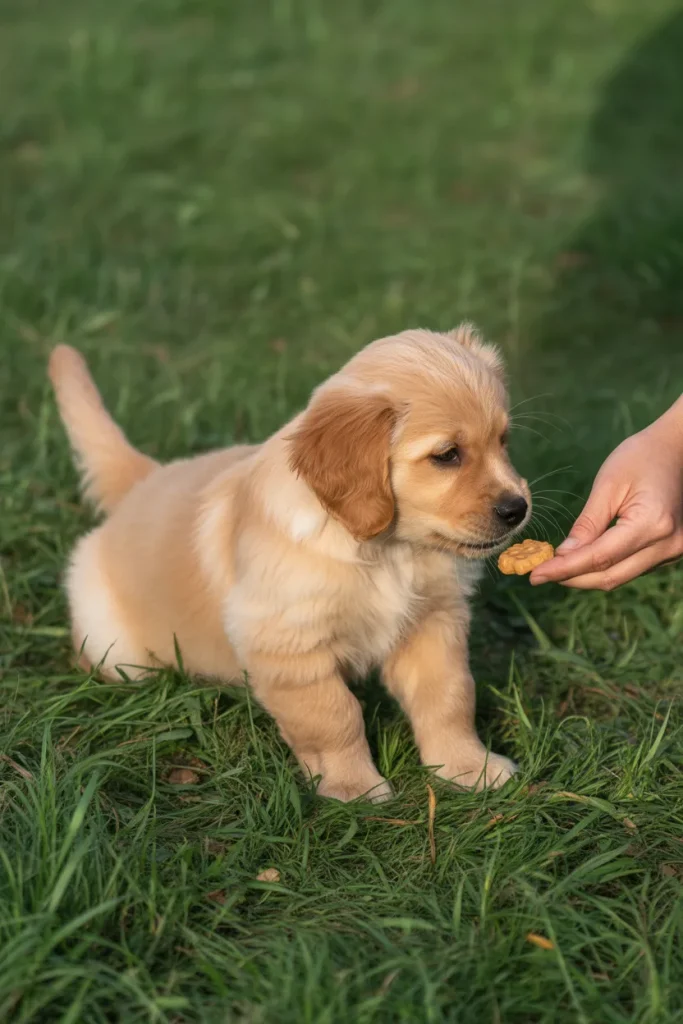
I won’t lie – potty training tested me. For the first two weeks, I took my puppy outside every 90 minutes. Yes, that included 2 AM. Here’s what worked: Right after she woke up, finished eating, or stopped playing – straight outside. When she went in the grass, I acted like she won a trophy. High-pitched praise and a tiny treat. Accidents happened. I used an enzyme cleaner (regular soap leaves smell that attracts them back).
Pro tip: If you catch them mid-accident, clap once to interrupt, then rush them outside. Never rub their nose in it – that just confuses them.
4. Socialization: The World’s Their Playground
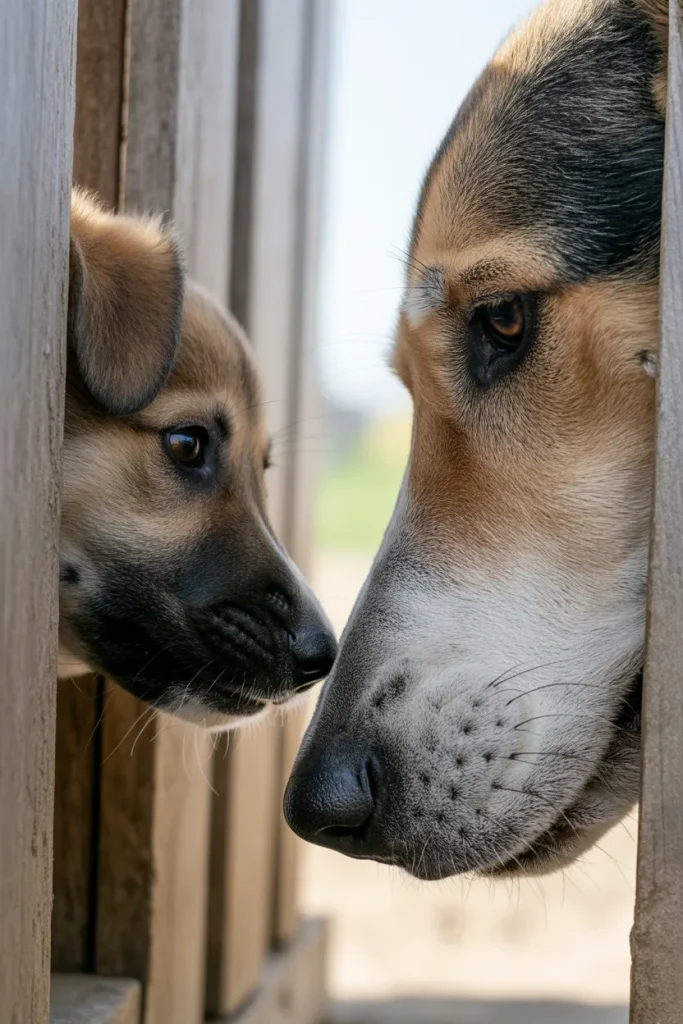
I read that the prime socialization window closes at 12–14 weeks. So I got to work. I carried my puppy to a quiet park (before full vaccines) and let her watch kids, bikes, and other dogs from a distance. Stat: Unsocialized puppies are 5 times more likely to develop fear-based aggression as adults. I also played YouTube videos of thunderstorms, traffic, and doorbells at low volume while giving treats. One thing I learned: don’t force a scared puppy to meet a stranger. Let them hide behind your legs. Slow wins.
5. Handling Nipping and Biting (Because It Will Happen)
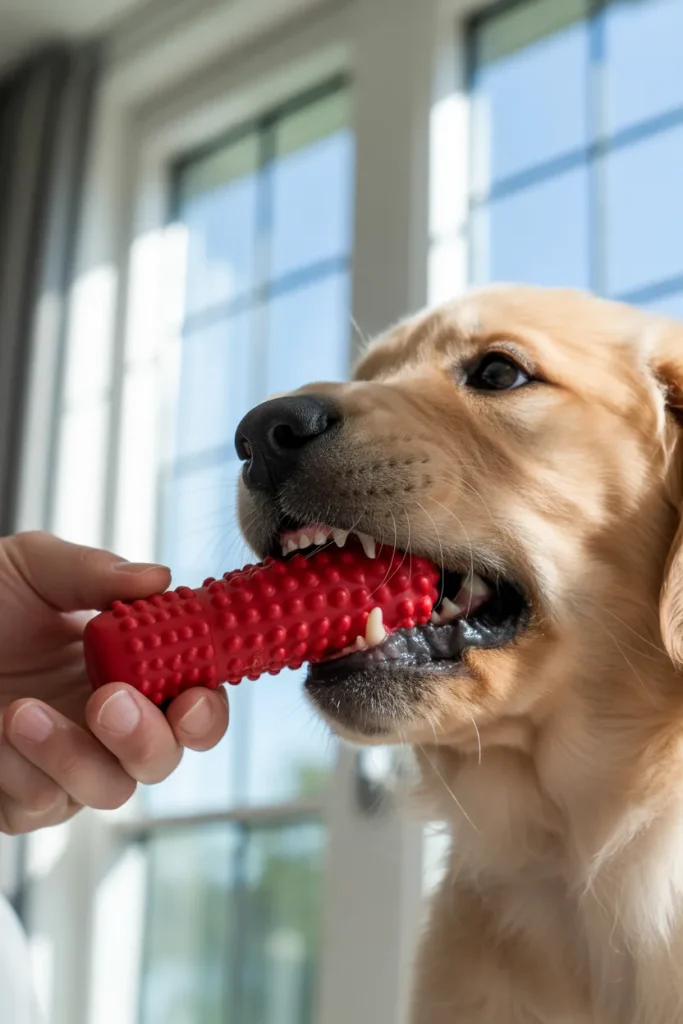
My arms looked like I wrestled a cactus for the first month. Puppies bite – it’s how they play with littermates. But here’s what I figured out. When her teeth touched my skin, I said “ouch” in a normal voice (not screaming) and froze my hand.
Then I shoved a chew toy in her mouth.
Fact: Puppy biting peaks around 12–16 weeks and usually fades by 5–6 months if you’re consistent. I also learned that overtired puppies bite more. So when she got extra nippy, I put her in the crate for a nap. Worked like magic.
6. Feeding and Treats: Finding the Balance
I made a mistake early on – I gave too many training treats. My puppy had loose stools for two days. The vet told me treats should make up no more than 10% of daily calories.
Here’s my rule: Use their own kibble as training rewards during meals. For high-value treats (like bits of boiled chicken), I break them into pea-sized pieces. Puppies under 6 months need three to four small meals a day. I fed at 7 AM, 12 PM, 5 PM, and 9 PM. A predictable feeding schedule also made potty training easier – she usually needed to go 15 minutes after eating.
7. Sleep: Because Puppies Need It (and So Do You)
I was shocked to learn that puppies sleep 18–20 hours a day. But they don’t do it in long stretches. My puppy would play for 30 minutes, then crash for two hours. At night, she whined the first three nights. I put her crate next to my bed and stuck my fingers through the bars. That helped. Pro tip: Don’t respond immediately to every whine.
Wait 30 seconds. If it continues, take them out for a quick, boring potty break – no play, no lights. Then back to crate. By week two, she slept from 11 PM to 5 AM. By week four, 10 PM to 6 AM.
8. Training Basics: Start Small, Stay Consistent
I started training on day two. Not long sessions – just two minutes of “sit.” Here’s the trick: hold a treat above their nose, move it back toward their tail. Most puppies sit naturally. I clicked my tongue and gave the treat.
Stat: Dogs learn best with 3–5 minute sessions, repeated 3 times a day.
Within a week, my puppy sat on command 80% of the time. Then I added “come” – calling her from a short distance while backing away. Never call a puppy for something unpleasant (like a bath). Keep training fun and short.
9. Enjoy the Cuddle Time – It Goes By Fast
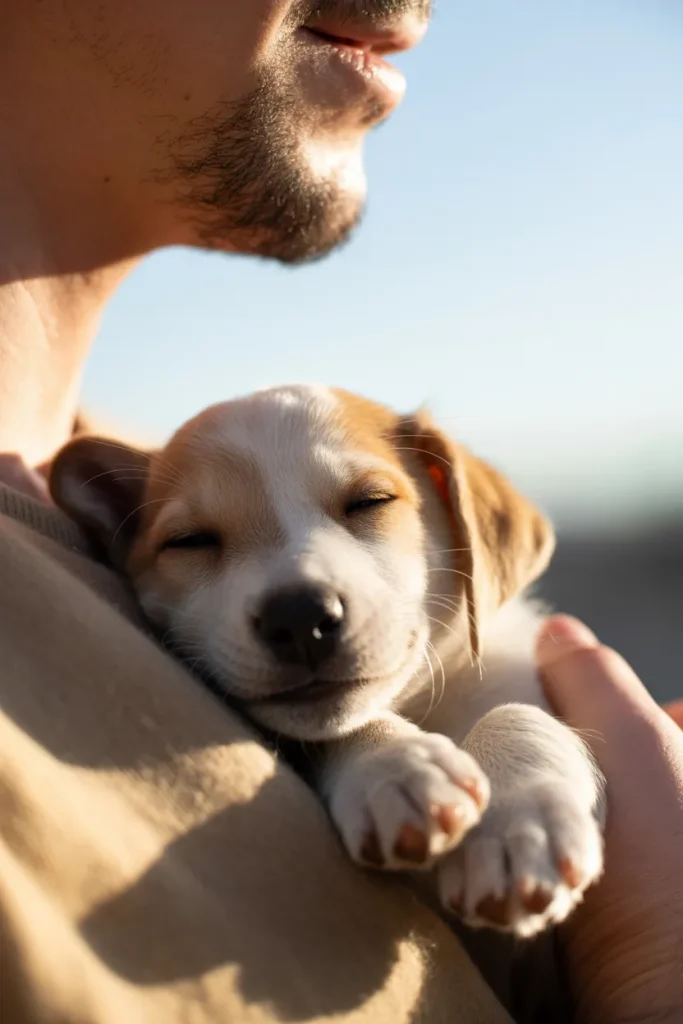
I look back at photos from that first month and my puppy is so tiny. She fit in one hand. Now she’s 40 pounds. The accidents, the chewed baseboards, the 2 AM wake-ups – they all feel like a blur.
I wish I had taken more videos of her wobbly walks and sleepy blinks. My advice: Set a daily reminder on your phone to just sit on the floor and let your puppy climb on you for five minutes. That bond you build in month one is the foundation for the next 10 years.
FAQ: Surviving Your First Month with a Puppy
Q: How often should I feed my puppy, and what should I feed them?
I fed three to four small meals daily until six months old. I stuck with the same brand the breeder used for the first week, then slowly mixed in a high-quality puppy food over five days. Sudden food changes gave my puppy diarrhea. If you’re unsure, ask your vet for a calorie count – overfeeding growing puppies can cause bone problems.
Q: How do I stop my puppy from biting everything (including me)?
I redirected to a chew toy every single time. Also, I learned that frozen washcloths (wet, twisted, frozen) soothed her teething gums. One thing that surprised me: exercise helps. A bored puppy bites more. But an overtired puppy bites even more. Find the sweet spot with short play and enforced naps.
Q: How do I get my puppy to sleep through the night?
Limit water one hour before bedtime. Take them out right before you go to sleep. Then set an alarm for four hours later – don’t wait for them to cry. After a week, stretch to five hours. By week three, my puppy made it six hours. Patience. It’s not linear.
Q: When should I start training my puppy?
Day one. But keep it playful. I trained before meals when she was hungry and motivated. “Sit,” “down,” and “look at me” are great first words. I never repeated a command more than twice – that just teaches them to ignore you.
Q: What’s the best way to socialize my puppy?
I took my puppy to Home Depot (they allow pets) in a shopping cart with a blanket. She saw different people, sounds, and smells without touching the floor. I also invited vaccinated adult dogs to my yard for short playdates. Stat: Puppies that meet 100+ new people before 16 weeks are significantly less likely to develop fear of strangers.
Q: Should I worry if my puppy has accidents after a few weeks of potty training?
No. I had an accident on day 25. My puppy got excited during play and peed a little. That’s normal. Full bladder control doesn’t really happen until 4–6 months. Just clean it up and go back to your routine. If you see blood or straining, call a vet.
Q: How do I know if my puppy is getting too much (or not enough) exercise?
A good rule: five minutes of structured exercise per month of age, twice a day. So a two-month-old gets 10 minutes of walking or active play. Too much can damage their growing joints. Signs of over-exercise: lying down mid-play, vomiting, or refusal to move the next day. Signs of under-exercise: destructive chewing, constant barking, and zoomies at midnight.
Final Thoughts
Looking back, the first 30 days felt like a blur of paper towels, puppy breath, and very little sleep. But I wouldn’t trade it. Every accident taught me patience. Every bite taught me redirection. And every sleepy cuddle reminded me why I did it. You’re not alone in this.
Millions of puppy owners have survived the first month – and so will you. Keep your routine simple, your treats small, and your sense of humor intact. Now go give your puppy a belly rub. You both earned it.