7 Creative DIY Dog Cone Ideas
Written By:

Watching my dog wear a hard plastic cone after surgery was honestly harder than I expected. She kept bumping into furniture, struggled to eat, and looked completely frustrated by the end of the first day. That experience pushed me to look for better DIY dog cone ideas that were softer, safer, and less stressful for recovery.
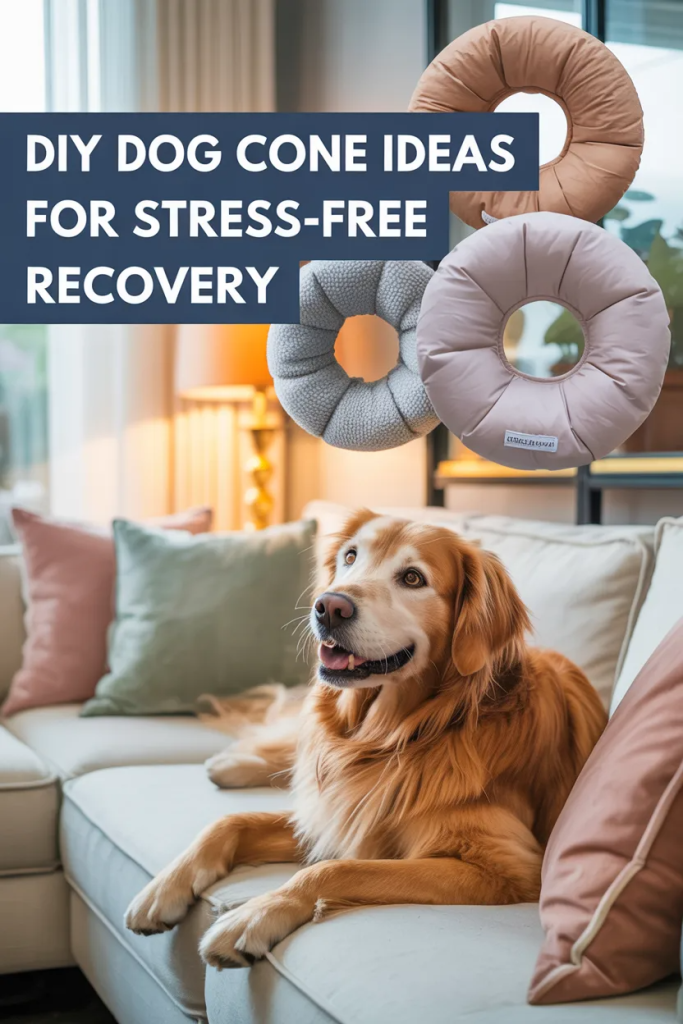
The good news is that you don’t need expensive pet recovery gear to make your dog comfortable. With a few simple materials, you can create homemade dog cones that actually work while helping your pup rest, eat, and move around more easily.
Some of these ideas are perfect for short-term use after surgery, while others are great for dogs dealing with allergies, hot spots, or excessive licking. I’ve also included practical tips I learned along the way so you can avoid common mistakes that make recovery harder for both you and your dog.
Quick Summary
- DIY dog cones can be softer and more comfortable than traditional plastic cones
- Clear cones help reduce anxiety because dogs can still see around them
- Soft fabric and donut collars are better for sleeping and relaxing
- Proper sizing matters more than the material itself
- Lightweight designs usually work best for anxious dogs
- Always monitor your dog during the first few hours of use
Key Takeaways
- Measure your dog’s neck carefully before starting
- The cone should extend slightly beyond your dog’s nose
- Soft edges help prevent irritation and rubbing
- Breathable fabrics improve comfort during longer recovery periods
- Clear materials often help dogs adjust faster
- Test the cone indoors before leaving your dog unattended
#1: DIY Clear Cone of Shame — Because Comfort Matters
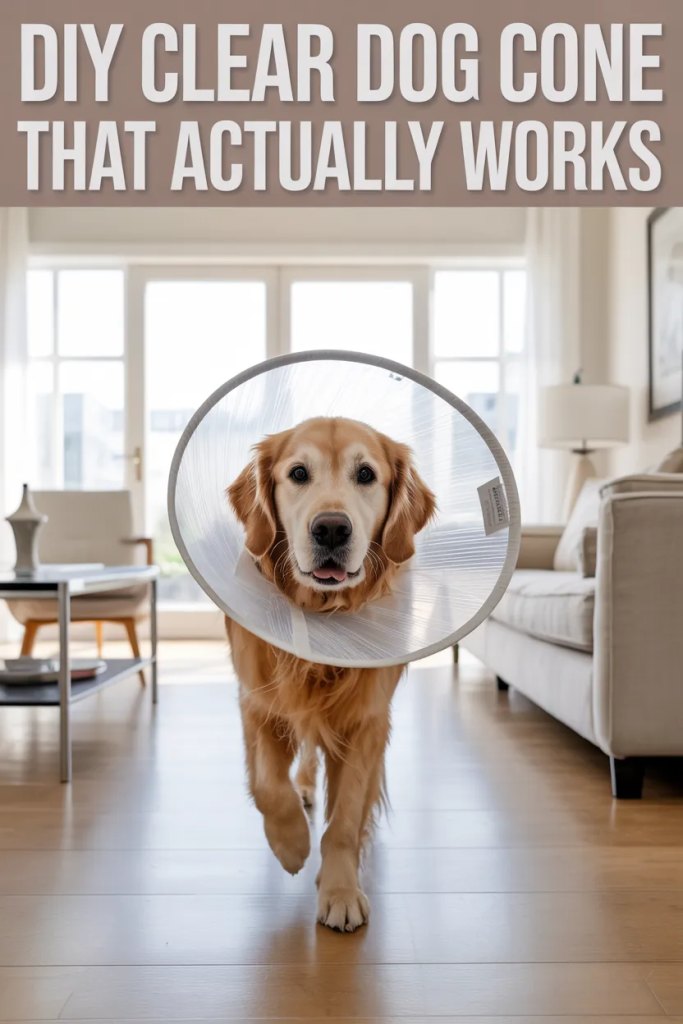
The first homemade cone I tried was a clear version, and it made a huge difference. My dog stopped freezing in place because she could actually see where she was walking.
For this project, I used a flexible clear plastic sheet, soft foam padding, and adjustable straps. The transparent design helped her feel less trapped compared to the solid cone from the vet.
What You’ll Need
- Flexible clear plastic sheet
- Foam padding
- Soft fabric tape
- Scissors
- Hole punch
- Adjustable strap or Velcro
Instructions
Cut the plastic into a curved fan shape, then gently roll it into a cone. Add soft foam around the neck opening to prevent rubbing. Secure the cone with adjustable straps so it stays snug without feeling tight.
One thing I noticed immediately was how much easier it became for my dog to eat and drink. She stopped crashing into chair legs every five minutes, which lowered her stress levels fast.
Pro Tip
Sand or tape over sharp plastic edges before using the cone. Even small rough spots can irritate sensitive skin during recovery.
#2: DIY Clear Plastic Cone for Dogs That Actually Stays On
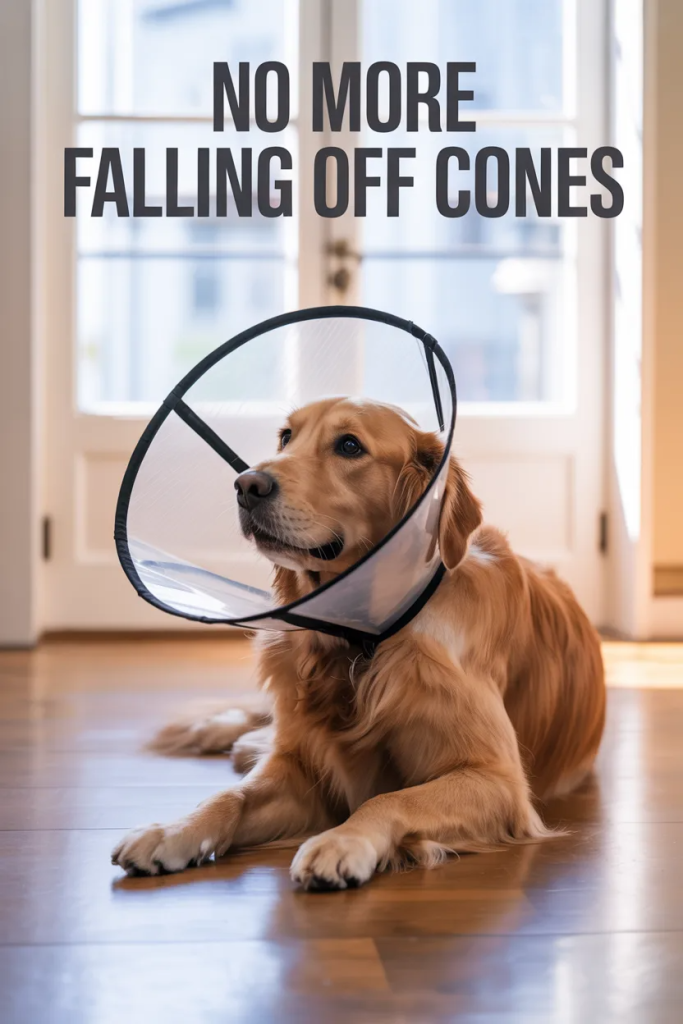
Some homemade cones slide off constantly, especially with active dogs. This version worked better because it attached directly to my dog’s collar.
I liked this setup for daytime use because it stayed secure without needing constant adjustments.
Materials
- Semi-flexible plastic sheet
- Foam strip
- Ribbon or nylon ties
- Velcro strips
- Dog collar
Instructions
Shape the plastic into a cone and secure the seam with tape or Velcro. Punch small holes near the base and thread ribbon through them to attach the cone to your dog’s collar.
Adding foam around the top edge made the cone much gentler around the face and neck area.
Common Mistake to Avoid
Many people make the cone too long. If your dog struggles to eat or walk, shorten it slightly while still preventing access to the wound.
#3: The Soft Fabric E-Collar
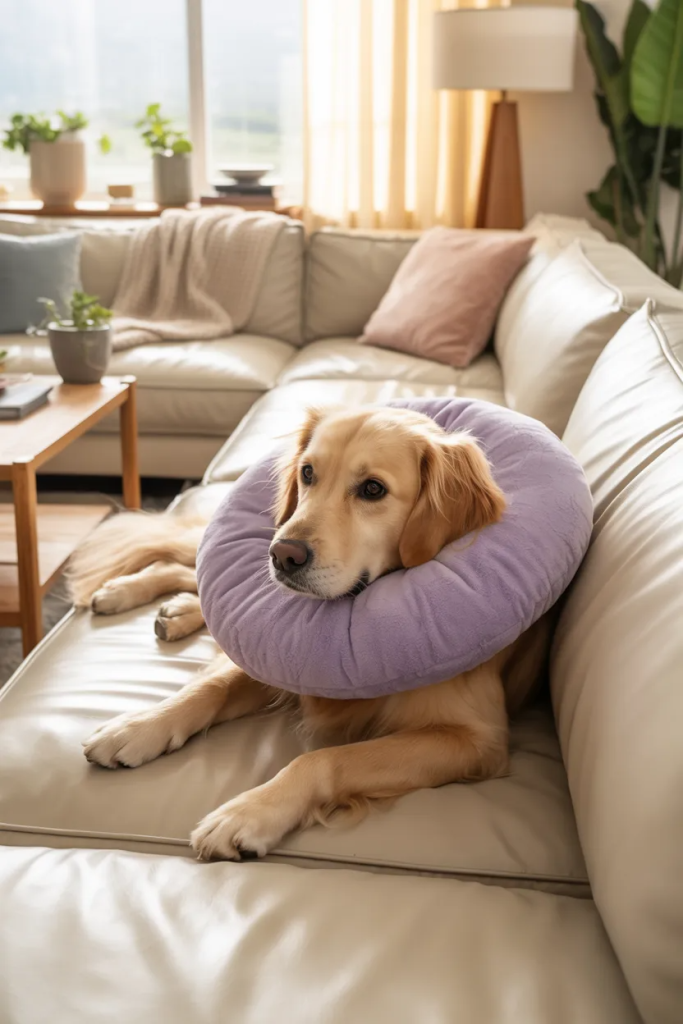
Not every dog tolerates plastic well. My friend’s husky completely refused to move while wearing one, so she switched to a soft fabric e-collar instead.
This style works especially well for calmer dogs who mainly need light protection from licking.
Supplies
- Soft fleece fabric
- Fiberfill stuffing
- Velcro
- Flexible boning strip
- Sewing kit or sewing machine
Instructions
Cut two donut-shaped fabric pieces and sew them together, leaving space for stuffing. Add light filling so the collar stays soft but supportive.
The flexible structure keeps the collar upright enough to block licking while still allowing your dog to rest comfortably.
Why It Works
Soft fabric collars reduce pressure around the neck and make sleeping much easier. My dog could finally nap without struggling to position her head.
#4: The Donut Cone
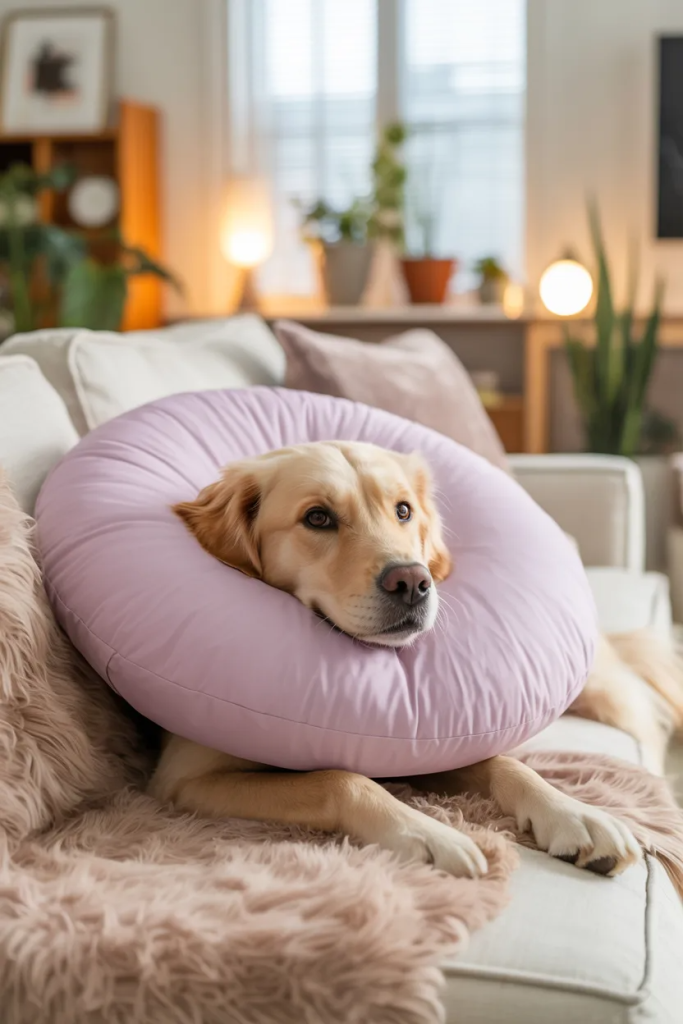
The donut cone became my personal favorite for overnight use. It reminded me of a travel pillow, except designed for dogs recovering from surgery.
Dogs usually adapt to this style faster because it feels less restrictive.
Materials
- Cotton fabric
- Polyfill stuffing
- Rope or fabric ties
- Needle and thread
Instructions
Sew two donut-shaped fabric pieces together and fill them evenly with stuffing. Attach ties or Velcro so the collar stays secure around the neck.
This design works best for dogs recovering from minor procedures or dealing with skin irritation.
Helpful Insight
A donut cone may not work for dogs with long noses or flexible bodies. Some dogs can still reach certain areas, so always test it first.
#5: The Inflatable Fabric Cone
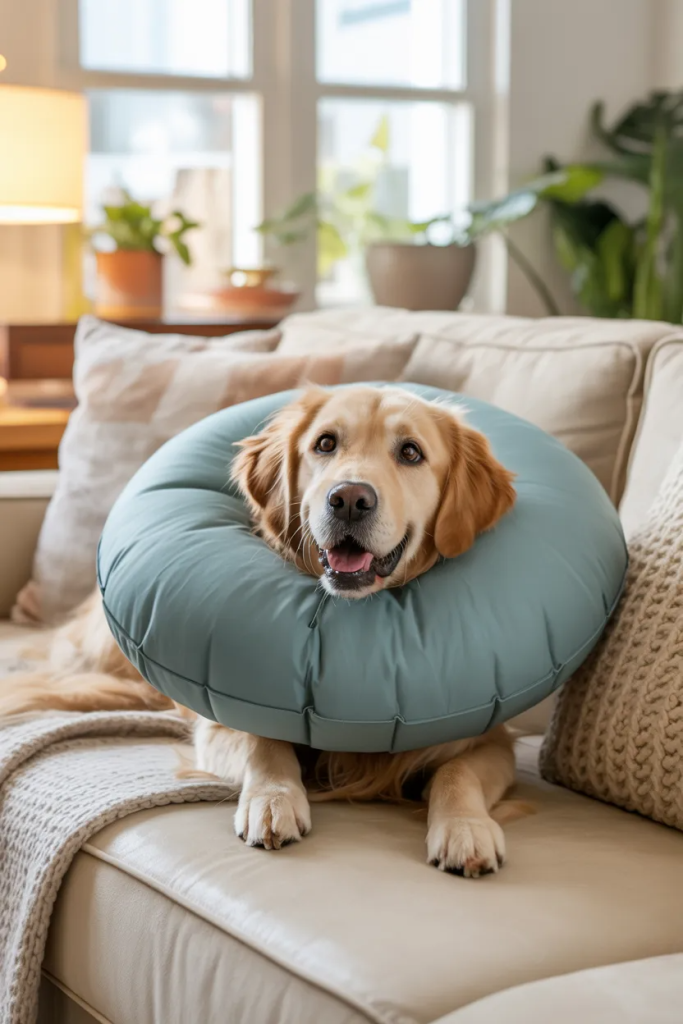
The Inflatable Fabric Cone
I was surprised by how well inflatable recovery collars worked. They look softer, feel lighter, and are much less intimidating for nervous dogs.
This option is ideal for dogs who panic while wearing traditional cones.
What You Need
- Foam tubing or pool noodle
- Cotton fabric cover
- Velcro closure
- Fabric glue or sewing machine
Instructions
Create a circular foam ring and wrap it with fabric. Add a removable closure so you can easily place it around your dog’s neck.
The lightweight design reduces strain on the neck and helps dogs move more naturally around the house.
Practical Tip
Use washable fabric because recovery collars get dirty quickly from drool, food, and outdoor trips.
#6: The Soft Clear Hybrid Cone
The Inflatable Fabric Cone
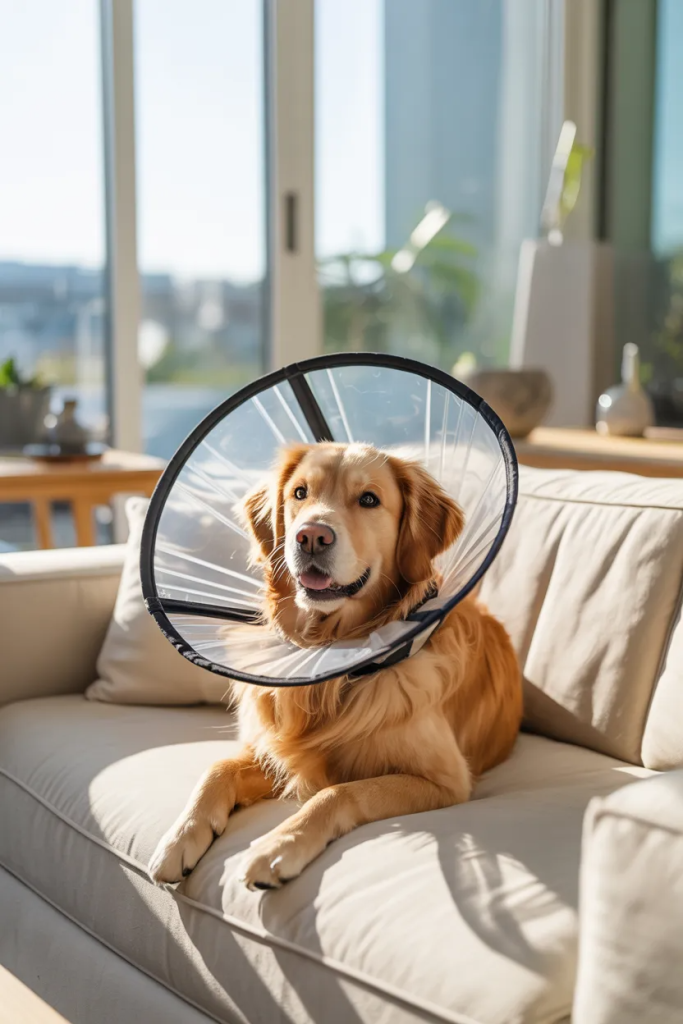
This design combines the visibility of a clear cone with the comfort of padded fabric edges.
After trying several styles, I noticed that hybrid cones often work best for dogs who need longer recovery periods.
Supplies
- Clear polypropylene sheet
- Soft neoprene strip
- Velcro strips
- Nylon straps
Instructions
Cut the clear sheet into a cone shape and reinforce the edges with soft fabric padding. Secure it using Velcro so you can easily remove it during meals if needed.
The padded edges prevent scratching while the clear material keeps your dog calmer and more aware of their surroundings.
Why Dogs Adjust Faster
Dogs rely heavily on visual awareness. A transparent cone feels less isolating than solid plastic, which often reduces anxious behavior.
#7: The Soft Fleece Recovery Cone
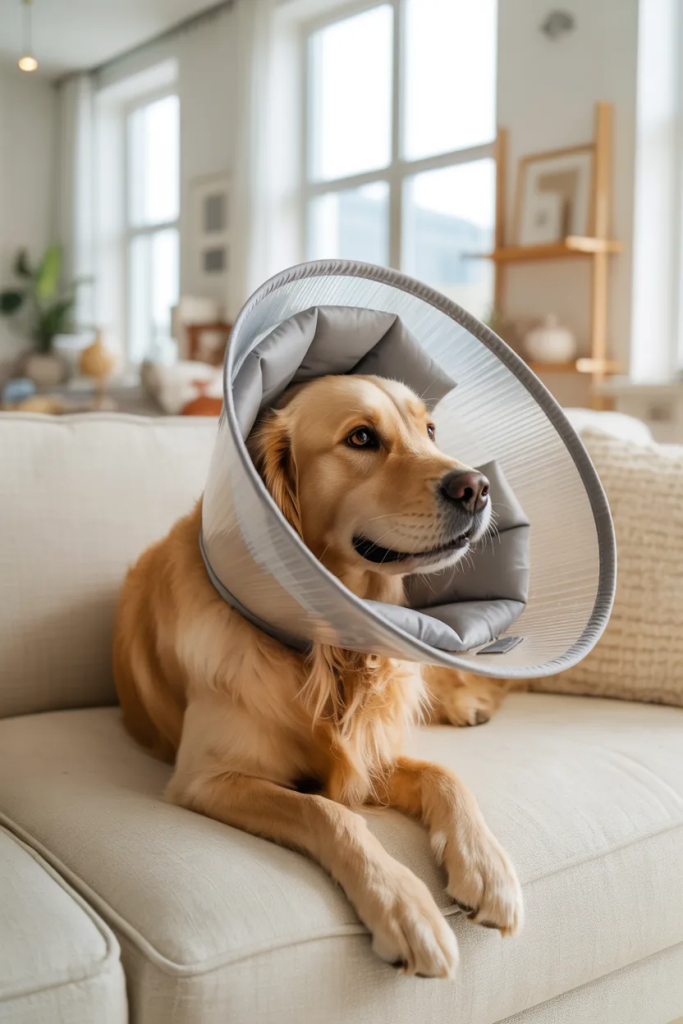
If your dog hates stiff materials, fleece is one of the gentlest options you can use.
I made a fleece cone for my dog during the final stage of recovery when she still needed supervision but no longer required a rigid barrier.
Materials
- Fleece fabric
- Lightweight interfacing
- Velcro strips
- Sewing machine or fabric glue
Instructions
Layer fleece around lightweight interfacing to create structure without stiffness. Add Velcro closures for adjustable sizing.
The soft material prevented chafing around my dog’s neck, especially after several days of continuous wear.
Best Use
This style works best for mild recovery situations or dogs who only need occasional licking prevention.
The DIY Dog Cone Mistake Most People Make
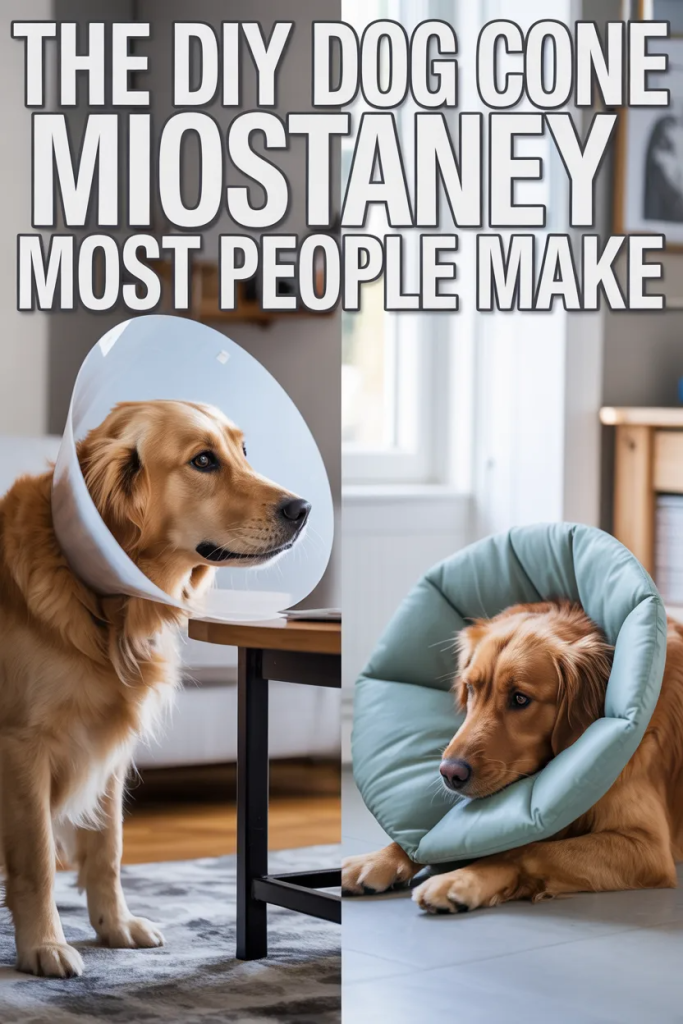
The biggest mistake I see is choosing comfort over function completely. A cone that feels soft but allows your dog to reach the wound won’t help recovery at all.
Your dog’s cone should extend slightly beyond the nose while still allowing normal breathing and eating.
Another issue is making the neck area too tight. Dogs become anxious quickly when movement feels restricted, and that stress can slow recovery.
A Better Approach
Keep the neck soft and flexible while adding structure to the outer edge. This balance makes the cone more comfortable without losing effectiveness.
Pool noodles, foam strips, and padded fabric edges work surprisingly well for this.
Final Thoughts
Recovery is already stressful for dogs, and the wrong cone can make it even harder. After trying several DIY dog cone ideas myself, I learned that small comfort upgrades can completely change how your dog handles healing.
Some dogs prefer soft donut collars, while others do better with clear plastic cones that let them see their surroundings. The best option usually depends on your dog’s size, personality, and recovery needs.
Take your time with measurements, keep the materials lightweight, and always supervise your dog when introducing a new recovery collar. A little extra effort upfront can make those post-surgery days much easier for both of you.