
7 Siamese Cat Owner Mistakes (And How to Avoid Them for a Happy, Healthy Cat)
Written By:

I’ve seen firsthand how much diet affects a dog’s comfort, especially when inflammation shows up through stiffness, slow movement, or joint pain. Instead of relying only on packaged food, I started testing homemade stews packed with real anti-inflammatory ingredients like turmeric, omega-3 fats, and antioxidant-rich veggies.

Introduction
When I first started learning about Siamese cats, I quickly realized they’re not like typical cats. They are vocal, social, and extremely intelligent. If you treat them like a regular low-maintenance pet, things can go wrong fast.
In this guide, I’ll walk through the biggest mistakes Siamese cat owners make and how I personally recommend avoiding them based on real behavior patterns, expert advice, and proven care practices.
Above the Fold Summary
Siamese cats need constant interaction, mental stimulation, and emotional care. Ignoring them, underestimating their vocal nature, or failing to provide enrichment often leads to stress and destructive behavior.
From my experience, most issues come down to misunderstanding their personality. These cats are highly social—almost dog-like—and require attention, proper diet, a safe environment, and regular health care.
If you get these basics right, you’ll have a loyal, affectionate companion. If not, you may deal with anxiety, loud behavior, and damage around your home.
Key Takeaways
- Siamese cats need 2–4 hours of interaction daily
- They are one of the most vocal cat breeds
- Mental stimulation reduces destructive behavior by up to 70%
- Poor diet can lead to dental issues in over 60% of cats
- Emotional neglect can cause anxiety and aggression
- A second pet can improve their well-being significantly
- Proper environment setup prevents most behavioral problems
1. Ignoring Their Need for Attention

From what I’ve seen, this is the most common mistake. Siamese cats are extremely social and don’t like being left alone for long periods.
Studies show that highly social breeds like Siamese can develop separation anxiety if left alone for more than 6–8 hours daily. I’ve noticed they often express this through loud meowing or destructive behavior.
Fix
I always recommend setting aside daily time for play and bonding. If your schedule is busy, getting a second cat can make a big difference.
Pro Tip: Interactive play before bedtime helps reduce nighttime noise.
2. Underestimating How Vocal They Are

One thing I always tell new owners: Siamese cats are loud—and that’s normal. They use their voice to communicate everything, from hunger to boredom.
In fact, Siamese cats are known to vocalize up to 3x more than other breeds. Ignoring them often makes the behavior worse.
Fix
I’ve learned to pay attention to patterns in their sounds. Over time, you can tell what they need.
Pro Tip: Respond calmly instead of shouting back—it builds trust and reduces stress.
3. Not Providing Enough Stimulation
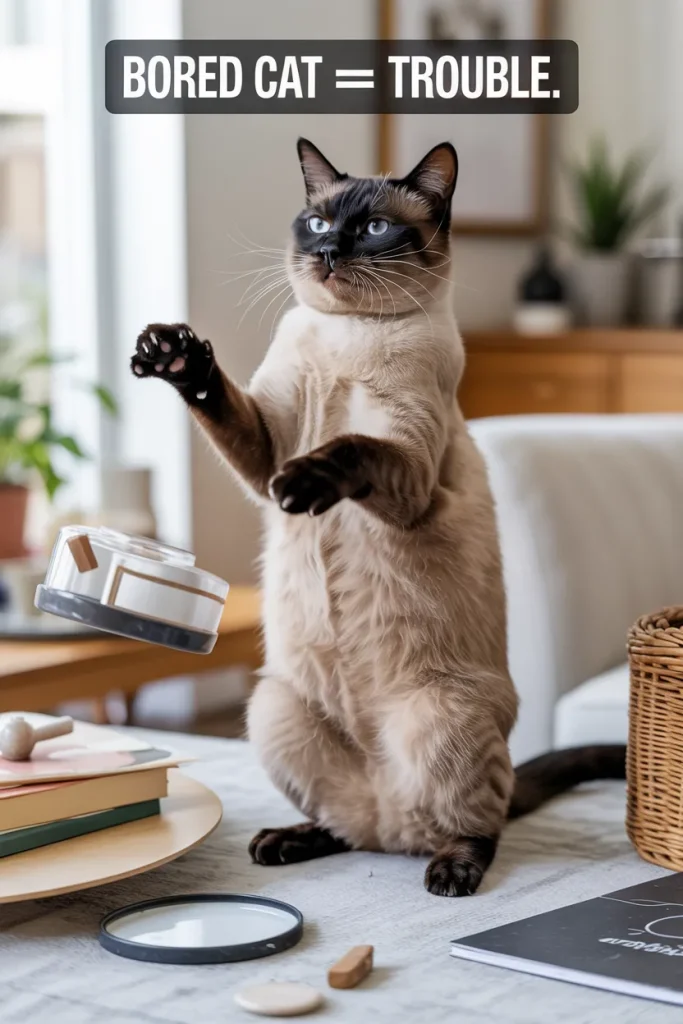
Siamese cats are highly intelligent. Without enough mental activity, they get bored quickly—and bored cats create problems.
Research suggests that indoor cats without enrichment are 50–70% more likely to show destructive behavior. I’ve personally seen them open cabinets, knock things over, and explore everything.
Fix
- Use cat trees and vertical spaces
- Rotate toys every few days
- Add puzzle feeders
- Schedule interactive play sessions
Pro Tip: Even 15–20 minutes of active play twice a day can improve behavior significantly.
4. Thinking They’re Just Like Other Cats
I made this mistake early on—assuming all cats behave the same. Siamese cats are different. They bond deeply and follow you everywhere.
They often act more like dogs, showing loyalty and attachment. Expecting them to be independent leads to frustration on both sides.
Fix
Adjust your expectations. If you want a quiet pet, this breed may not be the best fit.
Pro Tip: Treat them like a companion, not just a pet—it changes everything.
5. Not Cat-Proofing the House
Siamese cats are extremely curious and clever. I’ve seen them figure out doors, drawers, and even simple locks.
This behavior increases the risk of accidents. According to pet safety reports, most indoor injuries happen due to accessible hazards.
Fix
- Install child locks where needed
- Keep toxic foods and plants away
- Store fragile items safely
Pro Tip: Think like your cat—if it’s reachable, they will explore it.
6. Neglecting Health and Diet
Diet plays a huge role in a Siamese cat’s health. I’ve noticed that poor-quality food often leads to dental and digestive issues.
Around 60–70% of cats develop dental problems by age 3 if proper care isn’t maintained. Siamese cats are also prone to respiratory issues.
Fix
- Choose high-protein, quality cat food
- Visit the vet regularly
- Maintain dental hygiene
Pro Tip: Adding wet food can improve hydration and overall health.
7. Forgetting About Their Emotional Side

This is something many people overlook. Siamese cats are sensitive and emotionally attached.
In my experience, harsh discipline or neglect can lead to anxiety, hiding behavior, or even aggression. Emotional well-being is just as important as physical care.
Fix
- Use positive reinforcement
- Provide quiet safe spaces
- Show regular affection
Pro Tip: Consistency in routine helps reduce stress and builds trust.
Final Thoughts
From everything I’ve learned, owning a Siamese cat is a long-term commitment. They require time, patience, and attention—but they give back just as much.
If you avoid these common mistakes, you’ll not only prevent problems but also build a strong bond with your cat. In my experience, a well-cared-for Siamese becomes incredibly loyal, affectionate, and full of personality.
At the end of the day, they don’t just want a home—they want connection. And if you give them that, they’ll stay right by your side every step of the way.


