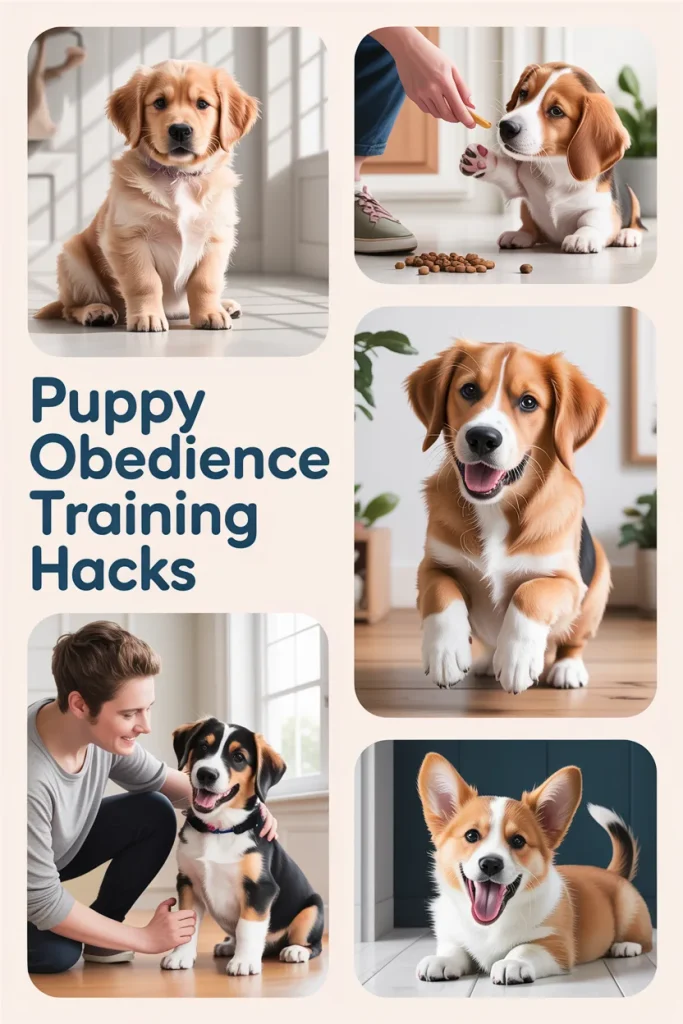
Puppy Obedience Training Hacks: Train Your Puppy Smarter, Not Harder
When I first brought my puppy home, I honestly felt overwhelmed. Between the constant energy, random chewing, and ignoring commands, I knew I needed a smarter approach to puppy obedience training—not a harder one.
I didn’t want complicated systems or strict routines. I wanted something practical that actually works in real life.
Above the Fold Summary
In this guide, I’m sharing the exact puppy obedience training hacks that worked for me. I focused on timing, short sessions, reward systems, and simple daily habits. These methods are based on how dogs actually learn, and I started seeing real progress within the first week. If you stay consistent, you can train your puppy faster without stress or confusion.
Key Takeaways
- Puppies connect actions and rewards within 1–2 seconds
- Short sessions (2–5 minutes) improve learning speed
- Consistency builds habits faster than long training
- Rewards can be treats or real-life benefits
- Never punish your puppy for coming to you
- Low-distraction training speeds up obedience
First Things First: Puppies Aren’t Being Jerks on Purpose
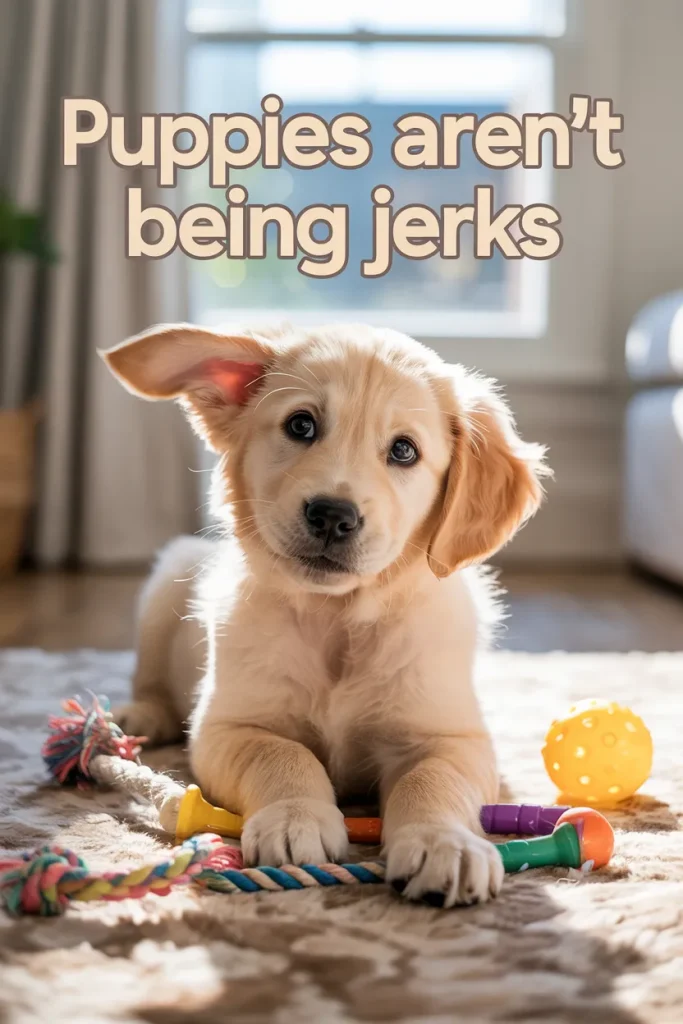
At the start, I used to think my puppy was ignoring me. But after spending time learning about dog behavior, I realized they simply don’t understand what I want yet.
Puppies are still developing focus and memory. Studies show young dogs have limited impulse control, which is why they seem distracted all the time.
Once I accepted this, my approach changed. I stopped reacting emotionally and started teaching clearly.
Pro tip: If your puppy fails, it’s usually a communication problem—not a behavior problem.
Timing Is Everything (Literally, Seconds Count)
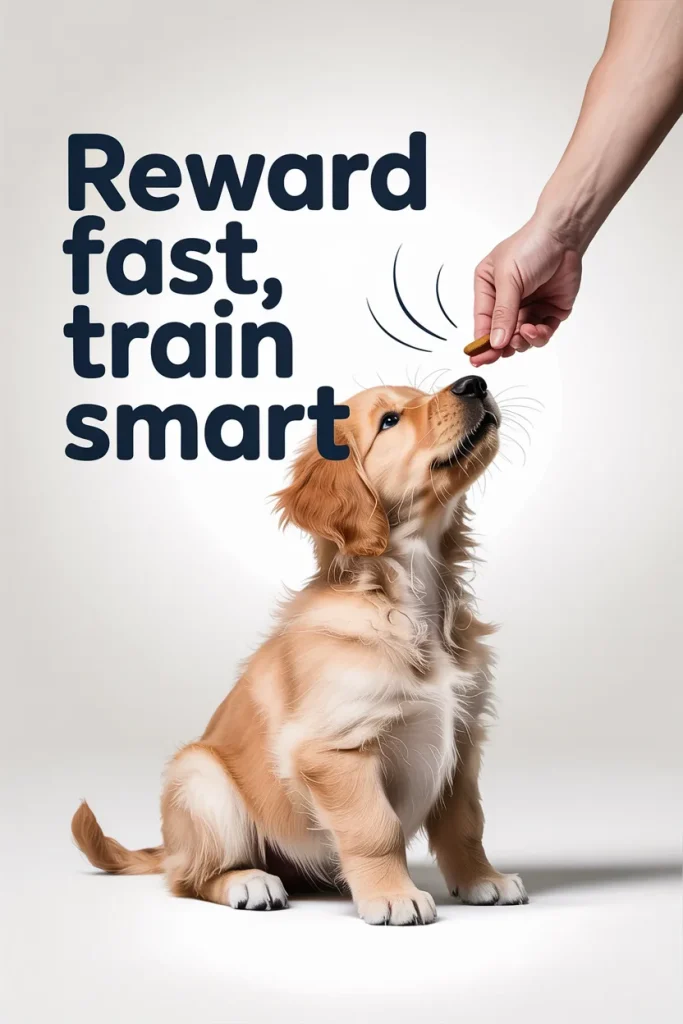
One thing that completely changed my results was timing. Dogs learn through association, and that connection happens within about 1–2 seconds.
When I delayed rewards, my puppy linked them to the wrong behavior. Fixing this improved training almost instantly.
What I started doing:
- I kept treats ready before training
- I used a clear marker word like “yes” immediately
- I rewarded the exact moment the behavior happened
From what I experienced, this alone made training feel 2x faster. Research also shows immediate reinforcement significantly improves learning accuracy.
👉 Fast timing is not optional—it’s the foundation of effective puppy obedience training.
Start in the Most Boring Place Ever
I made the mistake of training in distracting environments too early, and it didn’t work.
Puppies naturally pay more attention to movement, sounds, and smells than commands. That’s why starting in a quiet place matters.
What worked for me:
- Training in a calm indoor space
- Removing all distractions in the beginning
- Gradually adding new environments
This step-by-step exposure helped my puppy stay focused longer.
Pro tip: Train where your puppy can win first. Confidence builds faster than correction.
Short and Sweet = Success
At one point, I tried longer sessions thinking more time equals better results. I was wrong.
Puppies usually focus for only a few minutes. After that, learning drops and frustration increases.
What I changed:
- 2–5 minute sessions only
- Multiple sessions during the day
- Ending training right after a success
This approach worked better and felt easier to maintain daily.
Insight: Short sessions increase repetition, and repetition builds habits. That’s what really drives results.
Use the “Name → Command → Reward” Formula
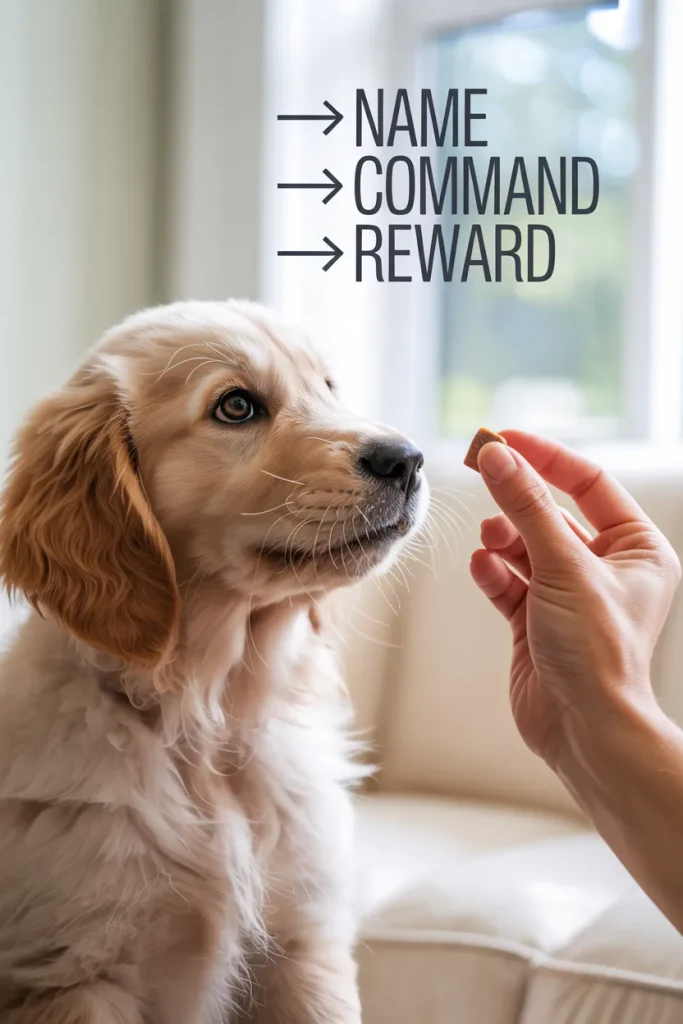
I used to repeat commands again and again, which only made things worse. My puppy learned to ignore me.
Then I switched to a simple structure that improved clarity.
What I follow now:
- Say the name to get attention
- Give the command once
- Reward immediately after success
Example:
“Buddy… sit… yes!” → reward
This made my communication clear and consistent. Over time, my puppy started responding faster on the first command.
Pro tip: Repeating commands teaches delay. Clear structure teaches response.
Jackpot the Big Wins
Not every behavior deserves the same reward. I learned to highlight important moments using bigger rewards.
This is known as “jackpot rewarding,” and it works because dogs repeat behaviors that bring higher value outcomes.
What I do:
- Give 3–5 treats in a row
- Use excited praise
- Add play as a bonus reward
This worked especially well for recall and new commands.
Insight: Variable rewards (sometimes bigger, sometimes smaller) keep dogs more engaged long-term.
Use Life Rewards (Not Just Treats)
At first, I depended only on treats. But I realized everyday situations are powerful training opportunities.
Dogs value access to things they enjoy, and that can replace treats in many cases.
What I started doing:
- Asking for “sit” before opening doors
- Asking for calm behavior before walks
- Giving attention only after good behavior
This made training part of daily life instead of a separate task.
Fact: Dogs trained with both food and real-life rewards tend to maintain obedience more consistently.
Make “Come” a Jackpot Command (Always)
The “come” command became my top priority because it directly affects safety.
But I also learned that one mistake—punishing after calling—can ruin it completely.
Dogs don’t understand delayed punishment. They only remember that coming to you led to something negative.
What I always do:
- Reward every recall
- Use high-value treats
- Stay positive no matter what
Even if my puppy took time, I still rewarded. This built trust and reliability over time.
Stat insight: Poor recall is one of the most common training failures, mainly due to inconsistent rewards or punishment.
Final Thought: Train with Joy or Don’t Bother
From my experience, training works best when it feels natural and positive.
When I stayed patient and consistent, my puppy improved quickly. When I got frustrated, progress slowed down.
I focused on small wins, daily repetition, and keeping things simple. That’s what made the biggest difference.
In the end, puppy obedience training isn’t about control—it’s about clear communication and trust.