Beef and Chicken Broth Cat Food Recipe – Protein-Rich, Hydrating & Homemade
Written By:

I’ve seen firsthand how much diet affects a dog’s comfort, especially when inflammation shows up through stiffness, slow movement, or joint pain. Instead of relying only on packaged food, I started testing homemade stews packed with real anti-inflammatory ingredients like turmeric, omega-3 fats, and antioxidant-rich veggies.
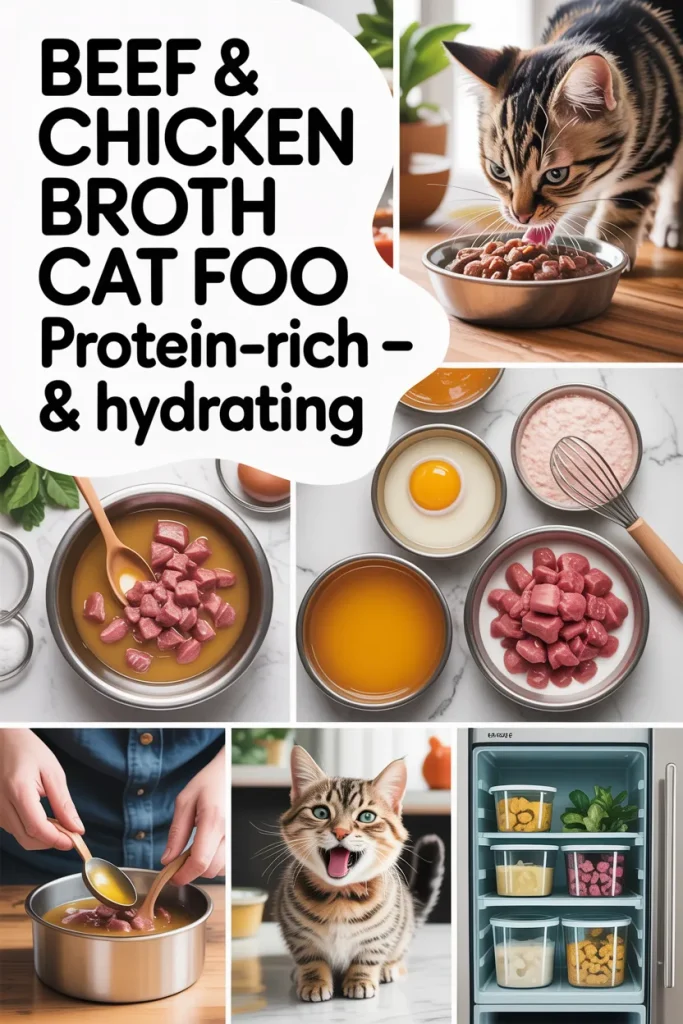
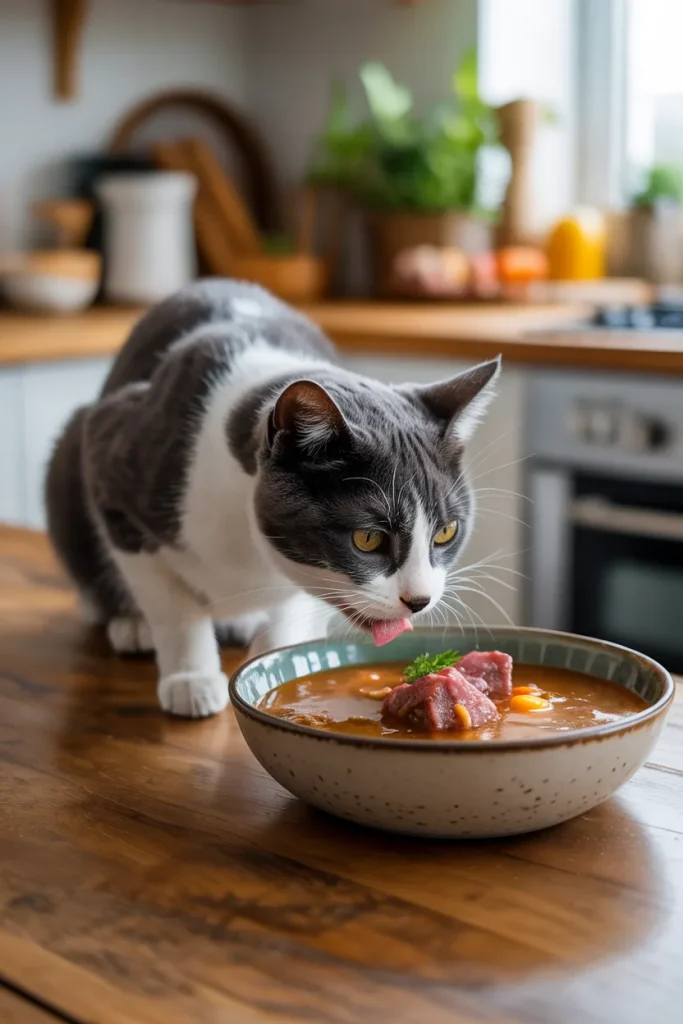
As a cat parent, I’m always looking for ways to make mealtime healthy, hydrating, and tasty. That’s why I love this homemade beef and chicken broth cat food.
It combines tender beef, nutrient-rich chicken broth, and optional supplements to create a soft, protein-packed meal that cats actually enjoy. Whether you have a picky eater, a senior cat, or one with sensitive digestion, this recipe provides hydration and high-quality protein without fillers or questionable ingredients.
Summary: This recipe focuses on two essentials: hydration and protein. Beef delivers bioavailable protein and iron, while chicken broth adds moisture and flavor. Optional additions like gelatin, egg yolk, taurine, and calcium can improve nutrition and texture. Serve slightly warm, avoid harmful ingredients, and consult your vet if feeding regularly. Safe storage and proper portioning ensure your cat stays healthy.
What Makes This Special
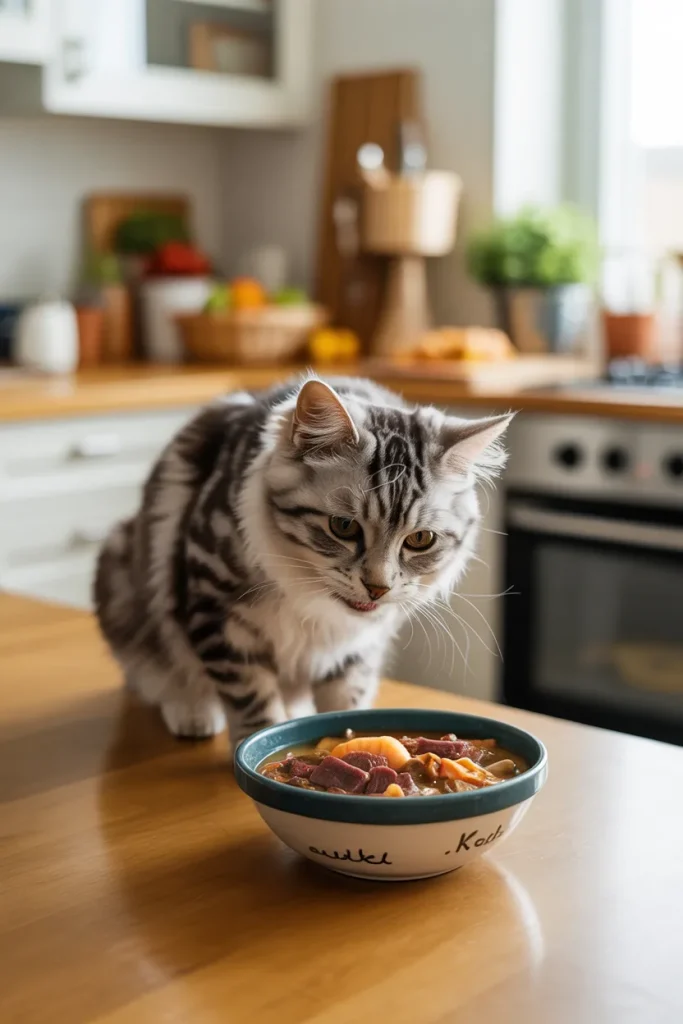
What I love most about this recipe is its simplicity and focus on what cats truly need: protein and moisture. Beef provides amino acids essential for muscle maintenance and overall health, while chicken broth makes the meal easier to eat and more enticing.
I also appreciate the flexibility—blend it smooth for a pate or leave it chunky for texture. Unlike many commercial broths, you control the sodium and avoid additives that can harm your cat. It’s an easy way to give them a wholesome, controlled meal.
Pro tip: Adding a pinch of taurine is crucial if you plan to feed this regularly, as cats cannot produce enough naturally.
Beef and Chicken Broth Cat Food Recipe – Protein-Rich, Hydrating & Homemade
Easy, protein-rich beef & chicken broth cat food recipe for hydration, picky eaters, and seniors. Safe, simple, and vet-approved tips included.
Ingredients
- Prepare the broth – Ensure low-sodium and no harmful ingredients. If homemade, skim fat if needed.
- Cook the beef – Poach or gently pan-sear until just cooked. For ground beef, drain excess fat.
- Optional gelatin – Bloom 1 tsp in 2–3 tbsp warm broth for 5 minutes, then dissolve completely.
- Combine ingredients – Mix cooked beef, broth (with gelatin if used), egg yolk, and optional fat/tallow.
- Adjust texture – Chop for soft chew or blend for smooth pate. Add water for soupier consistency.
- Add supplements – Stir in taurine and calcium once food is warm (not hot).
- Portion and serve – Serve slightly warm to entice picky cats. Offer a small amount first.
Instructions
- Storage: Refrigerate in airtight containers for up to 48 hours, or freeze for up to 1 month.
- Reheating: Warm in a water bath; never microwave supplements or overheat.
- Serving: Always serve slightly warm, never hot.
- Portion size: Typically 2–4 oz (55–110 g) per meal, twice daily, adjust per cat’s weight and activity.
- Enhancing appeal: Slightly warm the food, add a teaspoon of fat, or sprinkle freeze-dried meat on top.
Ingredients
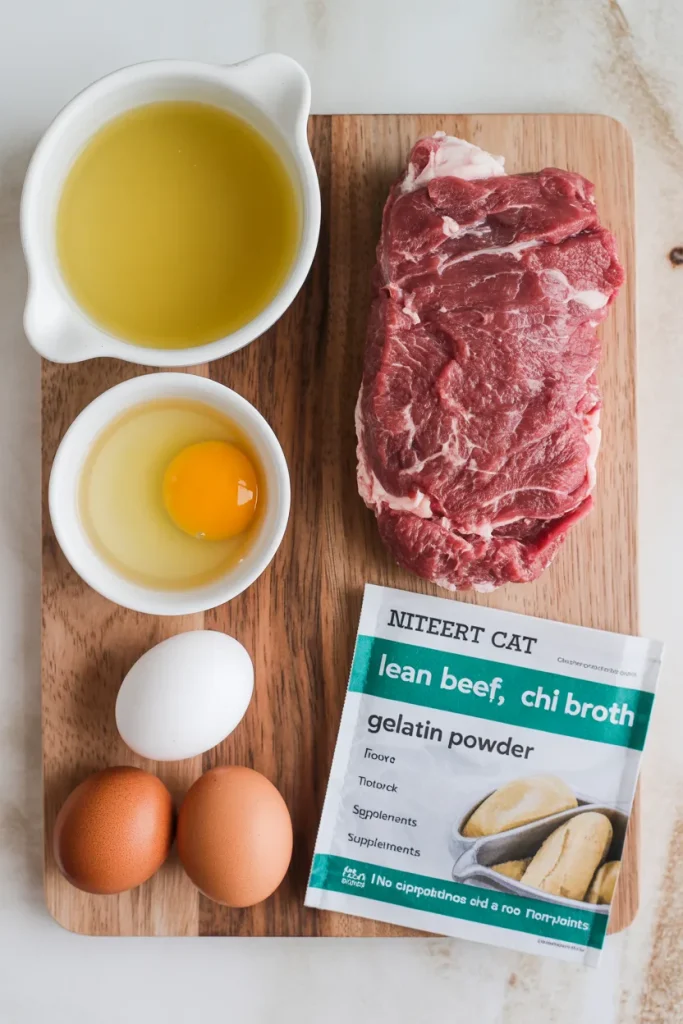
Here’s my preferred ingredient list, focusing on protein, hydration, and optional nutrient boosts:
- 8 oz (225 g) lean beef (stew meat, 90% lean ground beef, or beef heart)
- 1 cup low-sodium chicken broth (homemade preferred, onion- and garlic-free)
- 1 tsp plain gelatin powder (optional, for texture and hydration)
- 1 tbsp chicken fat or beef tallow (optional, for flavor/calories)
- 1 lightly cooked egg yolk (optional, adds healthy fats and richness)
- Water as needed to adjust consistency
- Vet-approved taurine supplement (as directed by your vet)
- Small pinch of calcium source (e.g., eggshell powder) if using boneless meat
Important: Avoid broths with onion, garlic, chives, or high sodium.
How to Make It
- Prepare the broth – Check that store-bought broth is unsalted and free of harmful ingredients. Homemade broth is ideal, and you can skim fat as needed.
- Cook the beef – Poach or pan-sear until just cooked. For ground beef, drain excess fat if sensitive. Avoid strong seasoning.
- Optional gelatin – Bloom 1 tsp in 2–3 tbsp of warm broth for 5 minutes, then dissolve fully for extra moisture.
- Combine ingredients – Mix cooked beef, broth (with gelatin if used), egg yolk, and optional fat/tallow.
- Adjust texture – Chop for soft chew or blend for smooth pate. Add water for soupier consistency.
- Add supplements – Stir in taurine and calcium when the food is warm (not hot).
- Portion and serve – Serve slightly warm to stimulate appetite. Offer a small amount first to test acceptance.
Pro tip: Slightly warming the food enhances aroma, which can increase acceptance in picky cats.
Storage Instructions
- Refrigerator: Store in an airtight container for up to 48 hours.
- Freezer: Portion into silicone trays or small containers; store for up to 1 month. Thaw overnight in the fridge.
- Reheat gently: Warm in a water bath to room temperature. Avoid microwaving supplements.
- Discard leftovers: Remove uneaten portions after 30–45 minutes to prevent bacterial growth.
Insight: Proper storage maintains nutrient quality and prevents digestive upset.
Health Benefits

- High-quality protein: Beef supplies essential amino acids that support muscles and overall health.
- Hydration support: Broth adds moisture, which aids urinary health and is helpful for cats who drink little water.
- Gentle on teeth and gums: Soft texture is ideal for seniors or cats with dental issues.
- Nutrient boost: Egg yolk provides fats, choline, and vitamins; taurine and calcium enhance nutritional value.
- Digestibility: Minimal ingredients and no strong seasonings are easier on sensitive stomachs.
Fact: Cats require taurine in every meal to prevent heart and eye problems, making supplementation important if feeding homemade meals regularly.
Common Mistakes to Avoid
- Using seasoned broth: Avoid onions, garlic, or high sodium as they are toxic to cats.
- Skipping taurine: Essential for cats, especially if feeding frequently.
- Serving too hot: Can burn your cat’s mouth; always test temperature.
- Relying on this as the sole diet: Not complete unless supplemented with necessary vitamins and minerals.
- Overdoing fat: Too much fat can trigger digestive upset or pancreatitis in sensitive cats.
Alternatives
- Protein swap: Turkey, rabbit, or chicken thigh can replace beef. Introduce one protein at a time to monitor tolerance.
- Different broth: Unsalted turkey or bone broth is a good option. Always avoid onion/garlic.
- Texture changes: Blend for hydration or leave small chunks for enrichment.
- Allergy-friendly: Substitute duck or rabbit if beef triggers allergies.
- Supplement tweaks: Add vet-approved feline multivitamins to balance homemade diets.
Pro tip: Gradually introducing new proteins helps identify sensitivities while keeping meals safe.
FAQ
Is this a complete and balanced meal?
No. It’s high-protein and hydrating, but consult your vet to add taurine, calcium, and micronutrients for balance.
Can I use store-bought broth?
Yes, if it’s unsalted and free from onion, garlic, or spices. Homemade is always safest.
Can I serve it raw?
This recipe is designed cooked for safety. Raw feeding requires careful pathogen management and proper supplementation.
How much should I feed?
Typically 2–4 oz (55–110 g) per meal, twice daily. Adjust based on your cat’s weight, age, and activity.
My cat is picky.
Serve slightly warm, add extra broth, drizzle a bit of fat, or sprinkle freeze-dried meat on top.
Can I add vegetables or grains?
Cats are obligate carnivores; introduce fiber only if recommended by a vet. Focus on protein and moisture.
What if my cat has kidney or urinary issues?
Extra moisture helps, but protein and minerals must be carefully managed. Always consult your vet.
Wrapping Up
I’ve found that this beef and chicken broth cat food is a simple, nourishing way to add hydration and protein without questionable ingredients. Use it as a gentle meal, a topper for dry food, or a base for a balanced diet under veterinary guidance. With a little care, mealtime becomes soothing, safe, and satisfying for your cat.
Key Takeaways
- Homemade broth cat food provides protein and hydration while avoiding fillers.
- Beef is rich in amino acids, and broth encourages water intake.
- Optional additions like gelatin, egg yolk, taurine, and calcium improve nutrition.
- Avoid onions, garlic, high sodium, and overdoing fats.
- Serve slightly warm, store properly, and consult your vet if feeding frequently.